


Pancoran Batan Nyuh: Tracing the Harmony of Shiva–Buddha Teachings in the Traditional Village of Kapal
Bali holds layers of beauty that do not always reveal themselves at the surface, hidden among flowing water, ancient trees, and quiet spaces safeguarded by tradition. Beyond the bustle of tourism, there are beji, sacred bathing places, that serve as meeting points between nature and the spiritual practices of the community. One of these is Pancoran Batan Nyuh, a sacred water source located in Desa Adat Kapal, Mengwi District. This pancoran not only offers natural coolness, but also records a long history of purification practices and spiritual harmony passed down through generations. In its simplicity, Pancoran Batan Nyuh stands as a marker that water, belief, and culture in Bali continue to flow as an inseparable unity.

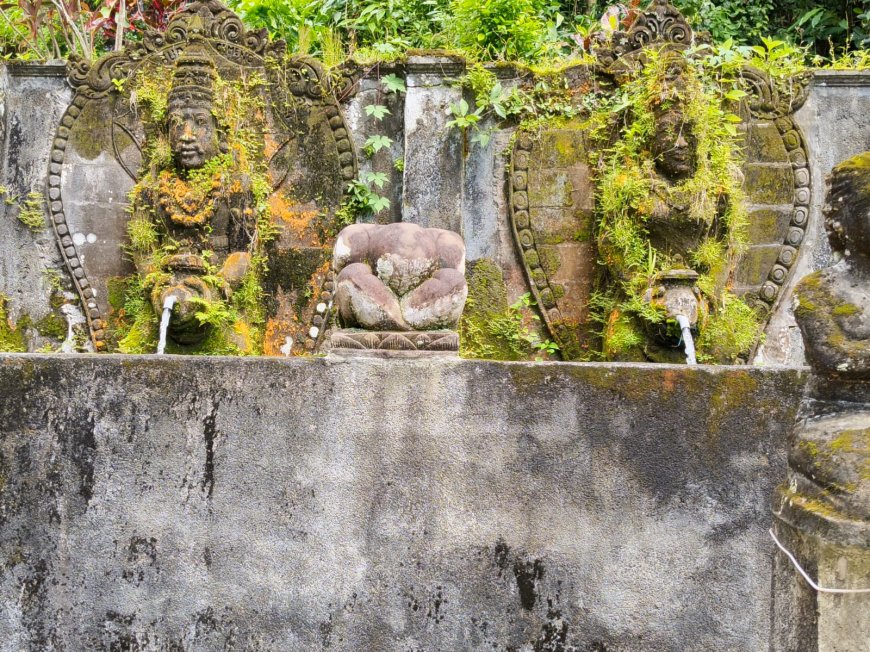
Desa Adat Kapal, situated in Mengwi District, Badung Regency, Bali, preserves a unique spiritual heritage within the local religious traditions. In Banjar Langon lies a natural spring known as Pancoran Batan Nyuh, a sacred site that reflects a harmonious trace between Hindu teachings and ancient Buddhist culture that once flourished in the area. As of the writing of this article, its location has not yet been officially registered on digital maps such as Google Maps. However, locals and visitors can reach the site by heading to Pura Beji Langon in the surrounding area, where Pancoran Batan Nyuh can be found adjacent to it.
Pancoran Batan Nyuh is a sacred water source long recognized as a place for melukat, or ritual self-purification using tirta (holy water). Although its existence is often associated with Balinese Hindu practice, the site holds an intriguing historical layer related to Buddhist influence, particularly prior to the period of Hindu dominance in Bali. Local tradition recounts that this place once functioned as a Pasraman Alit, a small spiritual retreat linked to the dissemination of Buddhist teachings. This influence is still reflected in the cultural symbols surrounding Pancoran Batan Nyuh, especially in the presence of sacred trees that support a symbolic narrative across spiritual traditions, reflecting the cosmological intersection between Siwa and Buddha teachings in the past.
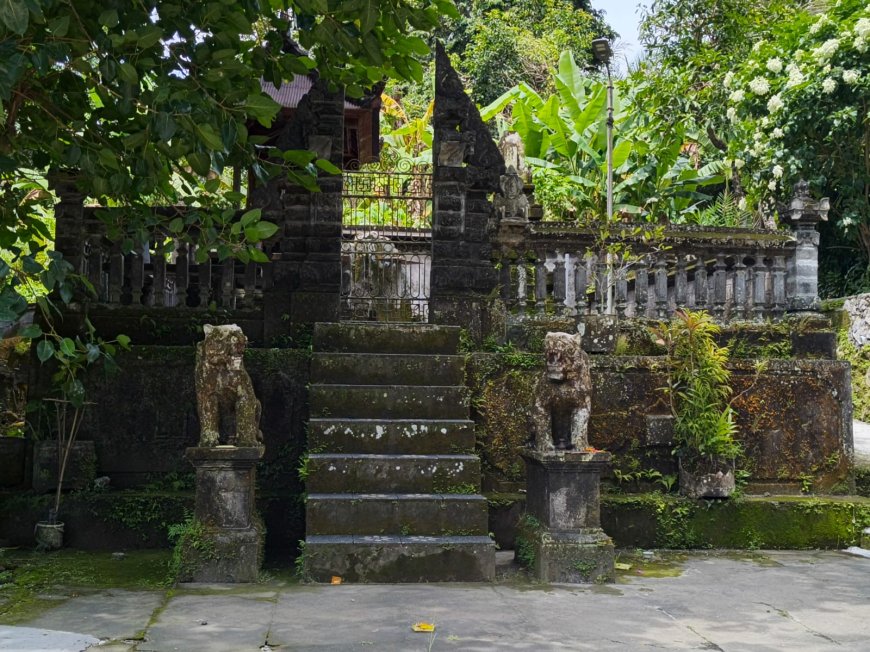
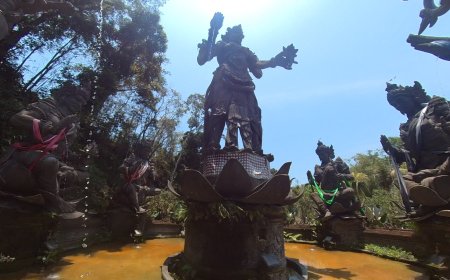
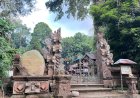
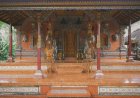
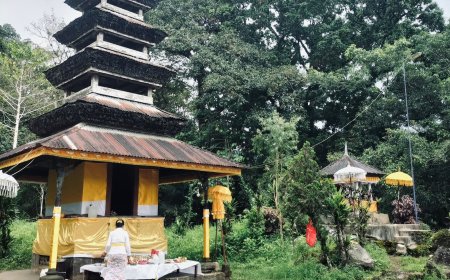
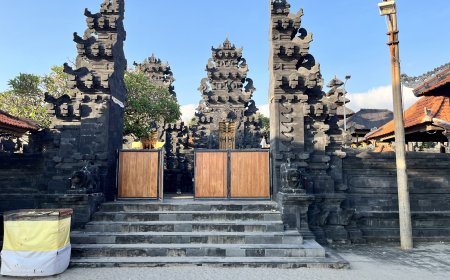
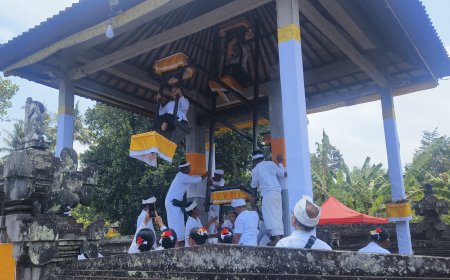
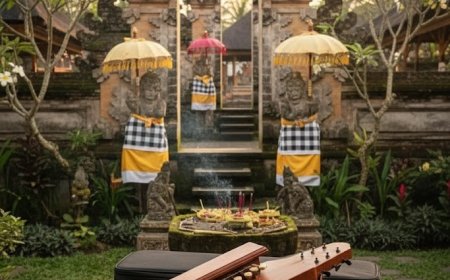
Praying Temple at Pancoran Batan Nyuh (Source: Editorial Collection)
Since ancient times, the surrounding community has used Pancoran Batan Nyuh as a place to perform panglukatan (ritual cleansing of body and soul). The water flowing from the spouts is believed to possess spiritual qualities capable of cleansing the inner self from emotional imbalance, past misdeeds, and negative energies. For this reason, the purification ritual continues to be practiced to this day, particularly at specific times within the Balinese ritual calendar.
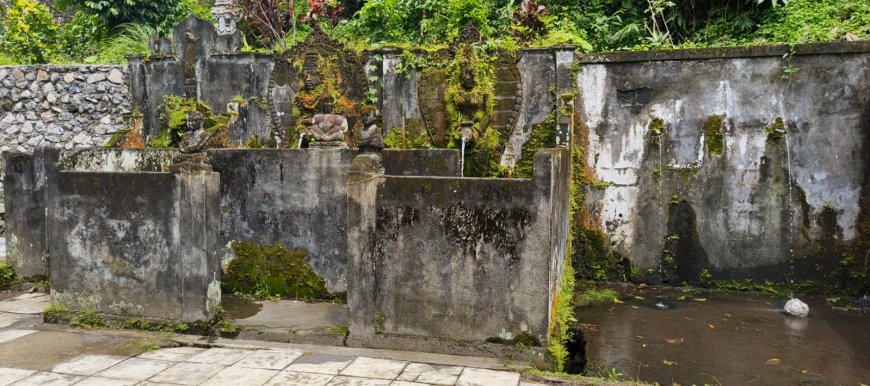
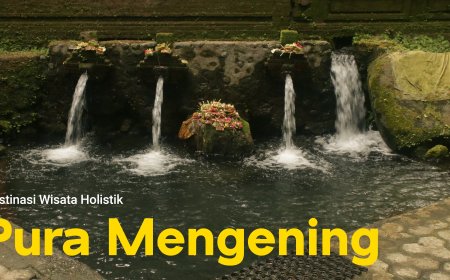
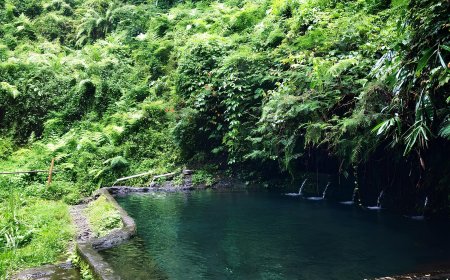
Five Water Spouts is Pancoran Batan Nyuh (Source: Editorial Collection)
Of the five water spouts recorded at the site, three are currently still active. Two are used regularly by pamedek (Balinese Hindu devotees) for purification rituals, while one is specifically designated for nunas tirta (collecting holy water for ceremonial purposes).
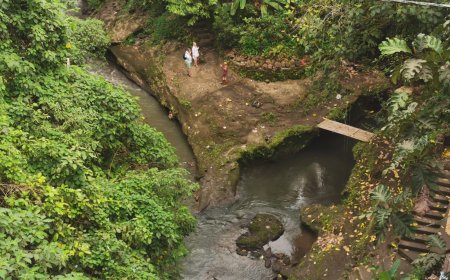
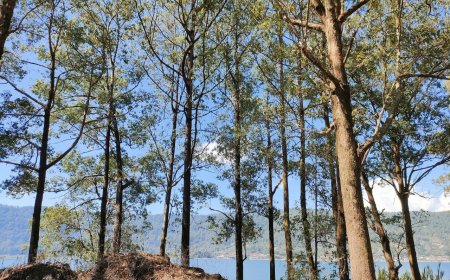
The area of Pancoran Batan Nyuh is defined not only by its flowing water but also by environmental elements imbued with religious symbolism. Around the springs stand several types of trees, each bearing distinct spiritual meaning:
- The Bodhi tree, which in Buddhist tradition symbolizes the enlightenment of Siddhartha Gautama;
- the Pule tree, believed to symbolize Lord Siwa;
- and the Banyan tree, often associated with Goddess Durga, an important figure in Siwa cosmology.
The integration of these symbols reflects an inter-traditional harmony that honors both Siwa and Buddha teachings among the local community of Desa Adat Kapal. Pancoran Batan Nyuh is a tangible manifestation of how spiritual traditions in Bali do not operate within a single domain. At Pancoran Batan Nyuh, traces of Siwa and Buddha teachings are evident in purification rituals (melukat), the presence of sacred natural symbols, and the way the community preserves and transmits ritual practices from one generation to the next. More than merely a water source, Pancoran Batan Nyuh functions as a space for the harmonization of belief systems, where differing cosmological values are unified within a distinctive religious experience that remains relevant today.