









The Allure of Sading Yowana Festival 2025: A New Face of Penjor Wrapped in Youth Creativity
Enlivening the atmosphere of Galungan and Kuningan, the Sading Traditional Village presents the Sading Yowana Festival 2025, which blends tradition and innovation. This festival highlights the creativity of the youth through a stunning Decorative Penjor competition. A cultural celebration that pairs the grandeur of modern aesthetics with the solemnity of tradition, inviting admiration from anyone who passes by.

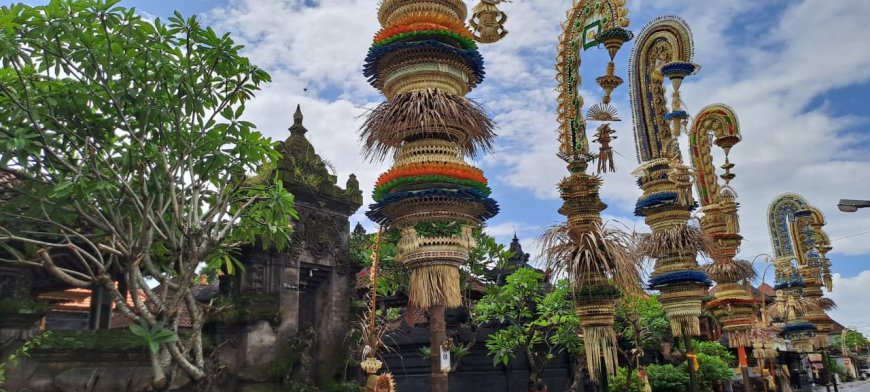
The atmosphere in Sading Traditional Village, Mengwi District, Badung Regency, felt very different last November 2025. Coinciding with the celebration of the Galungan and Kuningan holy days, the village streets were not only filled with ceremonial penjors in front of residents' homes but were also enlivened by rows of ornamental penjors lined up neatly along the main road. Precisely in front of the Village Temple and Wantilan hall and the Dalem Tungkub Temple area, this unique sight immediately attracted the attention of anyone passing by. This was part of the festivities of the Sading Yowana Festival 2025, a debut event held specifically to accommodate the creativity of the younger generation in the village.
This event was organized by Sabha Yowana Giri Winangun and lasted for quite a while, from November 9th to November 30th, 2025. The chairman of the organizing committee, I Gede Agus Ary Sanjaya, mentioned that this festival was born from the strong desire of the youth or Sekaa Teruna groups in Sading Traditional Village. Seeing the rising trend of penjor competitions in various regions, they wanted to participate and show off their skills. That is why this festival served as a stage for eleven Sekaa Teruna groups in Sading Traditional Village to channel their artistic talents, while celebrating the holiday season creatively.
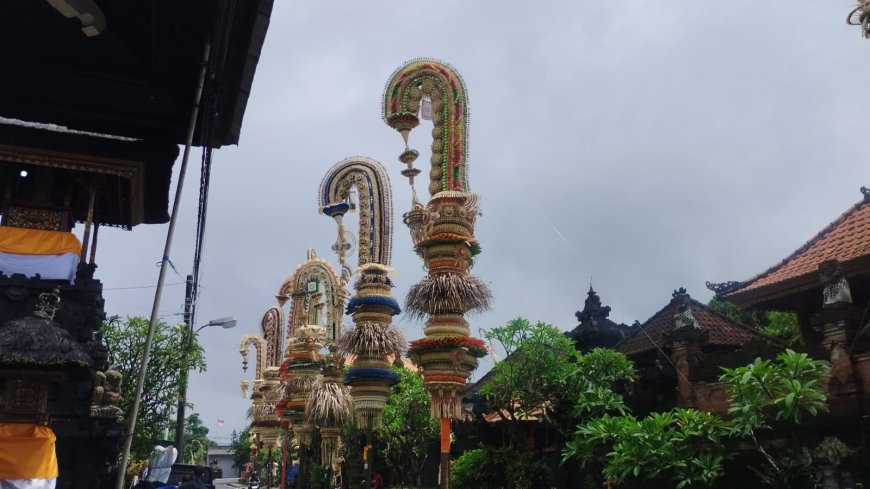 Rows of Ornamental Penjors at the Yowana Sading Festival 2025 (Photo Source: Personal Collection)
The festival's staging in November was timely because it coincided with the Galungan and Kuningan holy days. This provided an opportunity for the public to directly observe the difference between the Sacred Penjor (Penjor Sakral) and the Ornamental Penjor (Penjor Hias). The Sacred Penjor is a ceremonial medium that must be installed by Hindus on Penampahan Galungan day, usually after 12 PM. This penjor carries a profound philosophical meaning as the symbol of Naga Basuki (the dragon of prosperity), as well as the symbol of the sacred mountain. Every component represents a deity: such as bamboo for Lord Brahma, coconut for Lord Rudra, and rice and produce as symbols of Dewi Sri. Its purpose is purely an expression of gratitude and victory over the ego or negative traits within oneself.
On the other hand, the penjor featured in this festival is the Ornamental Penjor (Penjor Hias). Unlike the sacred penjor which has strict rules regarding the completeness of ceremonial equipment or offerings (banten), the ornamental penjor prioritizes elements of art and aesthetics. This type of penjor is typically made to enliven village events or art competitions. In this competition, participants were given the freedom to create with different shapes and decorations, as long as they maintained Balinese cultural norms and decency. Therefore, although the basic form is the same curved bamboo, the function and rules for its creation are very different.
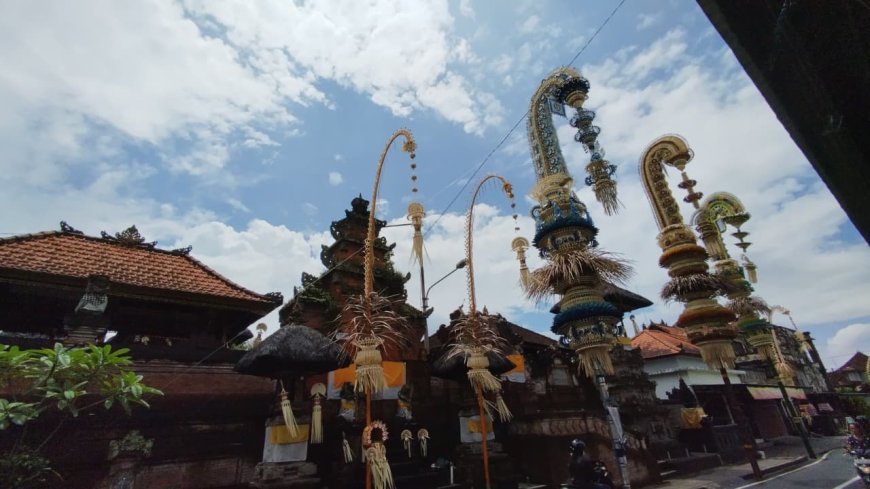 Comparison of Religious/Ceremonial Penjor with Ornamental Penjor (Photo Source: Personal Collection)
The penjor competition was judged on November 12th by three experienced judges in the field, namely I Wayan Eka Sukerya Ghama, I Putu Arif Suciawan, and AA Raka Yudhi Pratama. The judging criteria were quite detailed, covering the completeness of the work, concept alignment, harmony, and whether the penjor stands upright (jejeg) and neat.
From the assessment results, 1st Place was successfully achieved by Sekaa Teruna Dwi Eka Bhakti from Banjar Sengguan Pasekan with a work named "Penjor Durmanggala". This work raises the meaning of the purification ritual, where Durmanggala is interpreted as a means to neutralize negative forces, both in the universe and within oneself. The 2nd Place position was taken by Sekaa Teruna Dwi Tunggal from Banjar Puseh, who also displayed a very neat and beautiful work.
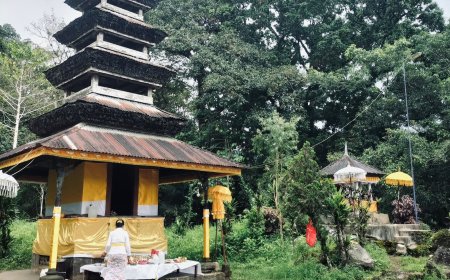
One of the works that quite stole the spotlight was the 3rd Place winner, Sekaa Teruna Eka Budhi Dharma from Banjar Karang Suwung with a piece titled "Tirta Selaka". The concept of this penjor was directly inspired by the history of Pura Kereban Langit (Open Sky Temple) in Sading Traditional Village. The name "Tirta Selaka" is derived from the holy spring in the temple, where "tirta" means water and "selaka" means silver.
Visually, this Penjor Tirta Selaka depicts purity and tranquility. The youth of Banjar Karang Suwung used natural materials such as ental leaves, simbar leaves, paper, and fabric with a dominance of silver-nuanced colors. The decorative shape was made circular and featured reringgitan (patterns) illustrating continuously flowing water. Additionally, there is a spout shape that symbolizes the source of the spring of life. This piece aims to invite viewers to feel a cool and peaceful atmosphere, similar to when undergoing the purification ritual (melukat) at Pura Kereban Langit.
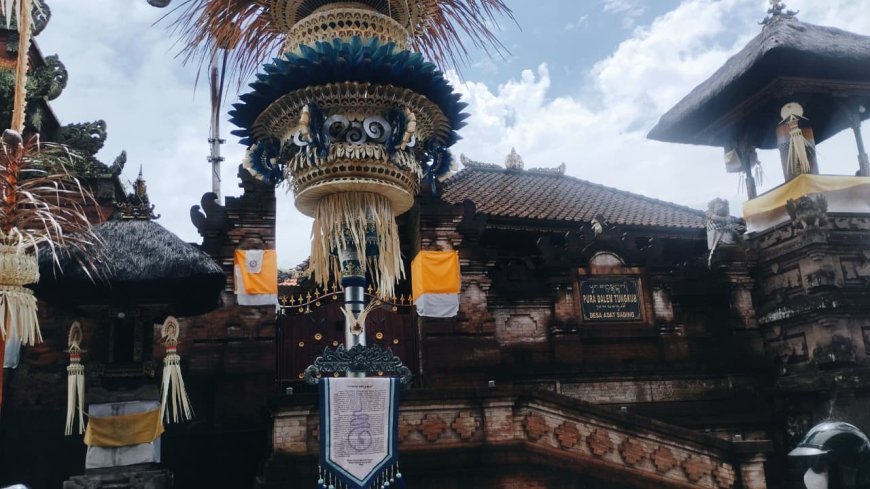 Tirta Sekala Penjor in front of Pura Dalem Tungkub (Photo Source: Personal Collection)
Besides the penjor competition, Sading Yowana Festival 2025 was also filled with various other positive activities. The series of events opened with environmental action, such as gotong royong (mutual cooperation) to clean the village, tree planting, and releasing fish seeds. Following that, various cultural competitions were held, starting from the Gebogan Competition with the Panca Rengga theme, the Ngelawar Competition serving the typical Jackfruit Lawar menu with pork, to a video content or Cultural Reels competition for young people who enjoy social media.
The committee also paid close attention to the aspects of village comfort and order. The chairman emphasized the importance of adjusting the installation of penjors to environmental conditions, especially concerning electrical wires. Through this festival, they supported the government's program in cable management so that the tradition of installing penjors could continue smoothly without disrupting public facilities. The hope was that the community could carry out their sacrifices (yadnya) comfortably, and the village would remain looking tidy.
The entire festival series will conclude with the removal of the penjors on November 30th, 2025. More than just a competition arena, Sading Yowana Festival 2025 has successfully become a positive platform for the younger generation. This event proved that the youth of Sading Traditional Village are capable of preserving ancestral culture in a creative and fun way. With activities like this, it is hoped that the sense of togetherness among the youth will become stronger and Sading Traditional Village will become more widely known for its cultural potential.