





































Sri Astasura Ratna Bumi Banten: The Last King of Bedahulu in the Shadow of Destruction (1337 AD)
Sri Astasura Ratna Bumi Banten was the last king of the Bedahulu Kingdom in the 14th century. He was known for his defiance in refusing to submit to Majapahit and his desire for Bali to remain independent without control from the Javanese kingdom. His defiance led the Majapahit to label him as an “evil and despicable” king, as mentioned in the Negarakertagama by Mpu Prapanca. Bedahulu faced challenges due to internal dynamics and external threats that weakened its political foundation. His leadership also played a significant role in the transition of Ancient Bali towards the broader Majapahit era.


Sri Astasura Ratna Bumi Banten ruled around 1337 CE in the Kingdom of Bedahulu, whose governmental center was located in the Pejeng–Tampaksiring area of Gianyar. His name appears in the Langgahan Inscription dated 1259 Saka (1337 CE) and the Gunung Panulisan Inscription. During his reign, he established a set of laws. These laws were composed in written form and engraved on bronze plates.
Although the situation at the time was becoming increasingly difficult, his leadership strongly reflected his determination to defend Bedahulu. Furthermore, the leadership of the last king of Bedahulu is regarded as a symbol of the preservation of Bali's ancient heritage. His reign was considered intelligent and wise, and he faithfully carried out religious ceremonies. He also showed great respect for Shaivite priests, Buddhist clergy, Mahabrahmana sages, village leaders, and central government officials. This demonstrates that he was not an authoritarian ruler, but rather a king who highly valued consultation, consensus, and religious principles.

AI Illustration Sri Astasura Ratna Bumi Banten Surrounded by Nobles (Source: Personal Collection)
However, behind all of this, Sri Astasura Ratna Bumi Banten faced significant challenges. Political instability frequently arose because the nobles and priests who were expected to support the kingdom often had differing interests. This situation weakened the political foundations of the kingdom. Although Bedahulu remained a respected cultural and spiritual center, these circumstances reflected a period of political transition.
In several Balinese manuscripts, Sri Astasura Ratna Bumi Banten is also known by various titles, such as Cri Tapolung, Cri Beda Muka, Cri Beda Murdi, or Dalem Bedahulu. These titles carry similar meanings; for example, Beda Muka, Beda Murdi, and Bedahulu can be interpreted as “the different head” or “the distinct leader,” referring to a perspective that differed from that of the central kingdom of Majapahit. Meanwhile, the title Cri Tapolung is interpreted as a powerful ascetic king, associated with the ideals of asceticism that he promoted in the Langgahan Inscription.
These various identities illustrate how ancient Balinese tradition viewed the king as both a religious and a political figure, embodying spiritual authority as well as temporal leadership.

AI Illustration of the Aerial View of the Bedahulu Temple Complex in Pejeng, Gianyar (Source: Personal Collection)
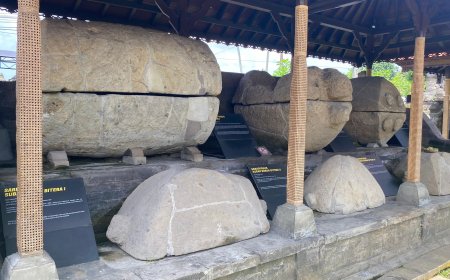
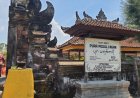
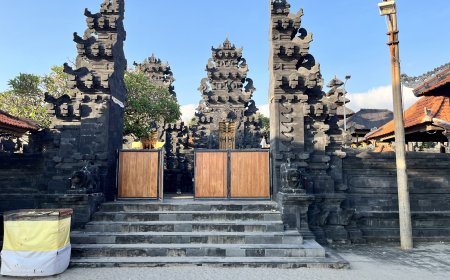
The Pejeng–Tampaksiring royal center played a strategic and sacred role in ancient Bali. Temples such as Pura Penataran Sasih stand as enduring evidence of the cultural and spiritual richness of the Bedahulu Kingdom, although the region’s hilly and valley-filled geography made political unification difficult. This situation shows that, despite Bedahulu’s strong religious and cultural heritage, its geographical conditions limited the kingdom’s ability to consolidate power amid internal political divisions. This fragility eventually opened the way for Majapahit to launch a major campaign against Bedahulu.

AI Illustration of Sri Astasura Ratna Bumi Banten Leading His Army (Source: Personal Collection)
Tensions reached their peak when Majapahit, under the command of Queen Tribhuwana Tunggadewi, dispatched Mahapatih Gajah Mada to invade Bali. As king, Sri Astasura Ratna Bumi Banten made great efforts to address the crisis. He prioritized diplomacy, sought to reconcile opposing factions, and strengthened his legitimacy through various religious ceremonies. In addition, he worked to preserve cultural symbols so that his people would continue to feel protected by the kingdom. However, these measures could only delay the further destruction that seemed increasingly inevitable. The first Majapahit invasion failed due to Bedahulu’s strong defenses, but during the second campaign in 1343 CE, Gajah Mada, assisted by Arya Damar and other Arya nobles, successfully conquered Bedahulu.

AI Illustration of Sri Astasura Ratna Bumi Banten Standing at the Gate of a Ruined Palace (Source: Personal Collection)
Often referred to as the "shadow of collapse," the reign of Sri Astasura Ratna Bumi Banten eventually reached its climax. The fall of the Kingdom of Bedahulu was not caused by a single factor, but rather by a combination of circumstances, including fragile internal politics and intense external pressures, particularly the growing threat posed by the Majapahit expedition. Under such conditions, the kingdom's ability to preserve its stability and continuity became increasingly limited.
The greatest legacy of Sri Astasura Ratna Bumi Banten's leadership is the reminder that unity and harmony remain the essential foundations of a kingdom's resilience, surpassing even military strength alone.
References
Alit, DM (2020). Strategi politik Majapahit menaklukan Kerajaan Bali 1352–1380 M. Ilmu Sosial: Jurnal Pendidikan Ilmu Sosial, 9 (1), 45–56. https://ojs.mahadewa.ac.id/index.php/socialstudies/article/view/585
Anak Agung Gede Raka. (2020). Pejeng-Bedulu, pusat kerajaan zaman Bali Kuna. Balai Pelestarian Cagar Budaya Bali, Kementerian Pendidikan dan Kebudayaan. https://kebudayaan.kemdikbud.go.id/bpcbbali/pejeng-bedulu-pusat-kerajaan-zaman-bali-kuna-oleh-anak-agung-gede-raka-universitas-warmadewa/
Armadira, EP, Susanto, H., & Imanita, M. (2019). Penaklukan Bali oleh Kerajaan Majapahit tahun 1343 M. PESAGI (Jurnal Pendidikan dan Penelitian Sejarah), 7 (2), 1–12. https://jurnal.fkip.unila.ac.id/index.php/PES/article/view/19730
Jaya, IBS (2018). Kronologi pemerintahan raja-raja Bali abad XIII–XIV. Gudang Universitas Udayana. https://repositori.unud.ac.id/protected/storage/upload/repositori/ID3_19741004200212100121081404813kronologi-raja-raja-bali-abad-xiii-xiv-sejak-penaklukan-gajah-mada-(validasi)-sip.pdf