






























Crossing the Ocean: Traces of Ancient Balinese Diplomacy with Indian Ports (900–1200 AD)
The close relationship between ancient Bali and India during the 9th to 12th centuries AD was established through maritime trade routes. This interaction not only involved the exchange of goods but also strengthened the political legitimacy of Balinese kings, while bringing significant influences in culture, religion, and architecture. Evidence such as the Blanjong Inscription demonstrates Bali’s connection to international networks. These traces of diplomacy laid the foundation of a unique Balinese civilization that remains evident to this day.

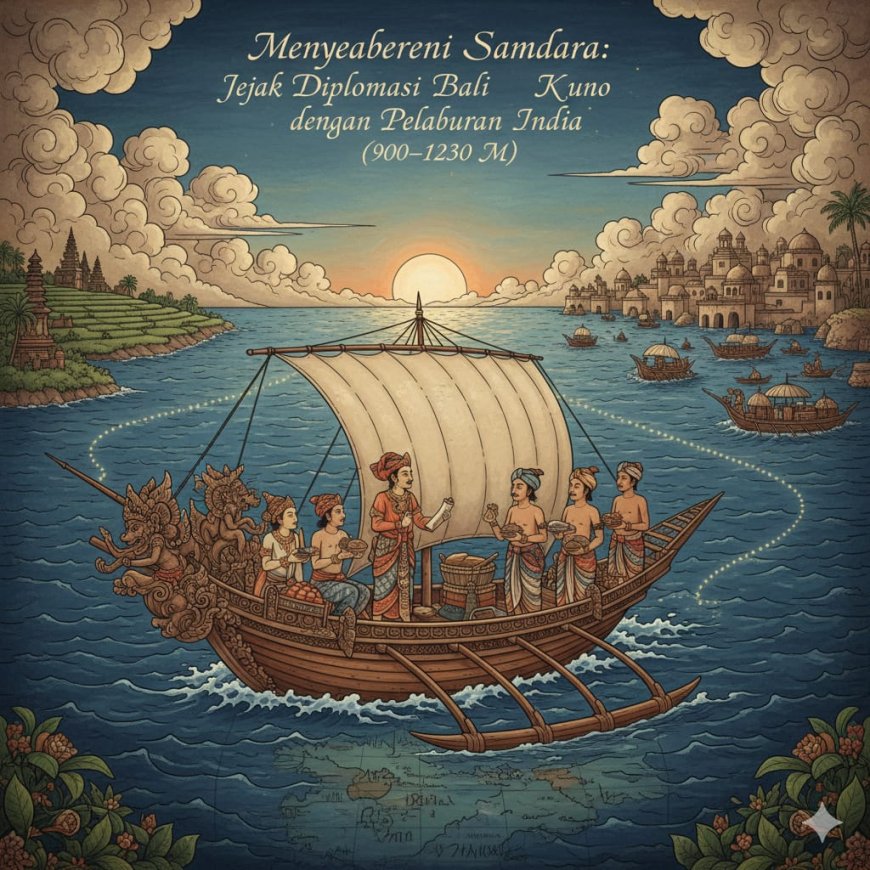
Bali, which is now known as a world tourism center, had already been part of extensive trade networks from the 9th to the 12th century AD and maintained close relations with India, especially through maritime trade routes. These relations not only reflected economic activity but also marked the beginning of political cooperation, diplomacy, and cultural exchanges that laid the foundation of Balinese civilization up to the present day.
Geographically, Bali’s location was very strategic, situated along the trade routes between South Asia and Southeast Asia, making it an important stopover for international merchants. Key ports in Bali, such as Sembiran and Julah on the northern coast, as well as Sanur on the southern coast, played crucial roles as meeting points between traders from the Nusantara and India.
Several important factors encouraged the relations between ancient Bali and India. From an economic and trade perspective, India offered metals, textiles, and jewelry that were highly valued by Balinese society. Politically, Balinese kings took advantage of ties with India to strengthen the legitimacy of their rule. One example was the use of Sanskrit in inscriptions as a symbol of authority and connection with a major cultural center in South Asia. From a cultural and religious perspective, India at that time was the center of Hindu-Buddhist traditions, which greatly influenced Bali. These teachings entered Bali through traders and priests and were then blended with local traditions. From this process emerged Bali’s unique spiritual identity, combining Indian influences with indigenous culture.
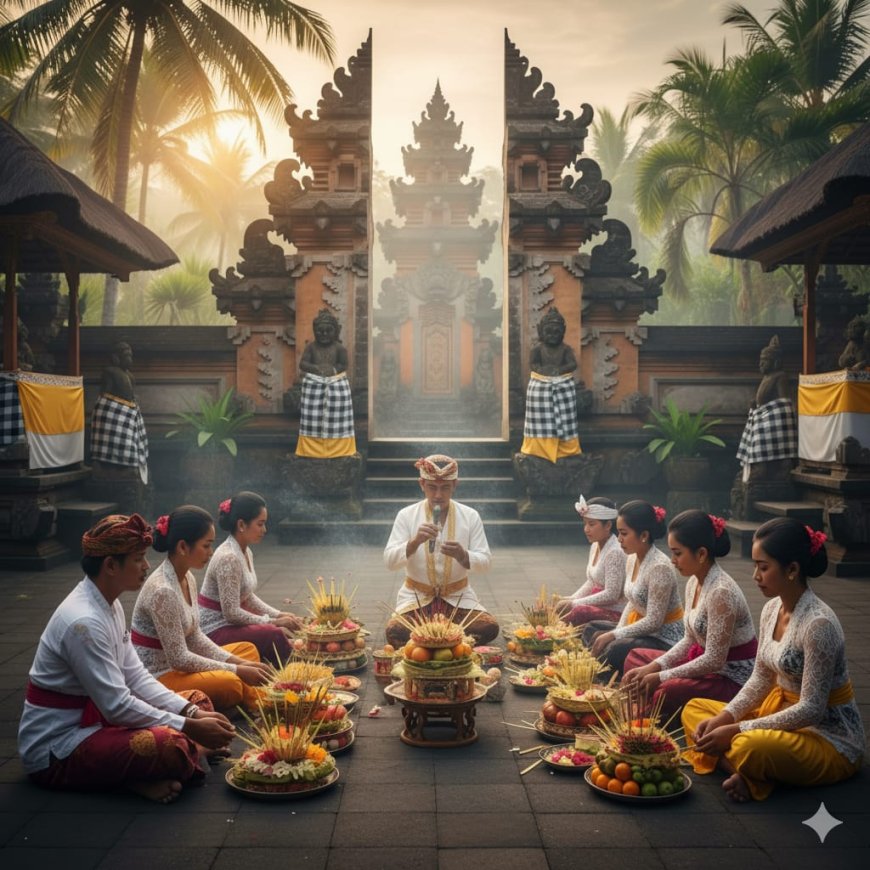
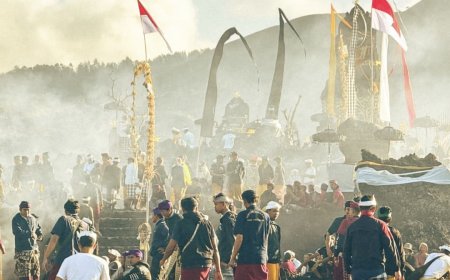
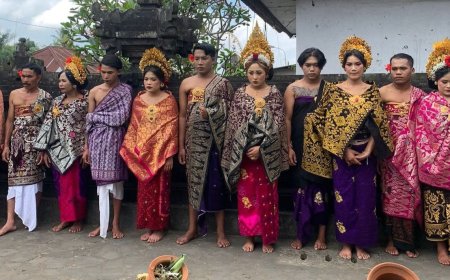
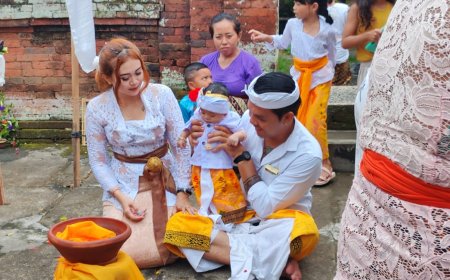
Religious ceremony in Bali. AI Illustration (Source: Private Collection)
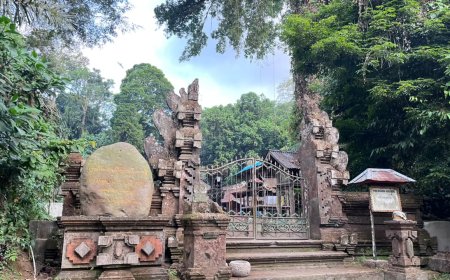
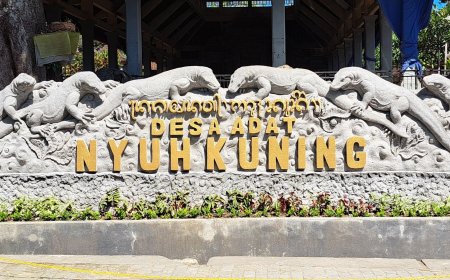
These connections were not only passed down through oral tradition but were also proven through historical remains. One of the clearest pieces of evidence of ancient Bali’s ties with India is the Blanjong Inscription (914 AD) in Sanur. This inscription is written in Sanskrit using the Pranagari script from India. It demonstrates that ancient Bali was already connected to the outside world and actively engaged in international diplomacy of its time. The relationship went beyond the exchange of goods and extended deeply into the spiritual realm.

The Blanjong Inscription as evidence of ancient Bali's diplomatic relations with the outside world. AI Illustration (Source: Private Collection)
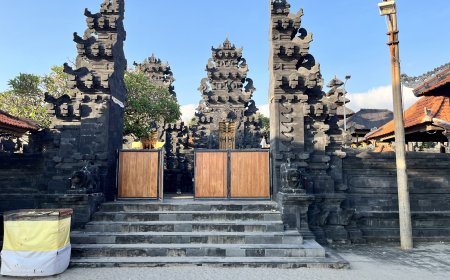
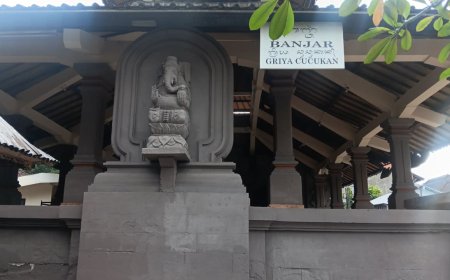
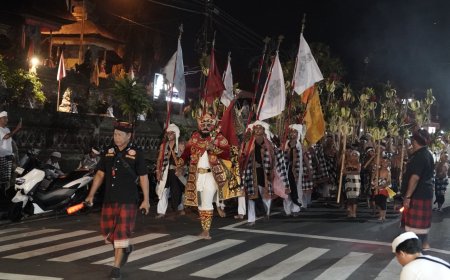
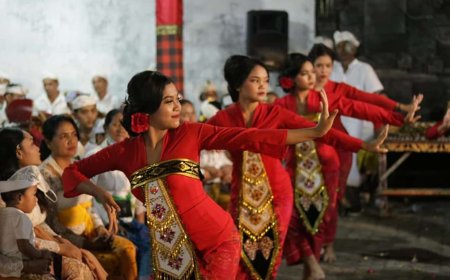
Beyond trade, India’s influence was deeply felt in Bali’s cultural and religious life. Some important traces include: Language and Script — the use of Sanskrit in Balinese inscriptions shows Indian influence on literacy. Architecture and Art — Balinese temples and carvings display a fusion of local and Indian styles. Calendar System — Bali adopted the Saka calendar, originating from India. Religious Traditions — Balinese ceremonies were heavily inspired by Hindu and Buddhist practices from India, though adapted to local customs. Hinduism and Buddhism in Bali thus bear strong traces of India, both in doctrine and in rituals that were localized.

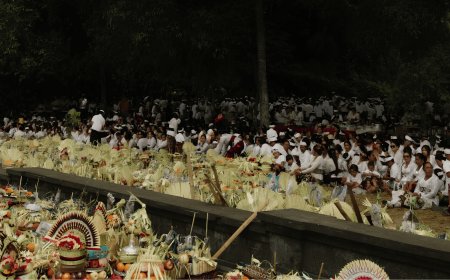
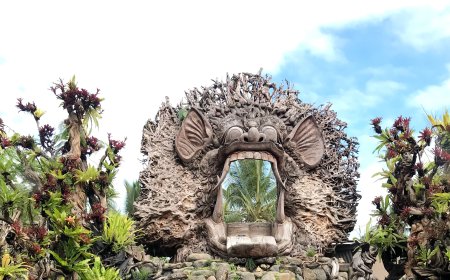
Temple architecture and carvings that developed in Bali. AI Illustration (Source: Private Collection)
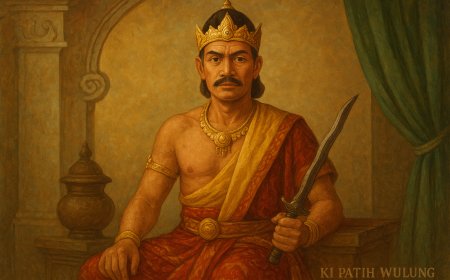
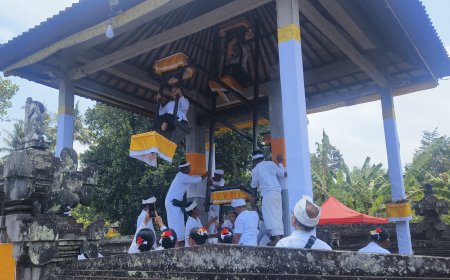
On the Balinese side, relations with India during this period involved rulers from the Warmadewa Dynasty. The most prominent king recorded in the Blanjong Inscription was King Sri Kesari Warmadewa. On the Indian side, the interactions mentioned in the inscription involved merchants, priests, and groups of people from the eastern coastal region of India, such as Odisha, and from the southern coastal region, Tamil Nadu. Balinese rulers played a vital role in ensuring the security of ports and trade routes.
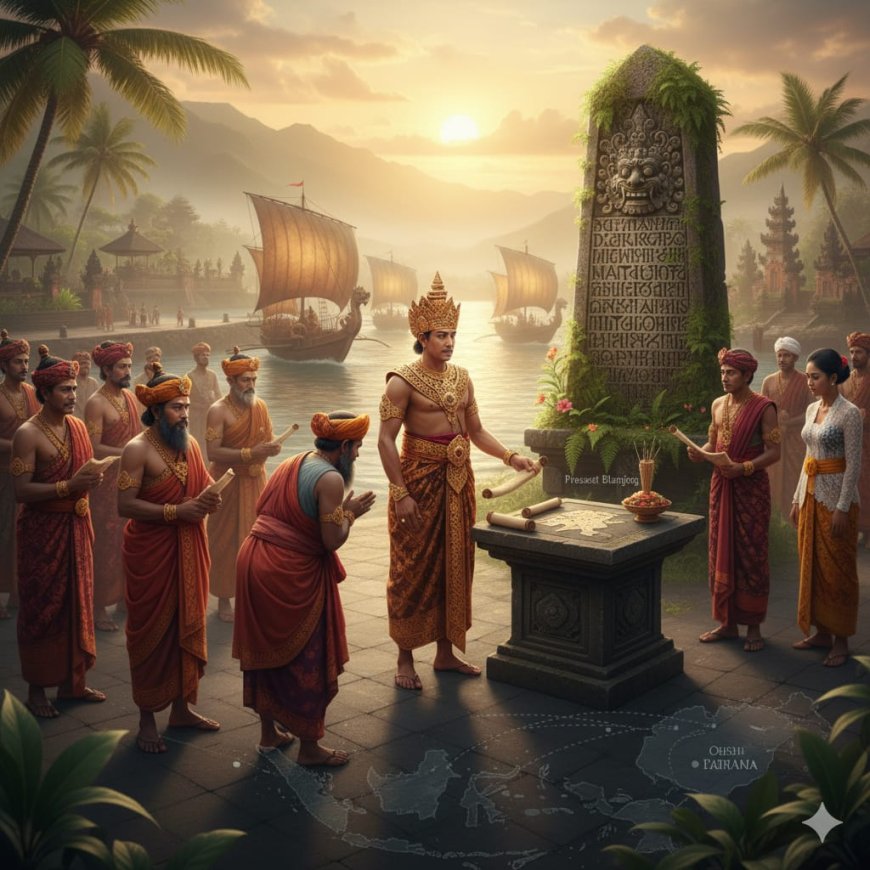
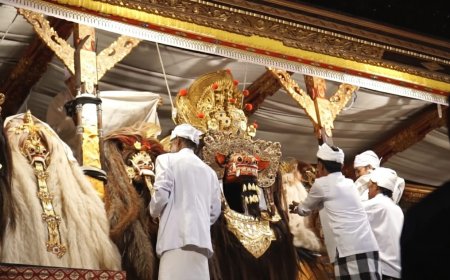
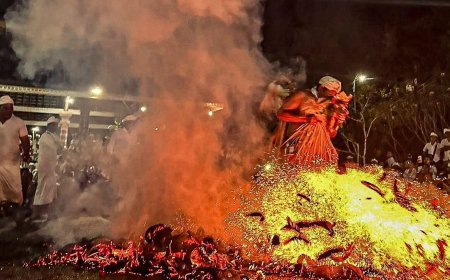
The interaction of King Sri Kesari Warmadewa with merchants, priests, and a group of people from India. AI Illustration (Source: Private Collection).
The impact of these relations was highly significant. First, Bali became increasingly connected to international trade networks. Second, Indian influences enriched Balinese culture, which was reinterpreted within the local context to form a distinct Balinese identity. Third, the legitimacy of ancient Balinese kings was further strengthened by their wide-reaching connections, extending even to India. The period from 900 to 1200 AD can be regarded as the early phase of Bali’s globalization. Although globalization at that time did not occur through modern technology, maritime routes served as the main channels enabling economic, political, cultural, and religious interactions across regions. The Bali–India connection was not merely about the exchange of trade goods, but also of ideas, values, and political legitimacy. Out of these interactions arose a unique Balinese civilization: a fusion of India’s great cultural legacy and Bali’s indigenous traditions. This identity remains visible today, making Bali one of the world’s cultural centers with deep historical roots.
- Ardika, I. Wayan & Bellwood, Peter, Sembiran: the beginnings of Indian contact with Bali, 1991
- Lansing, J. Stephen, A. J. Redd, T. M. Karafet, Joseph C. Watkins, I. W. Ardika, S. P. K. Surata, J. S. Schoenfelder, M. Campbell, A. M. Merriwether & M. F. Hammer, An Indian trader in ancient Bali?, 2004
- Ardika, I. Wayan, Sembiran and the first Indian contacts with Bali: an update, 1997
- Budiartini, N. P., Arta, K. S., & Purnawati, D. M. O. Pura Blanjong di Desa Sanur Kauh. 2020. Widya Winayata: Jurnal Pendidikan Sejarah, 8(3), 24–30.