















Mpu Gnijaya: His Role in Shaping the Identity of the Kawitan Pasek Lineage (11th Century)


The identity of the Kawitan Pasek in Bali cannot be separated from the central figure of Mpu Gnijaya, whose influence extends far beyond biological lineage. He stands as a spiritual, genealogical, and cultural foundation upon which the identity of the Pasek people continues to rest today. Mpu Gnijaya is not merely a historical figure; he represents a unifying symbol of identity, collective consciousness, and spiritual heritage for thousands of his descendants spread across the island of Bali.
The Ancestral Lineage of Mpu Gnijaya
The story of Mpu Gnijaya begins with a noble and ancient lineage. He was a descendant of Mpu Bhajrasattwa, through his son Mpu Tanuhun, who became the progenitor of the five sacred sages known as the Panca Tirtha or Panca Pandita. From these five holy figures emerged a spiritual bloodline that carried forward a divine mission in shaping Bali’s religious, cultural, and philosophical traditions.
Mpu Gnijaya’s father, Sang Brahmana Pandita, was the eldest son among the Panca Tirtha. As the firstborn, he bore both spiritual and social responsibilities to preserve and continue the sacred heritage of his ancestors. Thus, Mpu Gnijaya’s lineage held not only biological legitimacy but also a profound religious authority that was deeply revered by generations to come.
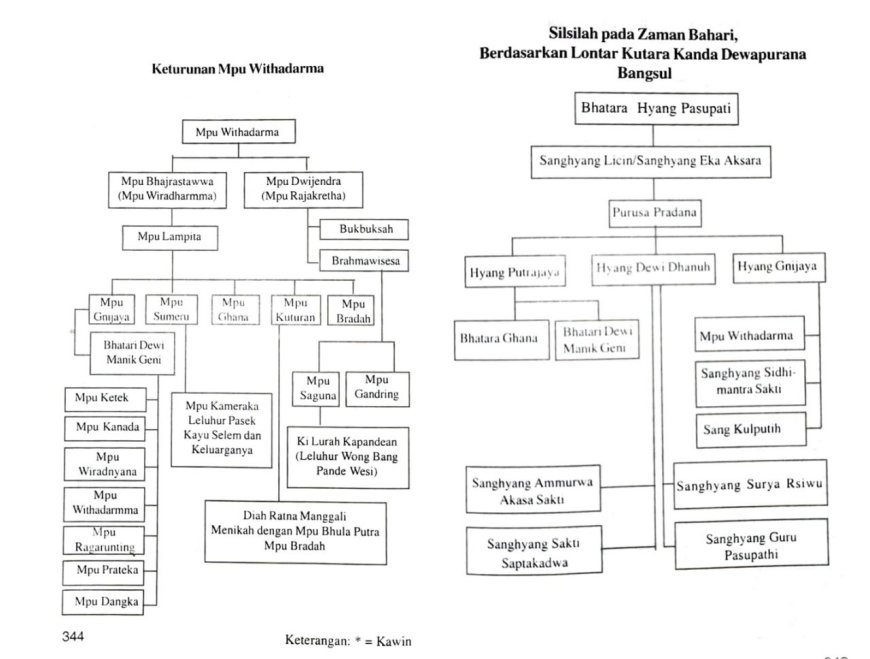
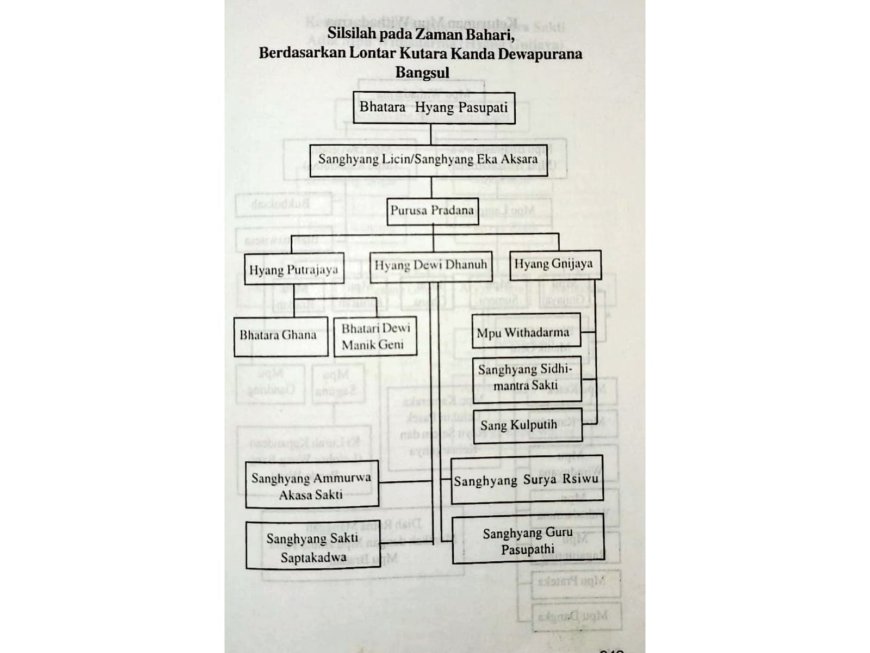
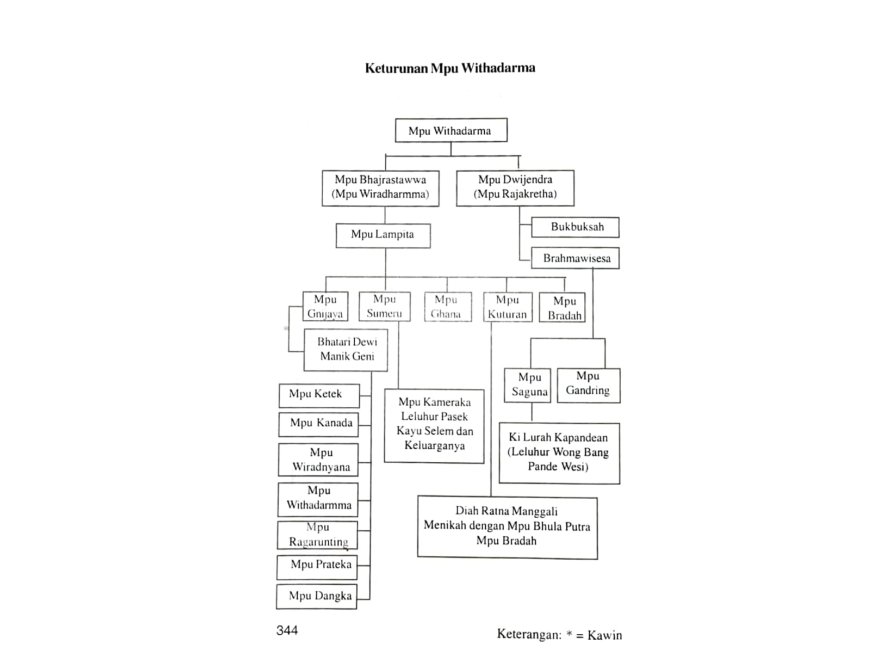
Genealogy of Mpu Withadarma and the Lineage Recorded in Lontar Kutara Kanda (source: Babad Pasek Book)
According to the Babad Pasek manuscripts, two major genealogical sources describe Mpu Gnijaya’s lineage.
The first, the “Descendants of Mpu Withadarma,” traces its origin to Mpu Withadarma, who had two sons Mpu Bhirastawwa (or Mpu Wiradharma) and Mpu Dwijendra (or Mpu Rajakretha). The descendants of Mpu Bhirastawwa included notable sages such as Mpu Lampita, Mpu Gnijaya, Mpu Sumecu, Mpu Ghana, and Bhatari Dewi Manik Geni, followed by generations like Mpu Ketek, Mpu Kanada, Mpu Wiradhyana, Mpu Withadarma, Mpu Ragatunting, Mpu Prateka, and Mpu Dangka.
Meanwhile, the line of Mpu Dwijendra gave rise to Bukbuksah, Brahmawisesa, Mpu Kuturan, Mpu Bradah, Mpu Saguna, and Mpu Gandring. The manuscripts also record marriages linking prominent figures, such as Diah Ratna Manggali and Mpu Bhula Putra Mpu Bradah, and identify Mpu Kameraka as the ancestor of the Pasek Kayu Selen family and Ki Lurah Kapandean as the forefather of the Wong Bang Pande Wesi lineage.
The second genealogy, found in the “Kutara Kanda Dewapurana Bangsul”, begins with Bhatara Hyang Pasupati, followed by Sanghyang Licin or Sanghyang Eka Aksara, and Purusa Pradana. Their descendants include Hyang Putrajava, Hyang Dewi Dhanuh, and Hyang Gnuyaja, illustrating the divine continuity between Bhatara Ghana and Bhatari Dewi Manik Geni. This lineage also connects Mpu Withadarma to Sanghyang Sidhimantra Sakti and Sang Kulputih, extending to Sanghyang Surya Rsiwu and Sanghyang Guru Pasupathi and later to Sanghyang Ammurwa Akasa Sakti and Sanghyang Sakti Saptakadwa.
The Spiritual Bridge Between Java and Bali
The lineage of Mpu Gnijaya represents a symbolic meeting point between the sacred traditions of Java and Bali. This connection was forged through the marriage of his father, Sang Brahmana Pandita, and Dewi Manik Gni, daughter of Bhatara Hyang Mahadewa of Bali. This union was not merely a familial alliance but a spiritual convergence of two great civilizations — Java, as the cradle of Hindu-Buddhist wisdom, and Bali, as the land where those teachings found their purest expression.

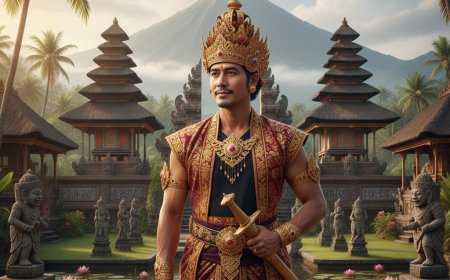
Illustration of Sang Brahma Pandita after undergoing the Dwijati ceremony and receiving the title Mpu Gnijaya (source: private collection)
After undergoing an advanced ritual of spiritual purification known as pudgala or dwijati, Sang Brahmana Pandita attained the title Mpu Gnijaya, a name reflecting his spiritual enlightenment and his status as a revered resi (sage). From him would emerge a lineage of profound influence, shaping the spiritual and cultural identity of Bali for generations.
Sapta Pandita: The Sacred Heirs of Mpu Gnijaya
Mpu Gnijaya’s legacy as the progenitor of the Pasek lineage was realized through his seven sons, known as the Sapta Pandita or Sapta Rsi. The eldest, Mpu Ketek, became the source of a vast and influential bloodline. His descendants, including Sanghyang Pemacekan and Arya Kepasekan, became the roots of the many Pasek branches that later spread from Pasuruhan and Majapahit back to Bali. The second, Mpu Kananda, fathered Sang Kula Dewa (later known as Mpu Sweta Wijaya), a line dedicated to priestly and ritual service. The third, Mpu Wiradnyana, had one son, Mpu Wiranatha (or Mpu Purwanatha), who maintained connections with royal courts in Java. The fourth, Mpu Withadharma, continued his lineage through Mpu Wiradharma, who settled in Pasuruhan a family that would later play a crucial role in Bali’s religious and political landscape. The fifth, Mpu Ragarunting, gave rise to Mpu Wira Runting (Mpu Paramadaksa), whose descendants migrated between Pasuruhan and Majapahit before returning to Bali. The sixth, Mpu Prateka, fathered Mpu Pratekajnana, and his lineage also journeyed through Java before returning to Bali. Finally, the seventh, Mpu Dangka, passed down his wisdom to Mpu Wira Dangkya, whose grandson, Sang Wira Dangka, eventually settled in Bali.

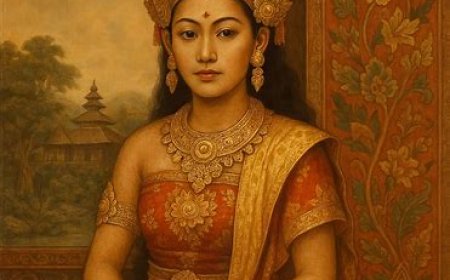
Illustration of Mpu Gnijaya with His Seven Sons (Sang Sanak Sapta Rsi) (source: private collection)
These seven sages, the Sapta Pandita, carried on their father’s spiritual teachings and established various lineages that became the core of the Pasek identity. The term “Pasek” itself traces back to Arya Kapasekan, the son of Mpu Ketek marking the genealogical and symbolic origin of the Kawitan Pasek.
The Meaning of “Pasek” in Balinese History
Originally, Pasek was not a family name but a functional title. Among the ancient Balinese (Bali Aga), the term referred to leaders or individuals with significant authority in governance or society. Over time, this title transformed into a hereditary identity, carried by the descendants of the Sapta Rsi who continued to serve as spiritual and community leaders in Bali. Even after losing formal positions, they retained the honorific Ki Pasek, and other influential groups such as the Pasek Pulasari later adopted the title as well.
Etymologically, pasek is believed to derive from an old Austronesian word related to pasak in modern Indonesian, meaning a “peg” or “stake” something that holds and strengthens. Symbolically, it refers to “the stabilizer of the realm,” representing those who uphold moral and spiritual balance within society. Thus, the name Pasek embodies the role of its ancestors as steadfast pillars of Bali’s cultural and religious order.
The Spiritual Foundation of the Pasek Lineage
Beyond the inheritance of blood, Mpu Gnijaya and his sons bestowed a profound spiritual legacy that became the core of the Pasek identity. Their teachings, derived from the divine revelation of Bhatara Hyang Paçupathi, emphasize the importance of living by sacred principles, maintaining purity of thought, word, and deed through Trikaya Parisudha, and honoring one’s ancestors as eternal sources of strength and guidance.
Equally important is the call to preserve a spiritual bond with the sacred land of Bali, regarded as the dwelling place of divine balance among humans, nature, and the gods. This doctrine was later reaffirmed by the Sapta Pandita, who taught that devotion to ritual, respect for tradition, and sincerity in worship would bring prosperity and harmony while neglect and impiety would lead to moral and spiritual decline. Thus, the teachings of Mpu Gnijaya are not mere relics of history, but living principles that continue to guide the Pasek people in maintaining purity, harmony, and cultural integrity throughout the ages.
The legacy of Mpu Gnijaya extends far beyond genealogical ties. He is a bridge between past and present, between Java and Bali, between ancestors and descendants. As a founder, teacher, and spiritual forebear, Mpu Gnijaya occupies a timeless position at the heart of the Kawitan Pasek, uniting faith, culture, and heritage into a single, enduring identity.
Subandi, Jro Mangku Gde Ketut. (2003). Babad Pasek Maha Gotra Sanak Sapta Rsi. PT Pustaka Manikgeni, Denpasar.