










Economic and Trade System in Ancient Bali Era
During the Ancient Bali era, economic and trade activities were rapidly developing, marked by the presence of markets, the use of currency, and the growth of trade commodities ranging from agricultural products to handicrafts. All of this was also inseparable from the geopolitical conditions of Ancient Bali, which supported the management of resources in the region at that time, thereby strengthening Bali's role in the trade network.

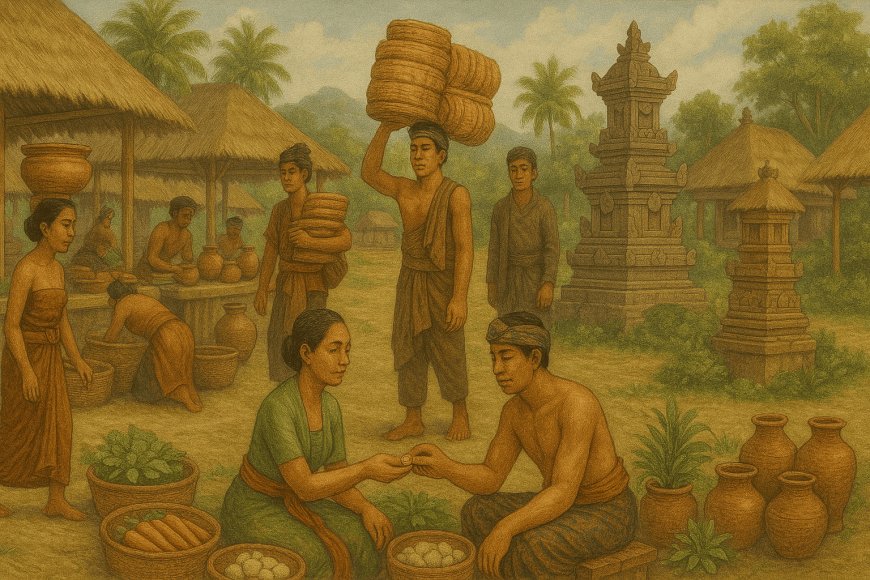
Economic activities are one of the ways humans fulfill their needs, and trade became an important activity that supported this. During the Ancient Bali era, specifically around the IX to XI centuries AD, trade practices had already shown rapid development. This activity not only took place within the island but also extended to other regions in the Nusantara, and even expanded to Southeast Asia, China, and India.
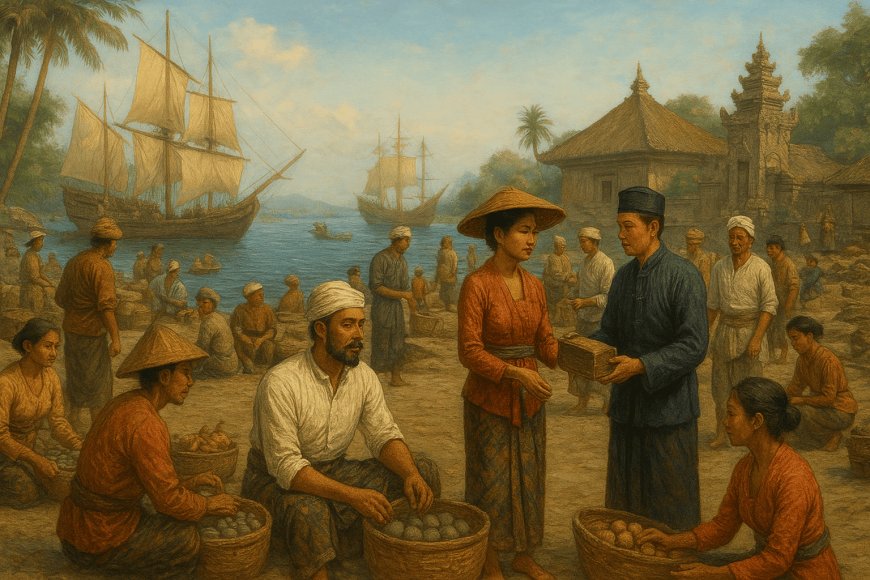
Trading atmosphere at the port, AI Illustration
(Source: Personal Collection)
In the life of Ancient Balinese society, trade held an important position and even had specific terms. The Ancient Balinese people referred to the marketplace with the terms pèkèn, tèntèn, or pasar, while the special day for gathering and trading was known as rgas pasar. On that day, people from various regions came bringing agricultural products and daily necessities to be traded. Interestingly, rgas pasar did not take place randomly, but was divided into three main cycles called tri wara. Each had its own name and special designation: Wijayakranta known as pasah, Wijayamanggala known as bètèng, and Wijayapura known as kajèng. This division was not without reason,
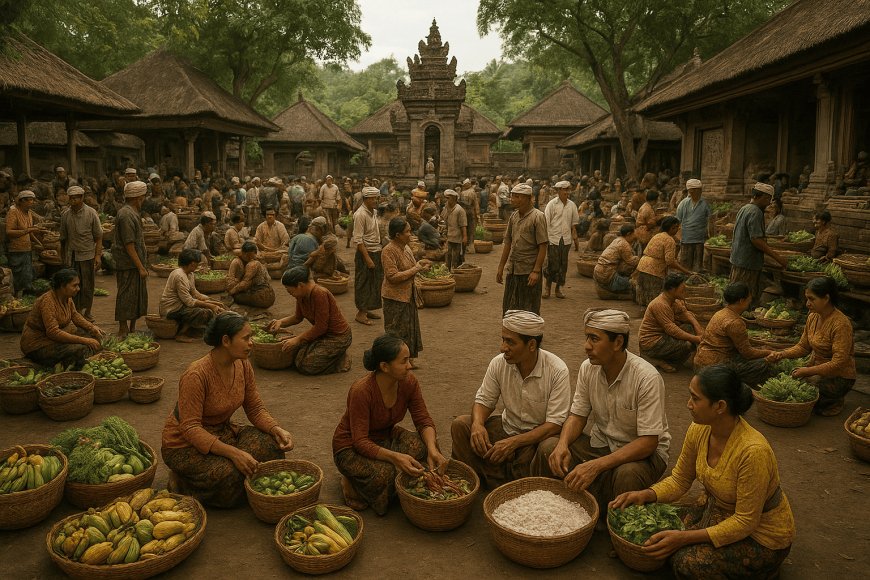
A crowded market atmosphere, AI Illustration
(Source: Personal Collection)
Along with the development of trading activities, the barter system that was initially used by the Ancient Balinese society began to be considered less practical. This encouraged the use of currency around the 9th century AD. The types of currency circulating at that time included mâsu (mas suwarna), mâ (macaka), ku (kupang), pi (piling), sâ (saga). These currencies were not only used in market transactions but also to pay taxes and fines. This shows that the currency had become the official medium of exchange issued by the king. The value comparison of these currencies was 1 suwarna = 1 tahil = 16 mâ = 64 kupang. With the existence of this currency, trading activities became more organized and allowed the community to widely trade various types of commodities.
The commodities traded during the Ancient Balinese period were very diverse. For daily needs, they generally included agricultural and plantation products, such as oil, taro, candlenut, coconut, and others. However, there were also certain restrictions in trading some goods. For example, cotton that could only be traded by the inhabitants of Kintamani, who were granted special autonomy to sell it to the northern coastal areas of Bali.
In addition to daily needs, trade also included handicraft goods. The artisan groups in Ancient Bali were divided into several types, including pande (metal craftsmen) as well as groups of clothing tailors, weavers, dyers, and pattern makers known as mangjahit kajang. Metal crafts were more dominantly used in religious offering ceremonies, while other handicrafts were more closely related to daily clothing needs.
Not only that, the Ancient Balinese society also traded livestock. However, these animals were not for consumption, but rather played a role in supporting daily life. Buffaloes were used for agriculture, horses for transportation, and dogs for hunting.
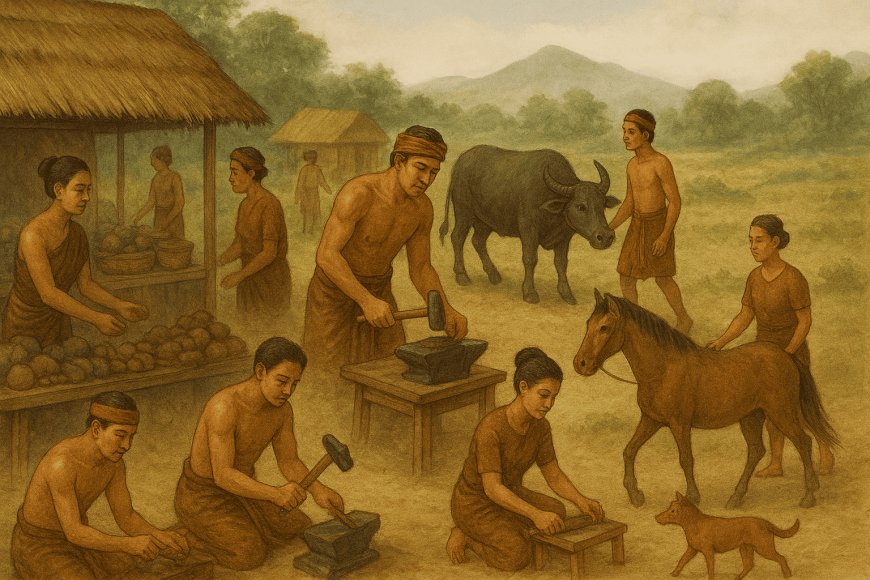
Activities of Ancient Balinese Society, AI Illustration
(Source: Personal Collection)
To facilitate the distribution of various commodities, means of transportation played a very important role. Transportation in ancient Bali can be distinguished into three types, namely local, interregional, and inter-island. In local trade, male traders usually used pikulan, while female traders relied on suhunan. For interregional trade, especially between North Bali and South Bali, horses were often used because they could cover long distances and cross hilly areas with ups and downs. As for inter-island trade, the people of ancient Bali utilized various types of traditional boats and ships, such as lancang, jong, bahitra, talaka, and jukung. The presence of these means of transportation not only facilitated the mobility of goods but also opened up wider channels of interaction, connecting Bali with major trade centers elsewhere in the archipelago and abroad, thereby strengthening Bali’s role in the trade network.
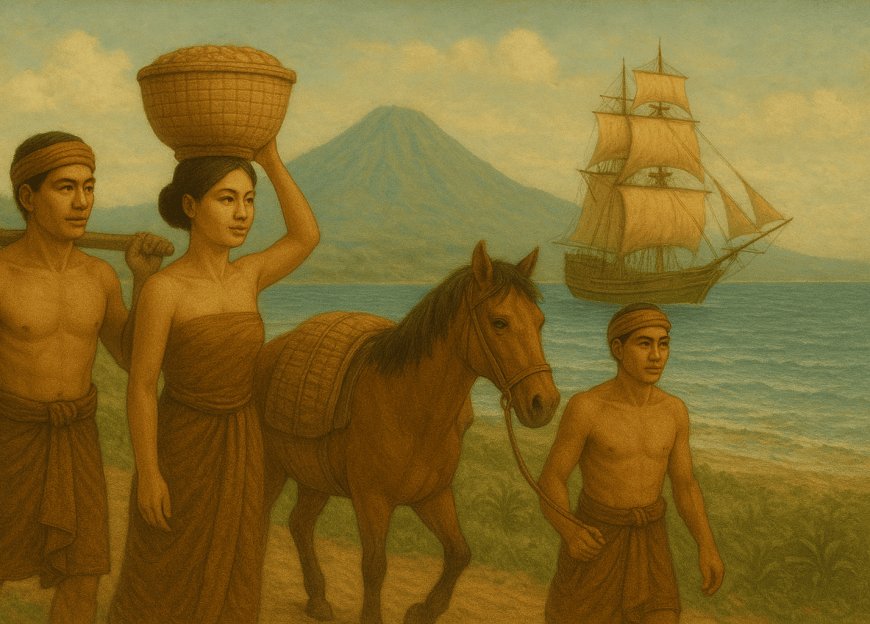
Ancient Balinese Transportation, AI Illustration
(Source: Private Collection)
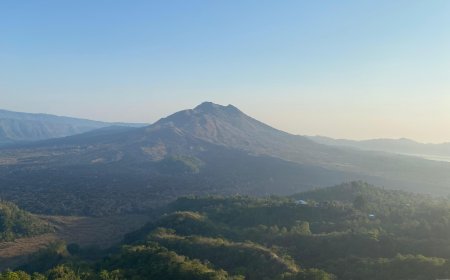
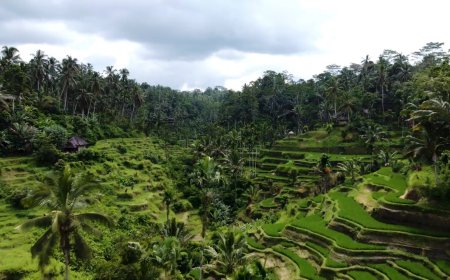
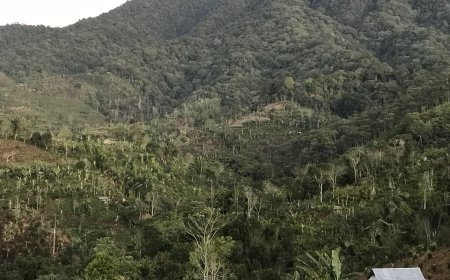
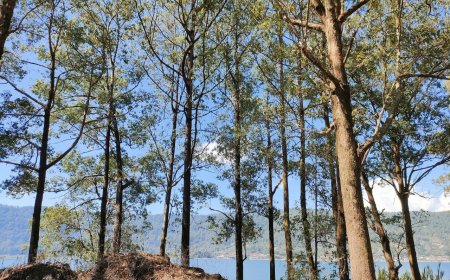
All of this was also inseparable from the geopolitics of Ancient Bali in managing the economy. At that time, there was an economic zone division which was split into two, namely the production zone and distribution zone, determined based on the geographical conditions of the region. Inland areas, such as the Kintamani Highlands and the surrounding areas of Lake Tamblingan, functioned as production centers because of their fertile land that could support the cultivation of various crops as trade commodities. The government also implemented special policies, such as granting autonomy rights to the Kintamani community to trade cotton as far as the northern coast of Bali. This policy aimed to maximize the natural potential of the region without causing direct competition with other areas.
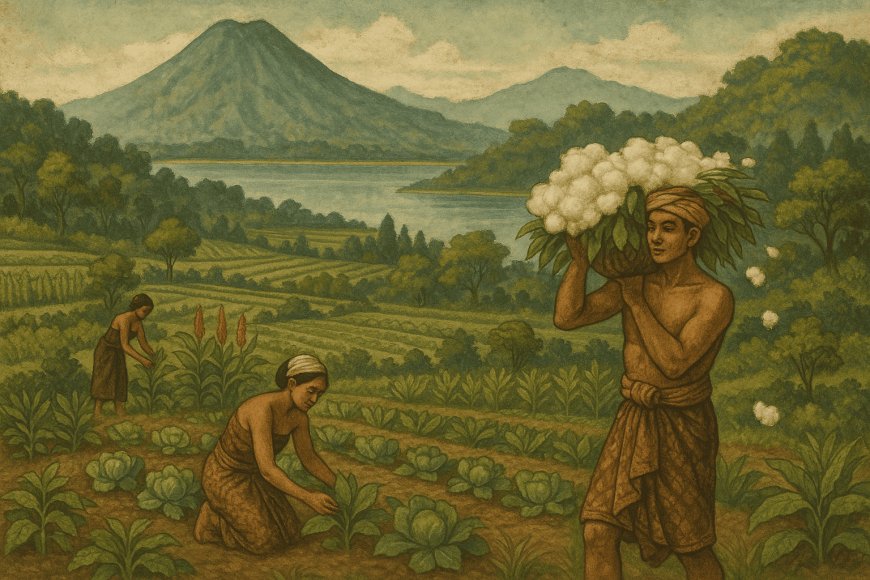
Balinese society engaged in farming, AI Illustration
(Source: Personal Collection)
Meanwhile, the distribution zone was located on the north coast of Bali, which became the center of distribution and marketing of various commodities, especially agricultural products and natural resources originating from the production zone in the hinterlands. The north coast of Bali had even been known as an important trading area since the beginning of the Common Era. In this region, merchants who docked were required to pay taxes. The purpose was to maintain the continuity of the kingdom’s economy.
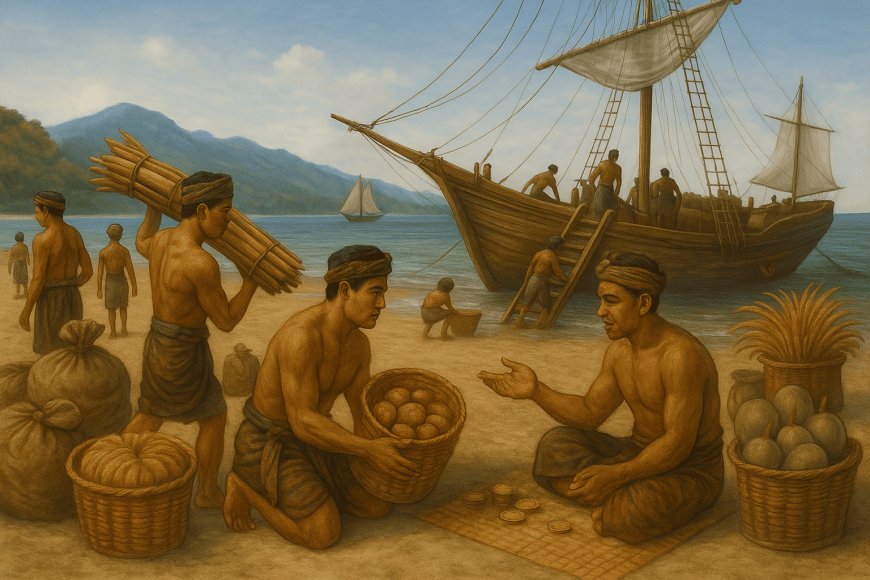
Trading activities on the coastline,
AI Illustration (Source: Personal Collection)
The economic and trade system in Ancient Bali shows that the community already had well-organized governance in meeting their needs. From the barter system that developed into the use of currency, to the division of production and distribution zones, all of this reflected the existence of clear regulations and economic mechanisms. Trading activities that covered the scope of local, interregional, and inter-island trade, supported by transportation facilities, also demonstrated how important trade was for the social and cultural life of Ancient Balinese society.
References:
Marzuki, I. W. (2010). Markets in Ancient Bali during the 9th–11th centuries AD (An epigraphic study). Balai Arkeologi Banjarmasin.
Suarbhawa, I. G. M. (2010). Trade in Ancient Bali: Based on inscriptional sources. Balai Arkeologi Bali.
Kamandalu, S. G. B. (2025). Geopolitics in Ancient Bali: Inland and coastal trade activities based on inscriptional sources. Sambhāṣaṇa.