




















From Lontar to Social Reality: Mpu Kuturan and the Transformation of Balinese Culture
This article explains how the legacy of Mpu Kuturan, through lontar manuscripts, temples, and awig-awig (customary regulations) shaped the Balinese customary system that remains alive to this day. The transformation of tradition demonstrates its ability to adapt to changing times without losing its sacred values.


Balinese teachings and cultural heritage have been greatly influenced by a prominent figure of t11th century, Mpu Kuturan. He is known as the one who formulated the foundations of Balinese tradition, unified various religious sects, and organized the social system to ensure harmony within society. This rhe ole made Mpu Kuturan not only a spiritual figure but also a social architect who laid the foundations of Balinese culture.
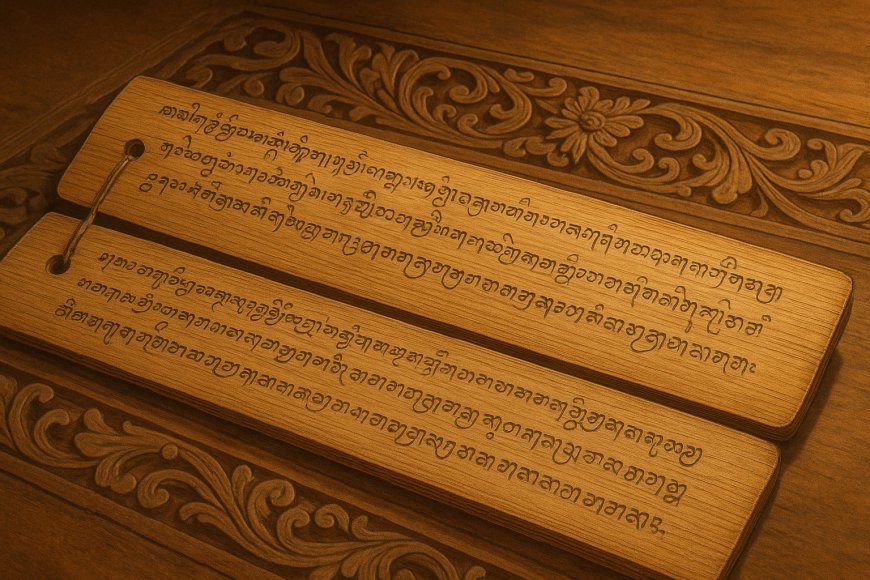
An ancient lontar inscribed in Balinese script as a legacy of Mpu Kuturan. (Source: Personal Collection)
One of the most important legacies from the era of Mpu Kuturan is the lontar manuscripts. These manuscripts, written in Balinese script, contain teachings on ceremonies, village regulations, and customary law. The lontar
serves as a guideline for life, as it sets forth rules governing the relationship between humans and God, fellow humans, and nature. Modern efforts such as digitization of lontar further strengthen its existence as an invaluable intangible heritage.

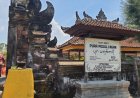
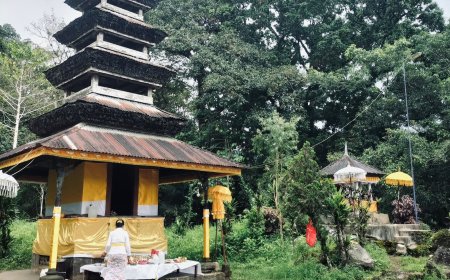
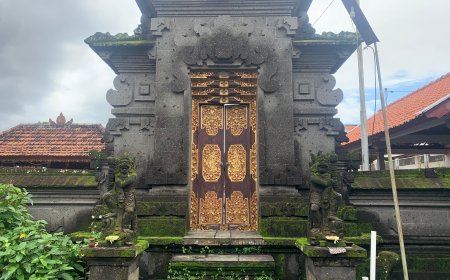
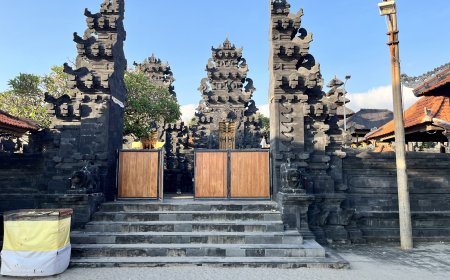
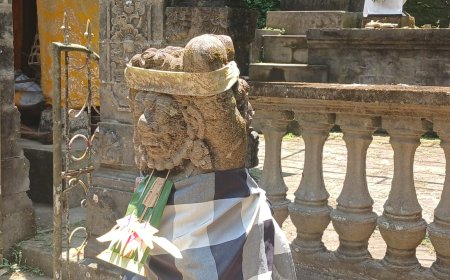
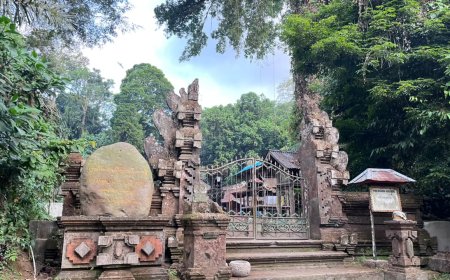
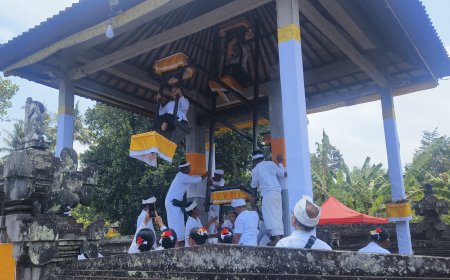
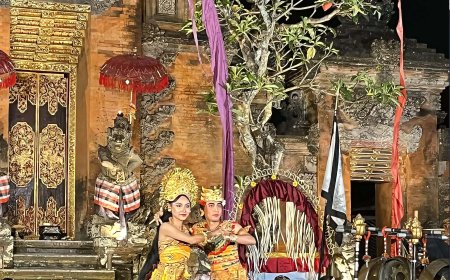
Pura Kahyangan Tiga as the spiritual center of the Balinese traditional village. (Source: Personal Collection)
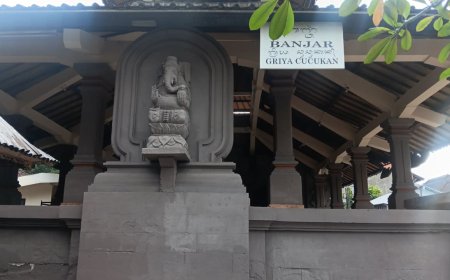
The teachings formulated by Mpu Kuturan were then realized in the structure of the Balinese traditional village, especially through the concept of Pura Kahyangan Tiga. Pura Desa, Pura Puseh, and Pura Dalem serve as the spiritual and social centers, ensuring the balance of parhyangan (human–God relationship), pawongan (human–human relationship), and palemahan (human–nature relationship). These three temples exist in almost every traditional village in Bali, serving as living proof of how the teachings from lontar manuscripts were manifested in spatial arrangements and community life.
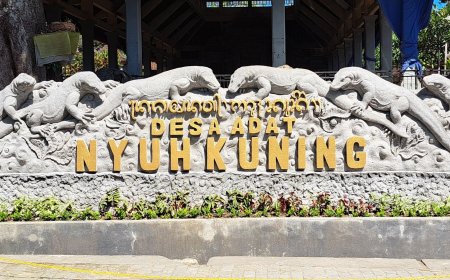
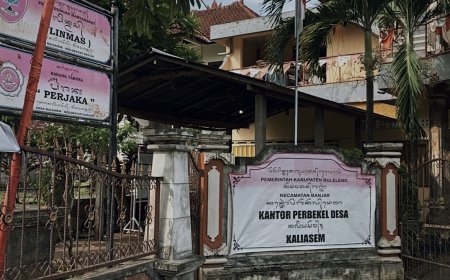
In addition to temples, the written rules known as awig-awig also became an important medium of customary transformation. Originally sourced from lontar manuscripts, these awig-awig are now formally legalized at the village level and even recorded in local government databases. They regulate various aspects, from village spatial planning, ritual practices, to social sanctions. In this way, the values inherited through lontar continue to live on and remain relevant despite the challenges of modernization and global tourism.
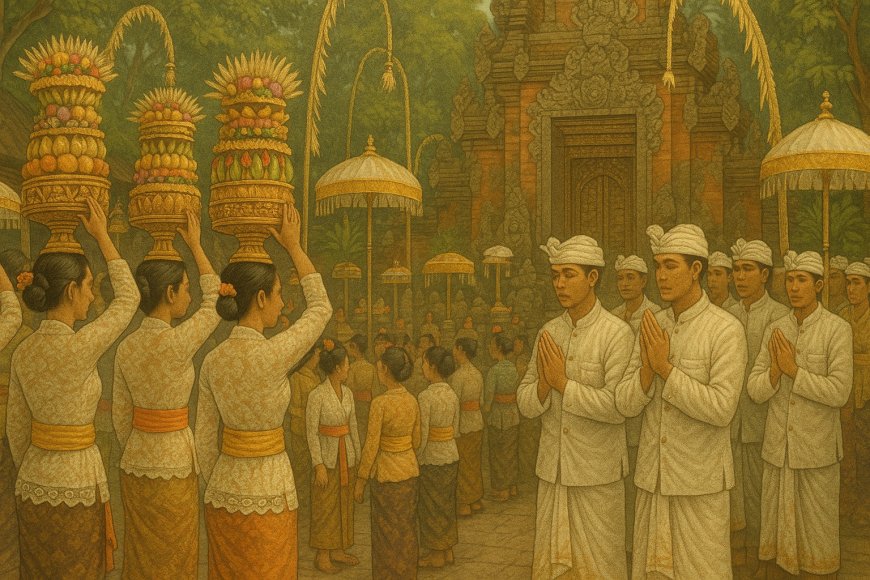
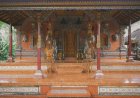
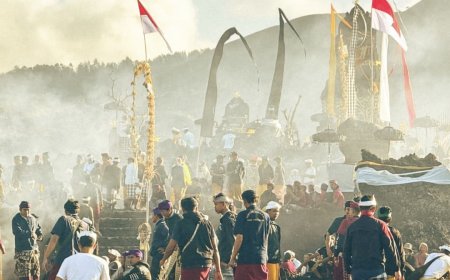
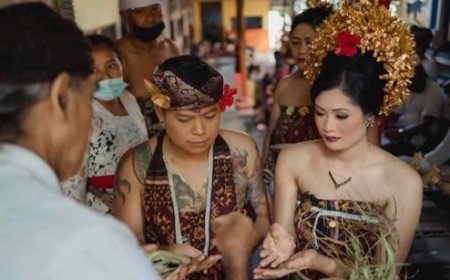
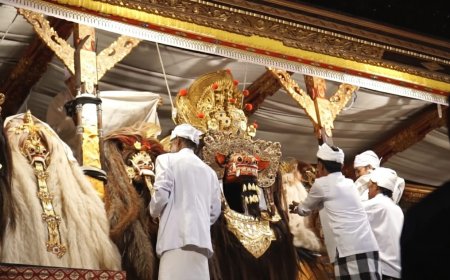
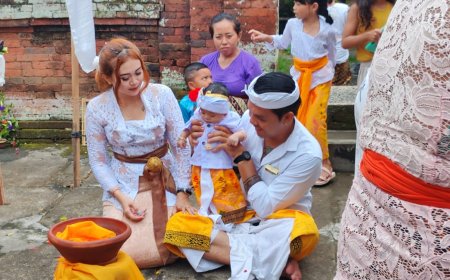
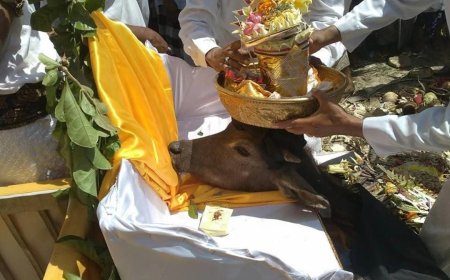
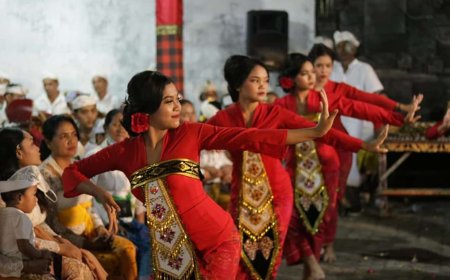
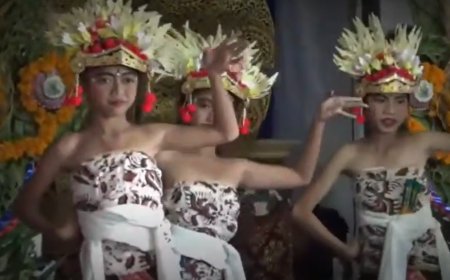
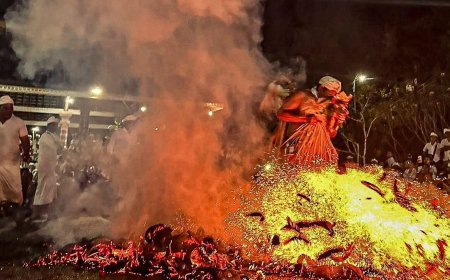
Balinese people in the practice of traditional ceremonies. (Source: Personal Collection)
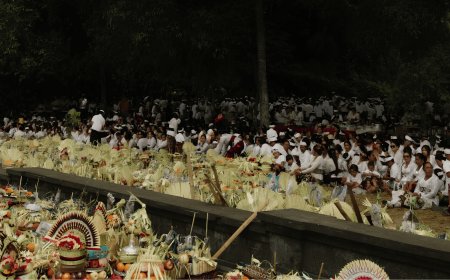
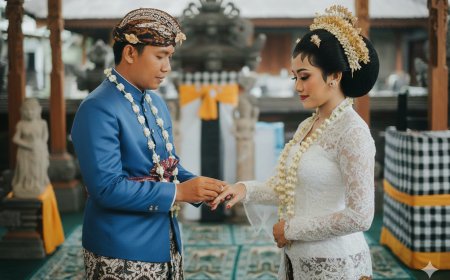
Customary practices do not remain merely as written rules, but are actively carried out in daily social life. Religious ceremonies, village meetings, and various rituals are examples of how the lontar manuscripts and the teachings of Mpu Kuturan shape the behavioral patterns of the Balinese people. The community continues to perform traditional ceremonies with sacred devotion, proving that cultural transformation does not eliminate traditional roots but instead adapts them to the times.
The strength of tradition also influences public policy. Local governments and academics collaborate to ensure the sustainability of Balinese customs through regulations, research, and cultural education. Efforts such as the digitization of lontar manuscripts and the strengthening of traditional village institutions aim to preserve the legacy of Mpu Kuturan as a guide for future generations.
The heritage of Mpu Kuturan, through lontar manuscripts, awig-awig, and traditional temples, demonstrates that tradition never stops at text but always lives within social reality. Through this transformation, Bali is able to preserve its cultural identity while adapting to the modern world.
References
Ardiyasa, I. N. S. (2018). The Role of Mpu Kuturan in Building Balinese Civilization (A Historical and Critical Review). Purwadita: Journal of Religion and Culture, 2(1). Retrieved from https://www.neliti.com/publications/268225/peran-mpu-kuturan-dalam-membangun-peradaban-bali-tinjauan-historis-kritis
Citrawati, D. A. C., & Putra, I. G. G. P. A. (2024). Rescuing Balinese manuscripts (Lontar) with Balinese Wikisource: Creating metadata, cataloging and digitising. [Online journal/article]. Retrieved from https://www.tandfonline.com/doi/full/10.1080/13614568.2024.2345182
Putra, N. Y. N., Mahadewi, N. P. R., & Arsana, I. K. Y. A. (n.d.). Pura Samuan Tiga: Tracing the Unification of Sects in Bali. OJS Mahadewa. Retrieved from https://ojs.mahadewa.ac.id/index.php/nirwasita/article/view/2246/1650