














Tracing the Trail of Mpu Bharadah in the Development of Balinese Hinduism
Mpu Bharadah was a prominent 11th-century sage from East Java who served as an advisor to King Airlangga, playing key roles in politics, spirituality, and the division of the kingdom into Jenggala and Kediri. He is also renowned for defeating Calon Arang, who spread terror through black magic, thus freeing the people from suffering. His teachings and dharma significantly influenced the religious system in Bali, making him an important spiritual link between Java and Bali as well as a model of wisdom and devotion.

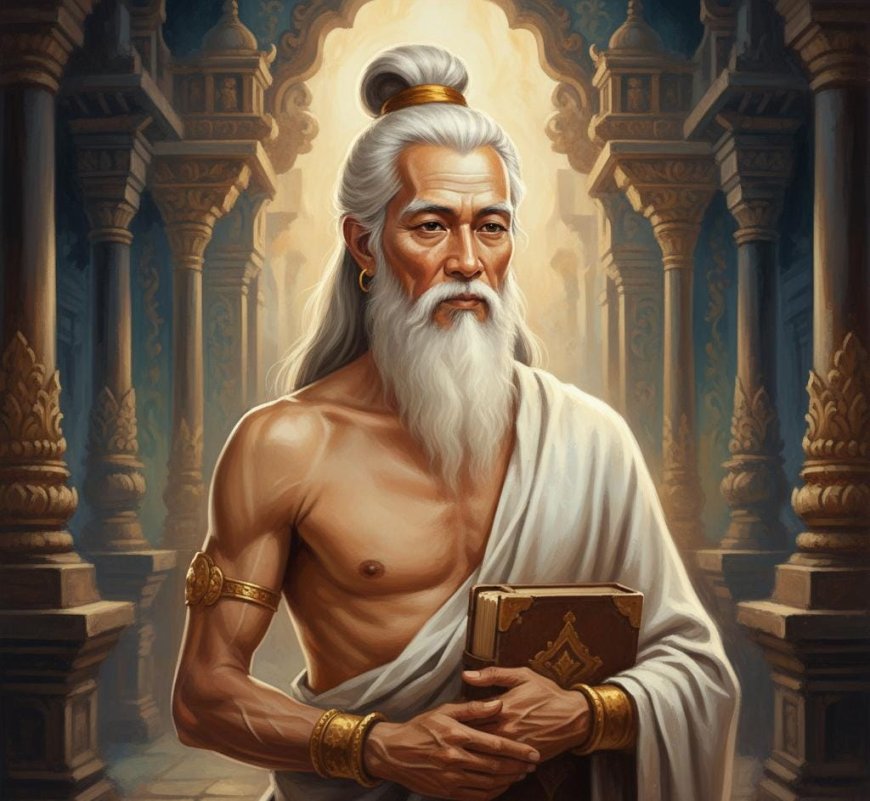
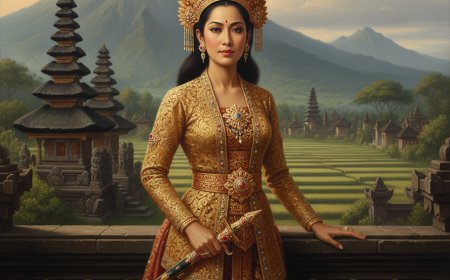
The history of Hinduism in Bali cannot be separated from the role of sages and priests who acted as intermediaries between political authority and the spiritual life of the community. One important figure in this context is Mpu Bharadah, a prominent sage from East Java in the 11th century CE. He lived during the reign of King Airlangga of the Kahuripan Kingdom.
Mpu Bharadah is widely known through various traditional manuscripts such as Serat Calon Arang and Babad Tanah Jawi. His presence serves as evidence of the close political and spiritual connections between Java and Bali during that period. Under King Airlangga’s rule, Mpu Bharadah played a significant role as a spiritual advisor as well as a respected religious figure. His authority extended not only to religious matters but also to the resolution of political conflicts.

AI Illustration of Mpu Bharadah Crossing the Ocean on a Leaf (Photo Source: Personal Collection)
When King Airlangga was about to abdicate, a rivalry arose between his two sons. To maintain political balance, King Airlangga planned for one of his sons to be placed in Bali. The trusted envoy tasked with delivering this message was Mpu Bharadah.
With his supernatural powers, Mpu Bharadah is said to have crossed the ocean using only a single leaf. Upon arriving in Bali, he conveyed the message to Mpu Kuturan. However, the plan was rejected because Bali was already ruled by Anak Wungsu, King Airlangga’s younger brother. Ultimately, King Airlangga decided to divide his kingdom into two parts: Kediri and Jenggala. The responsibility for dividing the territories was entrusted to Mpu Bharadah.

AI Illustration of Mpu Bharadah Pouring Water from an Earthen Jar to Create a Territorial Boundary (Photo Source: Personal Collection)
Mpu Bharadah then divided the kingdom using his supernatural powers, pouring water from a jug while flying through the air. The territorial boundaries were accompanied by a curse, stating that anyone who violated them would suffer misfortune. Records of this event are even hinted at in the Mahaksobhya Inscription (1289 CE), showing that Mpu Bharadah’s spiritual influence continued to be remembered centuries later.
In addition to his political role, Mpu Bharadah is also renowned for his story of confronting Calon Arang, a powerful widow from Girah Village who mastered black magic and brought disaster upon the people through plagues and crop failures.

AI Illustration of the Marriage of Mpu Bahula and Ratna Manggali (Photo Source: Personal Collection)
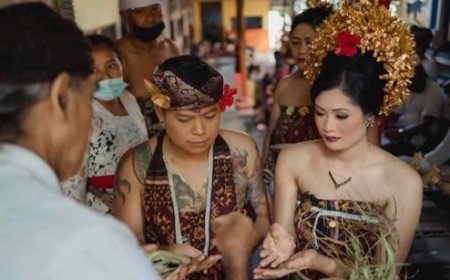
In an effort to counter the threat of Calon Arang, Mpu Bharadah sent his disciple, Mpu Bahula, to marry Calon Arang’s daughter, Ratna Manggali.

AI Illustration of the Battle Between Mpu Bharadah and Calon Arang (Photo Source: Personal Collection)
Through this strategy, Calon Arang’s book of magic was successfully seized. A battle ensued between Calon Arang and Mpu Bharadah, ultimately resulting in Calon Arang’s defeat and the liberation of the people from the threat of black magic. This story demonstrates how Mpu Bharadah acted as a savior of the people through the path of dharma.
Although his story is more closely associated with East Java, Mpu Bharadah’s legacy also influenced the development of Hinduism in Bali. Several lontars and babads mention that the dharma teachings from East Java, passed down by great sages like Mpu Bharadah, helped lay the foundation for ritual organization in temples, the pawongan (caste) structure, and the religious system in Bali. Thus, Mpu Bharadah became an important figure in the spiritual bridge between Java and Bali.
His influence reaching Bali proves that the connection between Java and Bali was not merely political but also spiritual and cultural. Mpu Bharadah’s impact on the development of Balinese Hinduism constitutes a significant part of the history of the Nusantara, where dharma is upheld through the wisdom, spiritual power, and devotion of a sage.
In addition to being recognized as a historical figure, Mpu Bharadah also holds an important place in the literary and belief traditions of the Javanese and Balinese people. In Serat Calon Arang, he is depicted as an authoritative sage, highly knowledgeable, and capable of subduing adharma through both spiritual power and wisdom. This portrayal shows that his presence served not only practical political purposes but also as a moral and spiritual symbol for society in his time.
In Balinese tradition, Mpu Bharadah is often regarded alongside other great sages such as Mpu Kuturan and Mpu Gnijaya. His presence forms part of the lineage of sages considered instrumental in shaping religious life in Bali. The teachings he brought from Java enriched ritual practices and reinforced dharma as the foundation of the community’s spirituality. Therefore, Mpu Bharadah’s influence did not end with his lifetime but continues to live in the collective memory of the Nusantara people.
To this day, Mpu Bharadah’s name is still remembered in babads, inscriptions, and oral traditions. He is regarded as a role model who combined wisdom, spiritual power, and devotion to the people. Through his story, it is evident that the historical development of Hinduism in Bali and Java was not solely the result of political power but also due to the significant role of sages who upheld dharma to create balance in life.
References
Pigeaud, T. G. Th. (1960). Java in the 14th century: A study in cultural history. The Hague: Martinus Nijhoff.
Zoetmulder, P. J. (1983). Kalangwan: Sastra Jawa Kuno Selayang Pandang. Jakarta: Djambatan.
Abimanyu, Soejipto. (2025). Babad Tanah Jawi: Terlengkap dan Terasli. Yogyakarta: Diva Press.