




















Religious Harmony in Ancient Bali: The Dynamics of Hinduism and Buddhism in Society
Bali is often called the Island of the Gods, not only because of its beautiful nature but also due to its rich spiritual and cultural heritage. Long before it became known as a world-class tourist destination, Bali was already a meeting place for two great teachings: Hinduism and Buddhism. Interestingly, these two did not merely coexist but actually built a beautiful harmony within the community’s life.

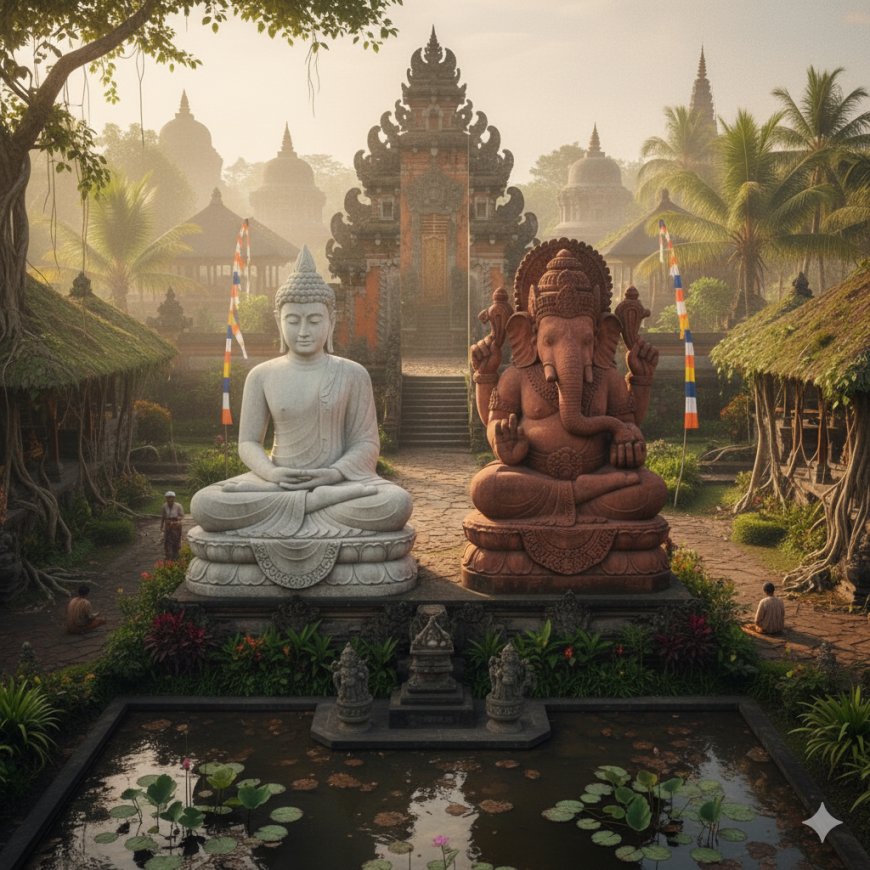
From the 9th to the 14th century, the Balinese people did not adhere to a single belief system. Hinduism and Buddhism developed side by side, and even within Hinduism, there were various different sects. Uniquely, this diversity did not cause division but rather gave birth to a tolerant society.
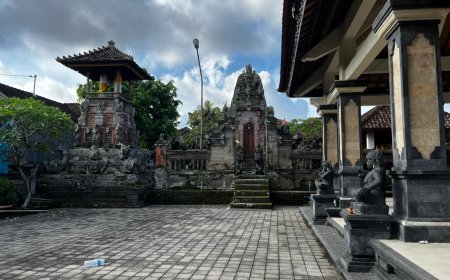
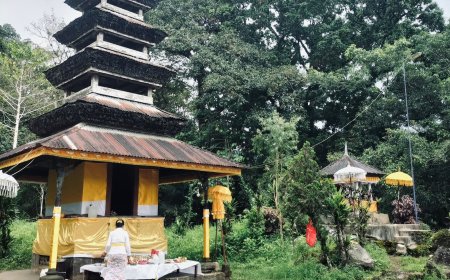
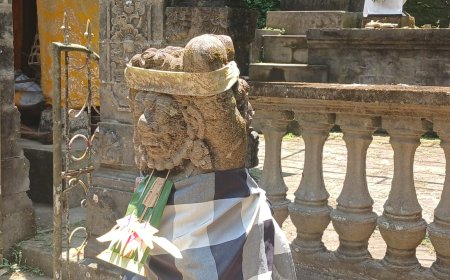
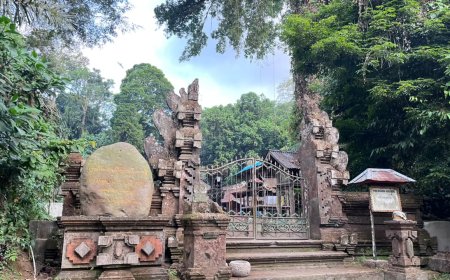
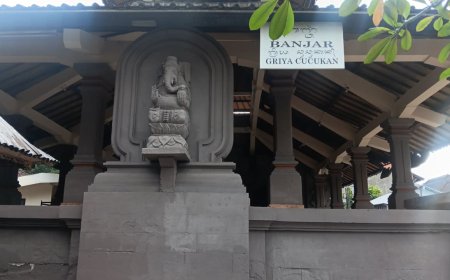
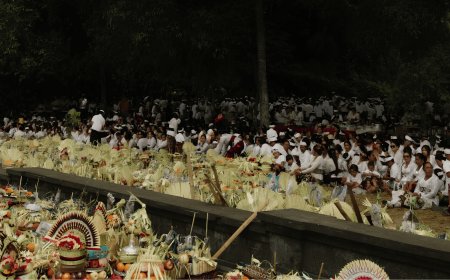
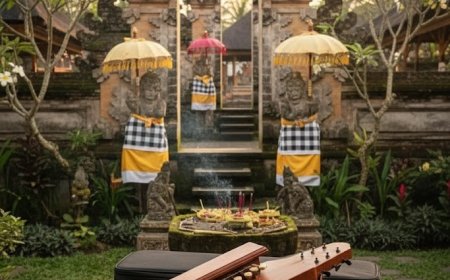
Traces of this can be seen in various historical sites. For example, at Pura Pegulingan, a Buddhist stupa stands in the middle of a Hindu complex. Likewise, at Goa Gajah, statues of Dhyani Buddha were found alongside statues of Ganesha and the Shiva lingam. All of these are tangible symbols of integration and mutual respect.

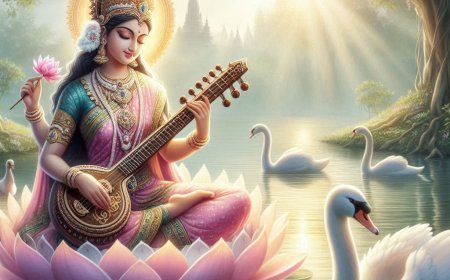
Buddhist Stupa (Source: Personal Collection AI Illustration)
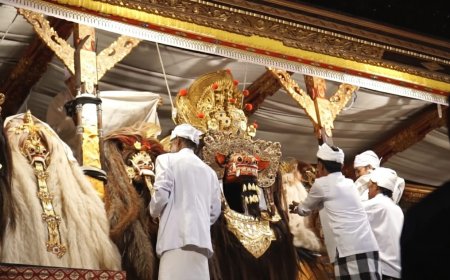
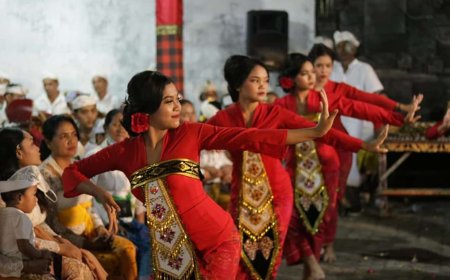
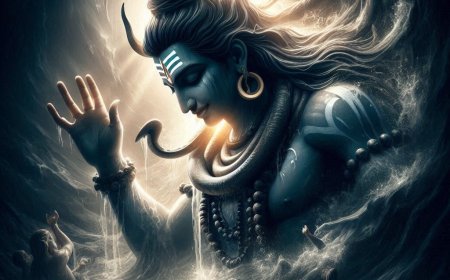
This harmony was inseparable from the roles of kings and spiritual figures. Mpu Kuturan, for instance, united various Hindu sects through the concept of Tri Murti (Brahma, Vishnu, Shiva). Meanwhile, Mpu Tantular, through his work Kakawin Sutasoma, introduced the motto Bhinneka Tunggal Ika, Tan Hana Dharma Mangrwa, which means “Unity in Diversity, there is no duality in truth.” This philosophy later became the foundation of spiritual unity in Bali and was even adopted as the national motto of Indonesia.

Tri Murti (Source: Personal Collection AI Illustration)
This spiritual pluralism flourished rapidly during the Ancient Bali period, especially from the 9th to the 14th century AD. Early traces of Hindu and Buddhist influence in Bali began to appear, marked by the discovery of a statue of the god Vishnu at Pura Patapan Lembean Kintamani, as well as archaeological evidence indicating the presence of Buddhism, such as clay stupas containing Buddhist mantras. During this period, Buddhist religious activities were already taking place at Pura Goa Gajah. By the 10th century, the Shiva (Brahmana) and Sogata (Buddhist) sects had spread widely in Bali. Representatives of both sects even held important positions within the government structure. Then, in the 11th century, the concept of pura (temple) as a sacred place for Hindu worship was widely introduced. At the same time, Hindu religious activities also began to develop at Pura Goa Gajah. Finally, in the 14th century, Bali was conquered by the Majapahit Kingdom, which made Hinduism more dominant, but the harmony between Hinduism and Buddhism remained intact, as reflected in literary works from the Majapahit era.
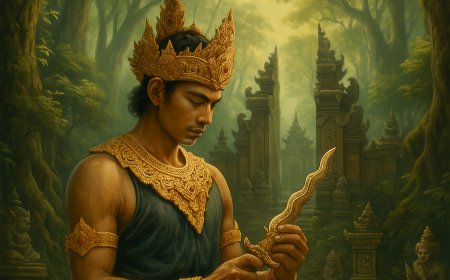
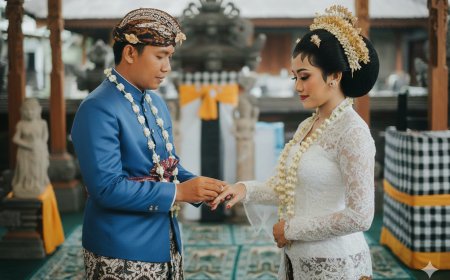
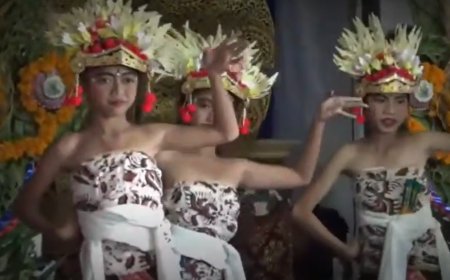
The success of Ancient Bali in creating spiritual harmony can be explained by several factors: the Balinese people’s tradition of openness to new cultural influences; the policies of Ancient Balinese Kings who recognized and protected both religions equally; and the involvement of Hindu and Buddhist spiritual leaders in government structures. Although the rituals and deities worshiped were different, Hinduism and Buddhism in Bali shared the same goal of spiritual liberation Moksha in Hinduism and Nirvana/Nibbana in Buddhism. The lontar (manuscript) of the Shiva-Buddha religion even states that perfect understanding requires knowledge of both teachings and affirms that Shiva and Buddha are one unity despite different names.
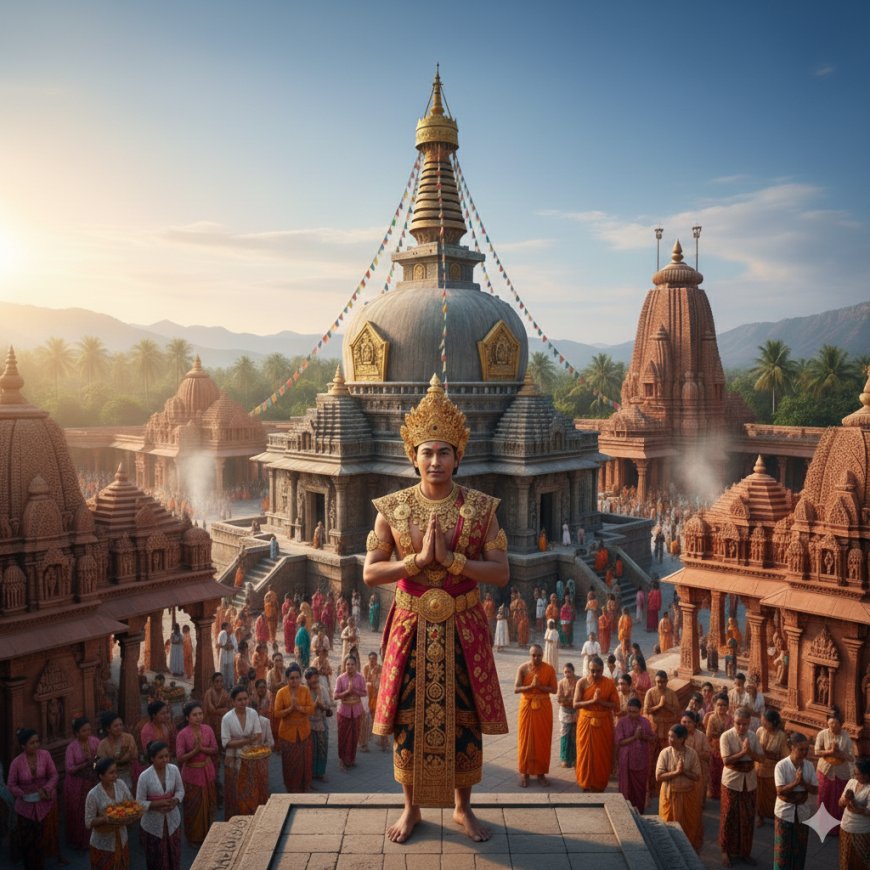
Ancient Balinese King (Source: Personal Collection AI Illustration)
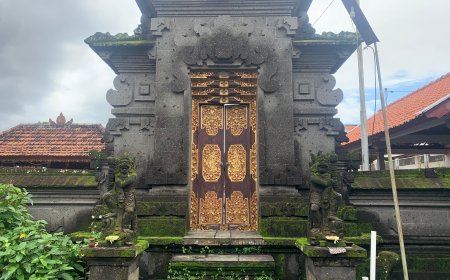
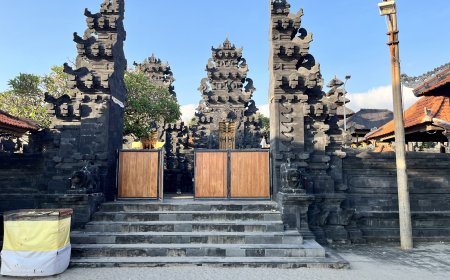
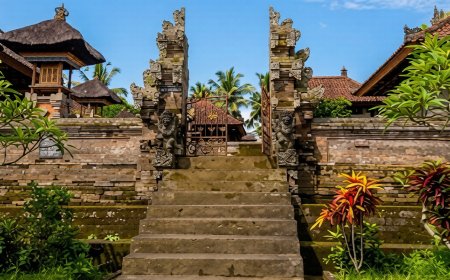
Spiritual harmony in Ancient Bali manifested in various aspects of daily life, such as the presence of Hindu and Buddhist sacred buildings standing side by side, even within the same complex like at Pura Goa Gajah, which is a real proof of tolerance. Older Buddhist artifacts were not destroyed by Hindu adherents who later used the site; instead, they were protected and respected as part of tradition. Architectural arts such as temples, statues, reliefs, dances, and performances like wayang kulit and wayang orang all show deep Hindu influence. Stories like the Ramayana and Mahabharata were adapted into local art forms that served as moral and spiritual media.
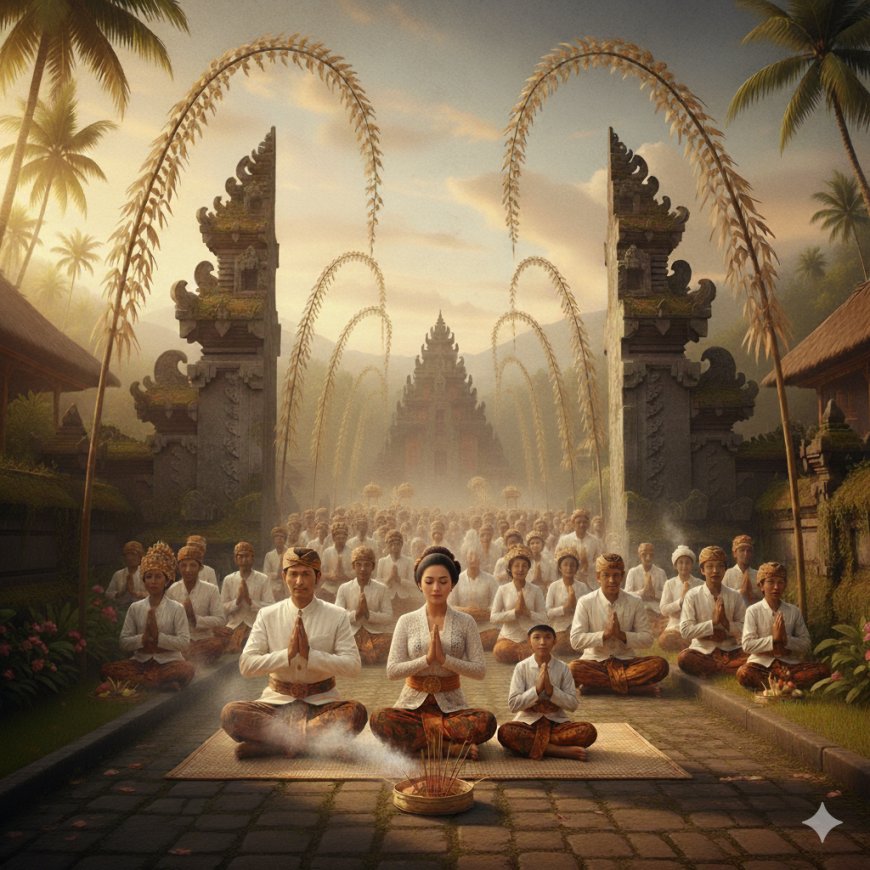
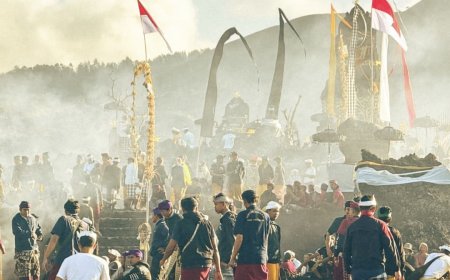
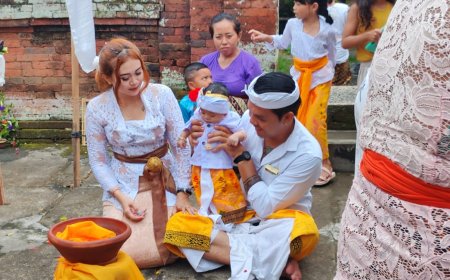
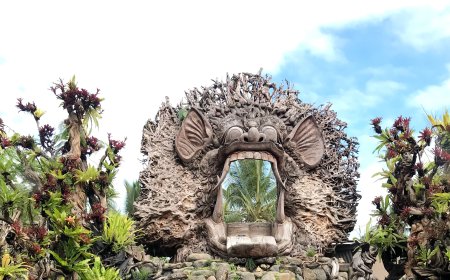
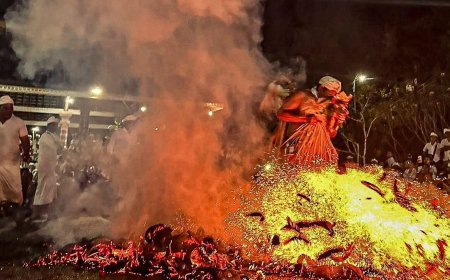
Galungan Ceremony (Source: Personal Collection AI Illustration)
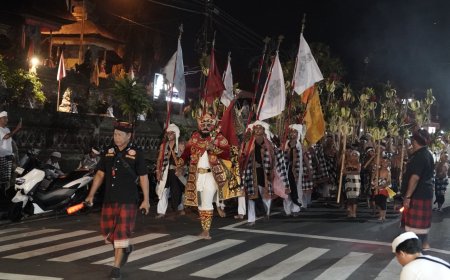
Religious ceremonies such as Nyepi and Galungan in Bali reflect the integration of Hindu teachings into daily life. The caste system, although adapted, also shows Hindu influence in social structure. In Buddhism itself, the caste system was completely abolished and no longer used. Ancient literary works like Kakawin, influenced by Hindu literature, spread religious values and teachings. Sanskrit also contributed significantly to the vocabulary and structure of the Indonesian language, demonstrating deep cultural assimilation. Philosophical concepts from Hinduism and Buddhism such as Dharma, Karma, and Reincarnation became part of the community’s worldview, shaping individual ethics and morality as well as influencing ritual ceremonies.
The story of ancient Bali teaches that differences do not have to lead to division. Hinduism and Buddhism not only coexisted but also enriched each other through art, literature, architecture, and life philosophy. This legacy of tolerance is the true identity of the Balinese people: seeing diversity as a blessing, not a barrier. A value worth reflecting on, even in today’s modern era.
Reference:
Subawa, Ida Bagus Gede, (2024). Agama Hindu dan Budaya Bali: Warisan Luhur dalam Kehidupan Modern. Jayapangus Press.
Srijaya, I Wayan & K. Dedy P. R., (2021). PLURALISME PADA MASA BALI KUNO ABAD IX-XIV BERDASARKAN REKAMAN ARKEOLOGI. Researcher Discovery.
Suci, G. A. K. L. P., Ermawati, N. W. E., Sulianti, N. M., Pertiwi, L. W. D. W., & Nurhayanti, N. P. L., (2023). Pengaruh Agama Hindu Terhadap Seni Dan Kebudayaan Di Indonesia. Gudang Jurnal.
Laksmi, Ni Ketut Puji Astiti, Identitas keberagamaan masyarakat Bali Kuno pada abad IX-XIV Masehi: kajian epigrafi. UI Library.