



























Samprangan: Majapahit's Access Point to Ruling Bali
The Samprangan Kingdom marked the beginning of Majapahit’s control over Bali after the conquest of Bedahulu in 1343. To stabilize Bali, Majapahit appointed Mpu Kresna Kapakisan as the ruler of Bali in 1352, who established the Lingga Pura Samprangan Palace at a strategic location. This government brought Majapahit’s systems and traditions that formed the foundation of Bali’s governance and culture thereafter.

The Samprangan Kingdom was one of the historical realms that played a crucial role in shaping Bali’s political and cultural landscape during the 14th century. The kingdom emerged following the fall of the Bedahulu Kingdom, which collapsed after a Majapahit military expedition led by Gajah Mada. As a manifestation of Majapahit’s authority over Bali, Sri Aji Kresna Kepakisan was appointed as the new ruler and chose Samprangan, located in Gianyar, as his seat of power. The establishment of this kingdom marked a significant turning point in Bali’s governance and social systems, representing a transition from local rule to a more structured administration influenced by Majapahit’s political model.
The selection of Samprangan as the capital was closely tied to its strategic central location on the island and the local belief in its spiritual significance. Besides being easily accessible from various directions, the area was regarded as sacred and believed to possess protective spiritual energy. This decision reflected a combination of political consideration and the people’s reverence for sacred geography, making Samprangan not only the center of administration but also a spiritual symbol for the Balinese people. From that moment, Samprangan flourished as a representation of a new era of governance founded on law, tradition, and the powerful cultural influence of Majapahit.

AI Illustration of the Samprangan Kingdom (Source: Private Collection)
During the early years of his reign, Sri Aji Kresna Kepakisan successfully established a prosperous and well-organized kingdom. He implemented a government system modeled after Majapahit’s bureaucracy, dividing roles between the nobility and the common people, while also introducing new regulations in law, society, and religion that blended Javanese and Balinese cultures. This cultural integration created a stable and harmonious administration, where customary law and royal decrees coexisted in balance. Furthermore, the kingdom became a center of artistic and cultural development, attracting artists and spiritual figures from Java who enriched local traditions. From this fusion emerged various forms of dance, temple architecture, and customs that later became the foundation of modern Balinese culture known today.
The economic prosperity also played a vital role in supporting the kingdom’s glory. Samprangan flourished as a bustling trade center, while the agricultural sector thrived with abundant harvests. The political stability under Sri Aji Kresna Kepakisan’s rule ensured that the people lived in peace and prosperity, offering their full support to the monarchy. This harmonious condition made Samprangan one of the most influential kingdoms in Bali during its time, maintaining a balance between economic wealth, social stability, and cultural strength.

AI Illustration of the Shri Aji Dhalem Kresna Kepakisan as the King of the Samprangan Kingdom (Source: Private Collection)
After the death of Sri Aji Kresna Kepakisan, the throne of the Samprangan Kingdom was passed down to his son, Dalem Samprangan or Ida Dalem Agra Samprangan. However, his reign was very different from that of his father. He was known as an indecisive ruler who lacked wisdom and firmness in leadership. Instead of focusing on governance and the welfare of his people, Dalem Samprangan spent much of his time indulging in personal pleasures. According to Balinese oral traditions and historical chronicles (babad), the king lived extravagantly, surrounded himself with palace women, and often neglected his royal responsibilities. This behavior caused the loss of respect and trust from his people and court officials who had once been loyal to his father.
While the king was occupied with his private affairs, government matters were left unattended. Many important policies were ignored, tax collection became disorganized, and relations with regional nobles deteriorated. High-ranking officials, disappointed by Dalem Samprangan’s leadership, gradually withdrew their loyalty and refused to follow his commands. At the same time, internal conflicts arose within the royal family due to power struggles and jealousy over the king’s favoritism toward certain courtiers. As a result, the administrative system weakened, and Samprangan’s political influence declined rapidly until it finally collapsed. The fall of Samprangan gave rise to a new center of power in Gelgel, led by Dalem Ketut, Dalem Samprangan’s younger brother, who managed to restore stability and bring Bali back to prosperity.

AI Illustration of Ida Dalem Agra Samprangan Surrounded by Women (Source: Private Collection)
After the situation in the Samprangan Kingdom grew increasingly chaotic due to Dalem Samprangan’s weak leadership, his younger brother, Dalem Ketut Ngulesir, emerged as a wise, decisive, and capable leader. Observing the instability of the government, Dalem Ketut Ngulesir decided to leave Samprangan and establish a new center of power in Gelgel, a region in southern Klungkung known for its strategic location and fertile lands. He was accompanied by I Dewa Tegal Besung, a loyal and intelligent prime minister with extensive experience in state administration. Their move was not merely an act of escape but a calculated political decision to build a new, more organized, and respected government.
In Gelgel, Dalem Ketut Ngulesir and I Dewa Tegal Besung began to reorganize the royal structure that had collapsed in Samprangan. They reformed the bureaucratic system, strengthened relations with regional nobles, and reinstated the principles of law and tradition that had been neglected. Dalem Ketut Ngulesir’s reign became known for its stability and respect, thanks to his success in maintaining a balance between religion, custom, and politics—three essential elements of Balinese life. Under his authority and the skilled leadership of I Dewa Tegal Besung, Gelgel flourished as the center of governance, culture, and religion in Bali. Subordinate rulers from various regions even recognized Gelgel’s supremacy as the island’s principal kingdom. Thus, the founding of the Gelgel Kingdom under Dalem Ketut Ngulesir marked a new era in Balinese history, when power was re-centralized and social-political stability was successfully restored following the downfall of Samprangan.

AI Illustration of Dalem Ketut Ngulesir with I Dewa Tegal Besung (Source: Private Collection)
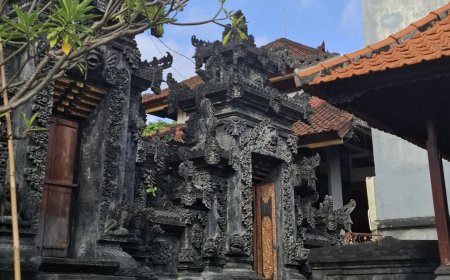
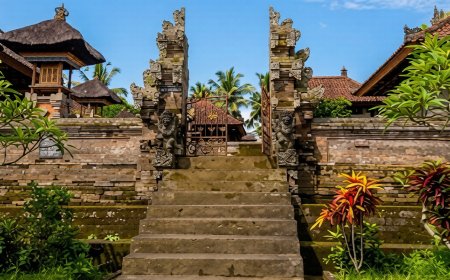
Although the kingdom eventually declined, the legacy and values of the Samprangan era continue to live on today. The systems of puri (royal palaces), desa adat (traditional villages), and the traditional governance concepts established during that time became the foundation of Bali’s modern social structure. The values of leadership, honor, and loyalty taught during the kingdom’s reign remain deeply embedded in Balinese culture. Traces of Samprangan’s former glory can still be found around Gianyar, particularly in temples and ancient archaeological sites, as well as through folklore, lontar manuscripts, and oral traditions that have been passed down from generation to generation.
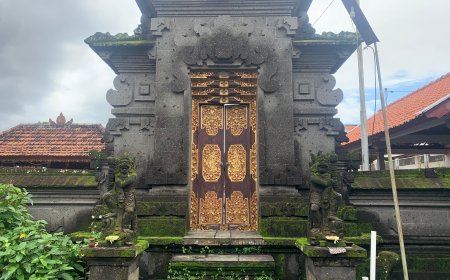
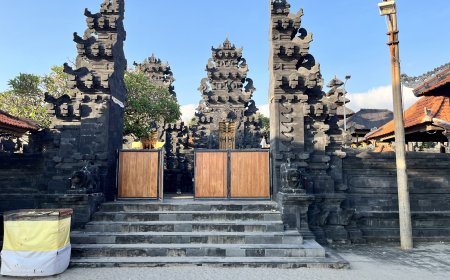
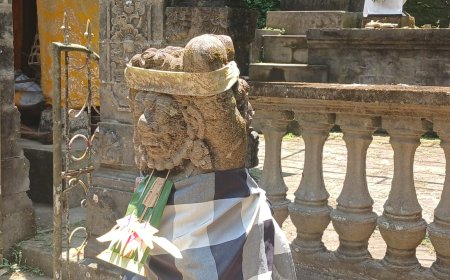
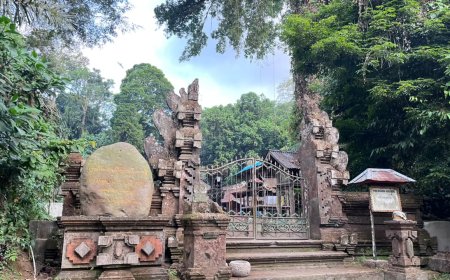
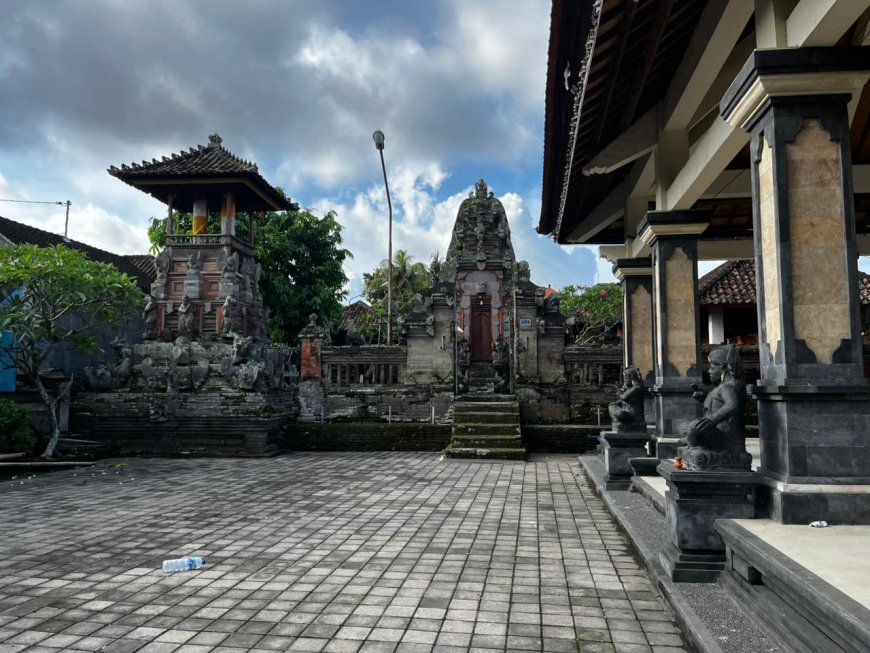
Beyond its historical value, the Samprangan Kingdom also left behind several tangible legacies that can still be seen today. One of the most significant is the Puri Agung Samprangan, which once served as the royal residence and symbol of power. Within the same area lies Pura Dalem Samprangan, a sacred temple believed to be the sanctuary of the kingdom’s ancestral spirits. In addition, several statues and ancient stone fragments have been discovered around the Samprangan region, providing evidence of the daily life and artistry of the kingdom’s past society. These remnants are not only archaeological proofs but also serve as cultural and historical markers of the Gianyar people’s enduring heritage, preserved and respected to this day.

AI Illustration of the Relics of the Samprangan Kingdom (Source: Private Collection)
Overall, the Samprangan Kingdom holds a significant role in the development of Balinese history and culture. It served as a bridge between the influence of the Majapahit Empire and the emergence of independent Balinese kingdoms. Although Samprangan collapsed centuries ago, its legacy continues to live on through the customs, beliefs, and way of life of the Balinese people. Samprangan is not merely a name in history but rather a symbol of rebirth and wisdom that has shaped the civilization of Bali to this day.
Reference:
Budihardjo, R. (2012). Sistem pemerintahan kerajaan pengaruhnya terhadap arsitektur Bali. Jurnal Nalars, 11(1), 1–13.
Kemas Udayana. (2024, May 9). Perkembangan sistem politik Bali pada abad XIV–XVIII: Kerajaan Samprangan, Kerajaan Gelgel dan Kerajaan Klungkung
Suwitha, I. P. G. (2019). Wacana “Kerajaan Majapahit Bali”: Dinamika puri dalam pusaran politik identitas kontemporer. Jurnal Sejarah Citra Lekha, 4(1), 59–70. Universitas Diponegoro.
Universitas Udayana. (2010). Sejarah Bali: Bab II – Sistem Politik Bali Abad XIV–XVIII. Denpasar: Udayana Press.