


















The Negligent King: The Story of Dalem Agra Samprangan in 14th-Century Bali
After the conquest of Bali by Gajah Mada in 1343, Majapahit established the Kepakisan Dynasty with its first center of power in Samprangan, Gianyar. As the crown prince of Sri Aji Kresna Kepakisan, great hopes were placed upon Dalem Agra Samprangan. However, history records him as a failed successor. His negligence in ruling not only cost him the throne but also triggered a political crisis that shifted the royal center of power from Samprangan to Gelgel, determining a new course for Balinese history.


After Bali was conquered, Majapahit appointed Sri Aji Kresna Kepakisan, a brahmana from Java, as the adipati (regent) in Bali. He built the administrative center in Samprangan, Gianyar, which at that time was known as Linggarsa Pura. From here, he laid the foundation for a new dynasty that would rule Bali for a long time. Samprangan then developed into a political, military, and cultural center, replacing the earlier centers of Ancient Balinese kingdoms. As the eldest son, Dalem Agra Samprangan was prepared to continue his father’s great legacy. The people and the nobles placed high hopes on him to maintain stability and continue the glory that had been initiated.

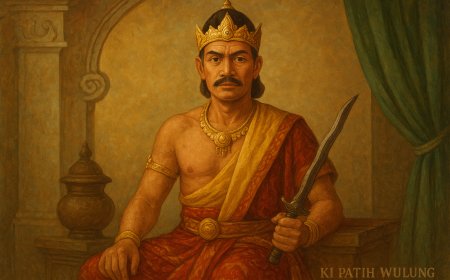
AI Illustration The Samprangan Kingdom in the Era of Sri Aji Kresna Kepakisan (Source: Private Collection)
However, those hopes were not realized. Balinese manuscripts, especially the Babad Dalem, describe Dalem Agra Samprangan as a king far from ideal. He was known to have a harsh character, was difficult to speak with, and lacked the authority of a leader. His most notable habit was his fondness for cockfighting. Because he was too engrossed in this hobby, he often neglected matters of governance. Advice from his counselors, including Patih Agung Kubon Klapa, was never heeded. As a result, the administration in Samprangan stalled, laws were ignored, and unrest spread among the nobles.
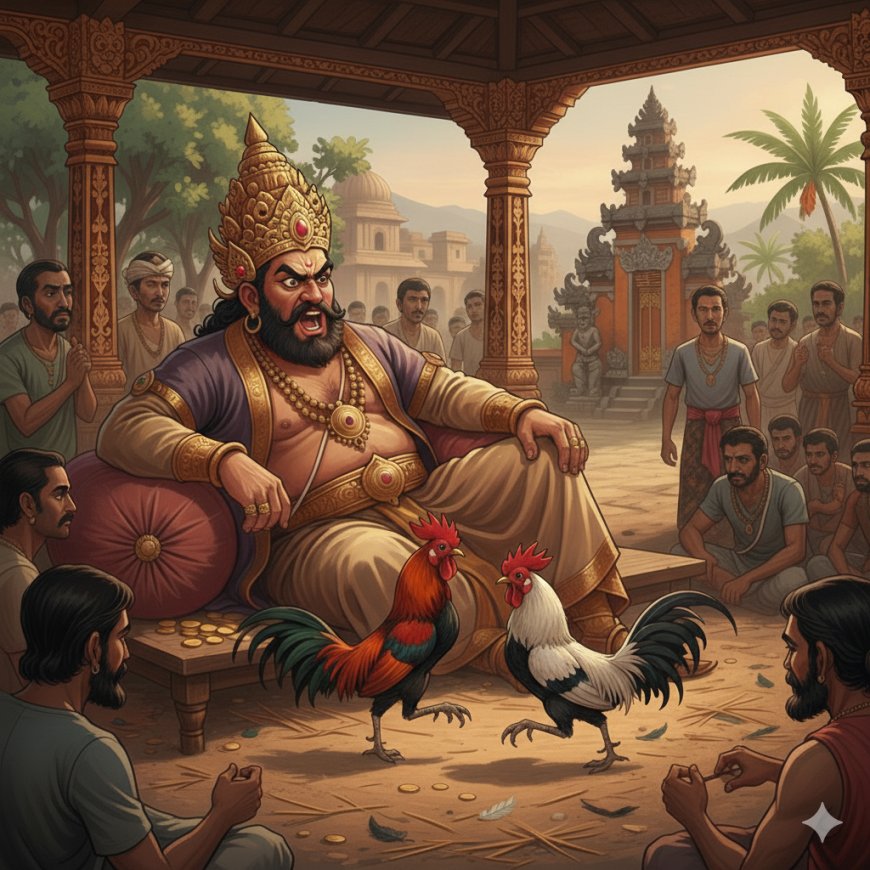
AI Illustration Dalem Sri Samprangan with a Harsh Character and a Fondness for Gambling (Source: Private Collection)
The incompetence of Dalem Agra Samprangan triggered a crisis of trust. Amid this anxiety, new hope arose in the figure of his younger brother, I Dewa Ketut. Completely different from his brother, Dalem Ketut was known to be wise, authoritative, and concerned with the kingdom’s fate. The Patih Agung (great ministers) finally agreed that leadership must shift. They collectively pleaded with Dalem Ketut to take over the throne to save the kingdom, and thus Dalem Agra Samprangan was removed from power without significant resistance.
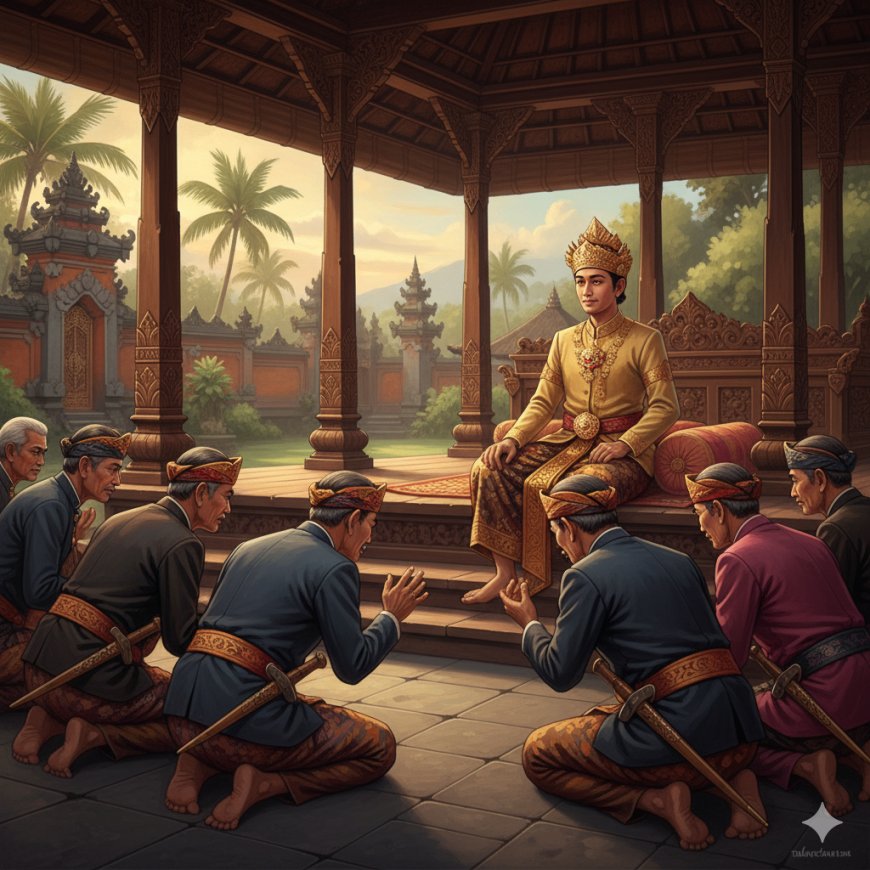
AI Illustration The Great Patihs Plead with Dalem Ketut to Take Over the Throne (Source: Private Collection)
This change in leadership brought major consequences. After ascending the throne with the title Dalem Ketut Ngulesir, he decided to move the royal center to Gelgel (now in Klungkung) and established a new palace named Sweca Pura. This decision simultaneously marked the end of Samprangan as a center of power. Under the leadership of Dalem Ketut Ngulesir and his successors, Gelgel developed into a great kingdom whose influence extended to Lombok and Blambangan. The story of Dalem Agra Samprangan became an important lesson in Balinese tradition: that the character and responsibility of a king are more important than personal pleasure.

AI Illustration The Gelgel Kingdom under the Rule of Dalem Ketut Ngulesir (Source: Private Collection)
The life journey of Dalem Agra Samprangan is a story of a leader’s failure. His negligent nature and his prioritization of a hobby over his duties led to him being overthrown. However, the event was not merely about the fall of a king. More profoundly, it became a turning point in Balinese history, ending the Samprangan era and paving the way for the glory of the Gelgel Kingdom. History remembers it as proof that the character of a leader can change the course of a kingdom and a civilization.
References
Budihardjo, Rachmat. "Sistem Pemerintahan Kerajaan Pengaruhnya Terhadap Arsitektur Bali." Jurnal Arsitektur Universitas Atmajaya Yogyakarta.
Darmawan, I Dewa Made, dan Semeton. "Penyebaran Pratisentana I Dewa Gdong Artha." (Artikel Penelitian Mandiri, Institut Seni Indonesia Denpasar).
Noorwatha, I Kadek Dwi. (2019). Naranatha-Kanya: Jejak Sejarah Dewa Agung Istri Kanya dan Perkembangan Seni Kerajaan Klungkung Abad Ke-19. Jakarta: Direktorat Sejarah, Direktorat Jenderal Kebudayaan, Kementerian Pendidikan dan Kebudayaan.