















Wréastra Script: Balinese Identity in Written Strokes
The Wréastra script is the foundational form of the Balinese writing system, serving as the basis of the island’s literary tradition for centuries. Its strokes are more than just letters, they are symbols of identity, spirituality, and the cultural continuity of Bali. Amid the currents of modernization, Wréastra is preserved through lontar manuscripts, education, and even adaptation to technology, standing as a living heritage of civilization.

History and Background of the Wréastra Script
Wréastra Script is the basic script within the Balinese writing system and has been used since ancient Balinese kingdoms. Its development traces back to the influence of Pallava and Kawi scripts, which entered the Indonesian archipelago around the 8th century CE. As literacy began to flourish in Bali, these earlier scripts were gradually adapted to suit local needs language, ritual, and literature shaping the structure of the Balinese script as we know it today. Because of this long historical journey, Wréastra is not viewed merely as a set of characters, but as a cultural development embedded deeply within Balinese tradition.
Within Balinese script, several categories exist: Wréastra as the basic alphabet, Swalalita for Sanskrit–Kawi loanwords, and Modre, used mainly for sacred texts and ritual purposes. This classification reflects the complexity of the Balinese writing system, yet it is Wréastra that forms the foundation upon which all other components connect.
The core of the Wréastra script lies in its 18 basic characters, namely ha, na, ca, ra, ka, da, ta, sa, wa, la, ma, ga, ba, nga, pa, ja, ya, and nya, which in Balinese script are written as ᬳ᭞ ᬦ᭞ ᬘ᭞ ᬭ᭞ ᬓ᭞ ᬤ᭞ ᬢ᭞ ᬲ᭞ ᬯ᭞ ᬮ᭞ ᬫ᭞ ᬕ᭞ ᬩ᭞ ᬗ᭞ ᬧ᭞ ᬚ᭞ ᬬ᭞ ᬜ᭟. These characters form the foundation of most written words in the Balinese language.
As an abugida, each Wréastra consonant inherently carries the vowel /a/. For example, the character ᬩ is read as ba, ᬫ as ma, and ᬓ as ka. Changes in vowel sounds are achieved through the use of sandangan (vowel diacritics), while consonant combinations are formed using pasangan. This system gives the Balinese script its distinctive structure and differentiates it from the Latin alphabet.
Understanding these 18 characters provides a strong starting point for reading Balinese texts. School textbooks in Bali often begin with Wréastra, emphasizing its importance as the primary foundation of Balinese traditional literacy.
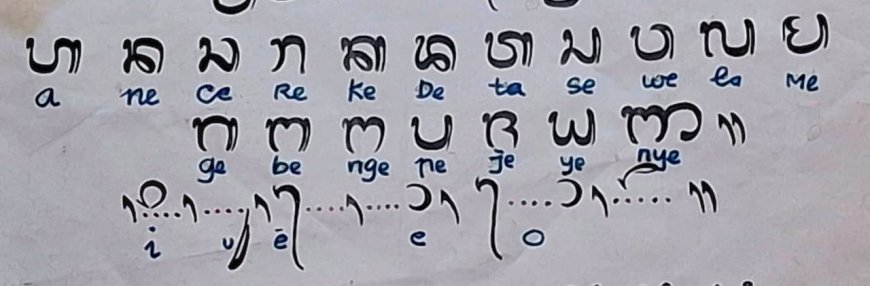
Basic Wréastra characters and vowel forms in Balinese script (Source: Personal Collection)
Meaning and Philosophy Behind Aksara Wréastra
Beyond its structural function, Balinese script carries deep cultural significance. Many Balinese regard these characters not merely as graphic symbols, but as an inherited tradition that shapes their cultural identity. The unique curves, the delicate strokes, and the precision required in writing them reflect more than visual form they embody a cultural practice passed down through generations.
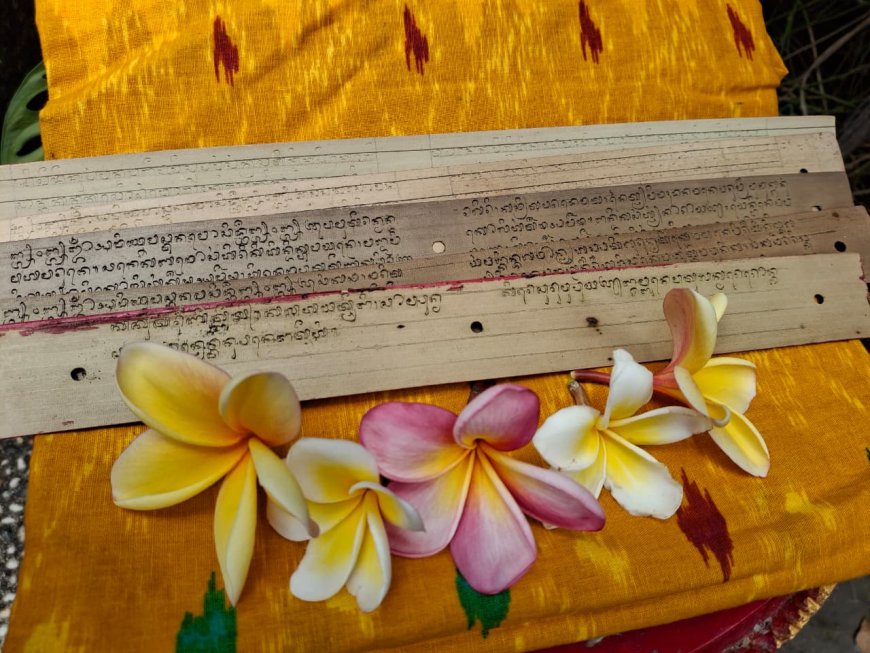
Writing on lontar palm-leaf manuscripts illustrates how highly the script is valued. The process involves careful control of hand position, pressure, and tool movement. Unlike writing with ink on paper, lontar writing uses a pengrupak (engraving knife), where errors cannot be erased. Too much pressure can damage the leaf, while too little pressure creates faint lines. Because of this, the act of writing becomes not only a technical task but also a practice in patience and attentiveness.
Many Balinese families still keep old lontar manuscripts as part of their household heritage. These manuscripts are not always read daily, yet their presence represents the family’s connection to their ancestors and cultural continuity. Each lontar holds stories about calendrical knowledge, genealogy, rituals, or moral teachings. Through these preserved texts, Wréastra becomes a bridge linking the past and the present.
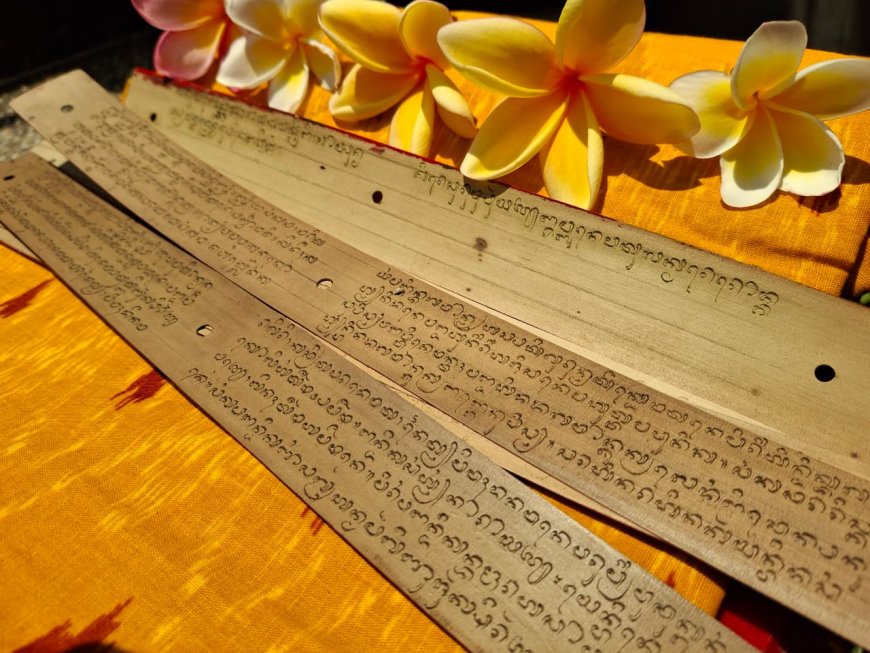
Wréastra Script in A Traditional Balinese Lontar Manuscript (Source: Private Collection)
Functions and Use of Wréastra in Daily Life
Wréastra appears across numerous traditional Balinese manuscripts. Wariga lontar records calendrical systems used to determine auspicious days. Usada lontar contains traditional medical knowledge and herbal remedies. Babad lontar preserves historical narratives and genealogies. Meanwhile, literary works such as kakawin also use the Wréastra script. The variety of these texts illustrates how closely Wréastra is woven into Balinese life not only in religious contexts but also in everyday cultural practices.
In formal education, Balinese script is introduced through local curriculum in primary schools. Students learn to recognize and write the basic characters, understand vowel markings, and gradually explore more advanced structures. Although instructional time may be limited, this introduction plays an essential role in preserving the script for future generations.
Beyond schools, village communities and cultural groups often hold workshops on reading and writing Balinese script. These spaces allow people to learn lontar-writing techniques, read traditional manuscripts, and practice script forms used in ceremonies. This community-based approach strengthens cultural identity while ensuring the script remains alive beyond formal education.
Traditional lontar writers in certain villages still use the pengrupak to carve characters into palm leaves. After engraving, soot made from burnt coconut shells is applied to highlight the lines. The endurance of this technique over centuries shows how deeply rooted Balinese writing traditions are and how Wréastra remains central to them.
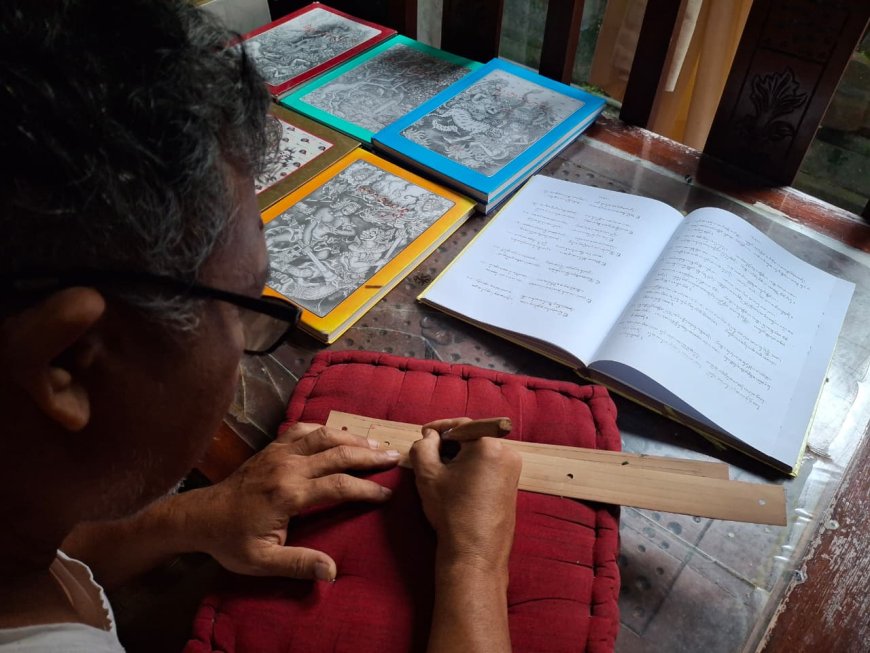
Writing practice of the Balinese Script in A Lontar (Source: Private Collection)
The Development of Wréastra in the Modern Era
In today’s digital world, the Balinese script has not only survived but has grown in visibility. Various Balinese script fonts are now available and can be used on computers and mobile devices. This development enables Wréastra to appear in posters, educational materials, social media content, and digital documents. The script adapts well to new media, allowing young people to encounter it in familiar formats.
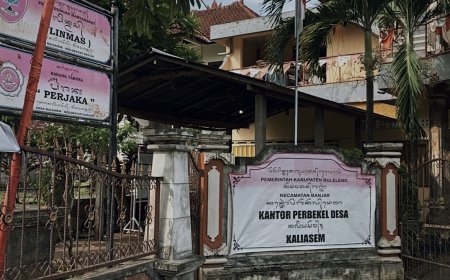
Government initiatives in Bali also support script preservation through policies requiring Balinese script on street signs, public buildings, and official spaces. This visual presence helps integrate the script into everyday life, making it more accessible to the general public.
Social media has become an especially dynamic space for Wréastra’s growth. Content creators often share tutorials on writing Balinese characters, explanations about script structure, and creative uses of Wréastra in modern design. These forms of digital engagement show how tradition and technology can work together, rather than replace each other.
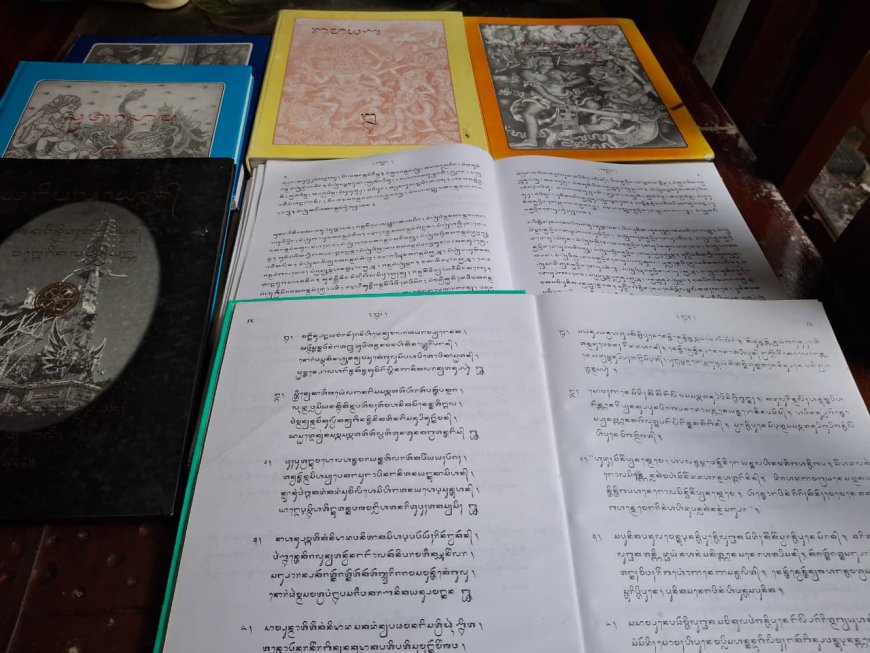
A Balinese Script Book Displaying A Series of Wréastra Letters (Source: Private Collection)
As a result, Wréastra is no longer confined to ancient manuscripts; it now appears in digital creations, classroom materials, and visual culture. This adaptation demonstrates that the Balinese script can continue to evolve without losing its essence and cultural identity.
Conclusion
Aksara Wréastra stands as a significant aspect of Balinese cultural identity. Its eighteen basic characters act as a gateway to understanding traditional texts and exploring Bali’s written heritage. Through formal education, community learning, lontar preservation, and digital innovation, Wréastra remains present and relevant across generations. It is not merely a script from the past it is a living tradition, connecting Bali’s cultural roots with its future.