












Harmony of the Island of the Gods (1460 AD): Architecture and Social Life in the Golden Age of Waturenggong
The golden age of 15th-century Bali under Dalem Waturenggong was a time when sacred architecture, trade, and social life harmoniously flourished, realizing the Island of the Gods as a center of culture and spirituality.

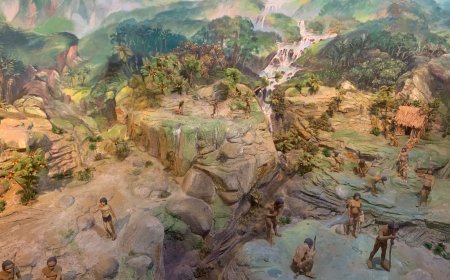
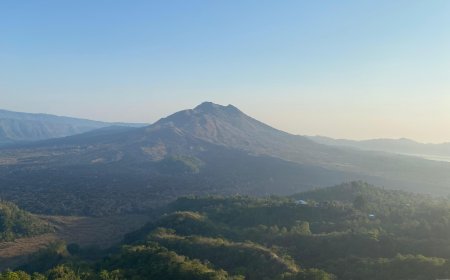
In the 15th century, Bali entered one of its glorious periods under the leadership of Dalem Waturenggong. The Gelgel Kingdom that he led developed into a center of political and cultural power, creating balance in spiritual, social, and artistic life. This period is considered a golden age because of the realization of harmony between just governance, a prosperous society, and rapid cultural development.
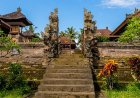
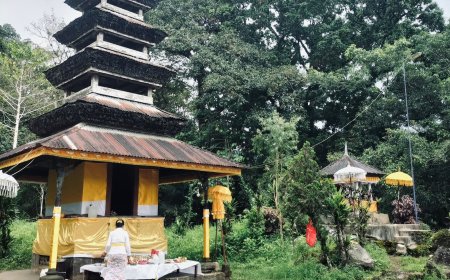
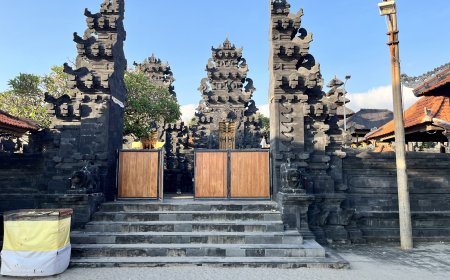
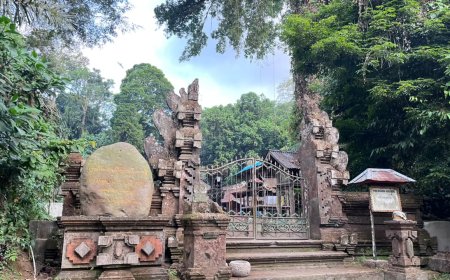
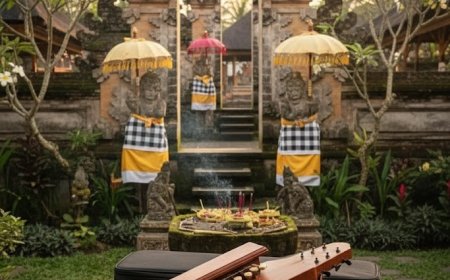
Architecture at that time developed rapidly based on the spiritual concepts of Balinese Hinduism, especially Asta Bhumi and Asta Kosala-Kosali, which regulate spatial planning and construction. One important achievement was the development of Pura Besakih as the highest spiritual center. Its spatial layout reflects the journey toward holiness, from the profane world to the most sacred place. This temple is not only a place of worship, but also a symbol of unity for the people because of the involvement of communities from various villages in major ceremonies.
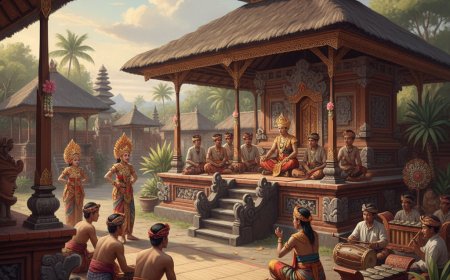
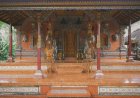
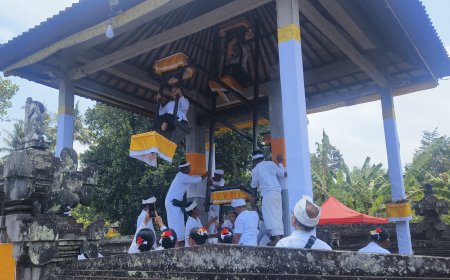
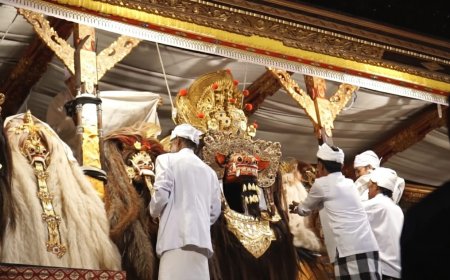
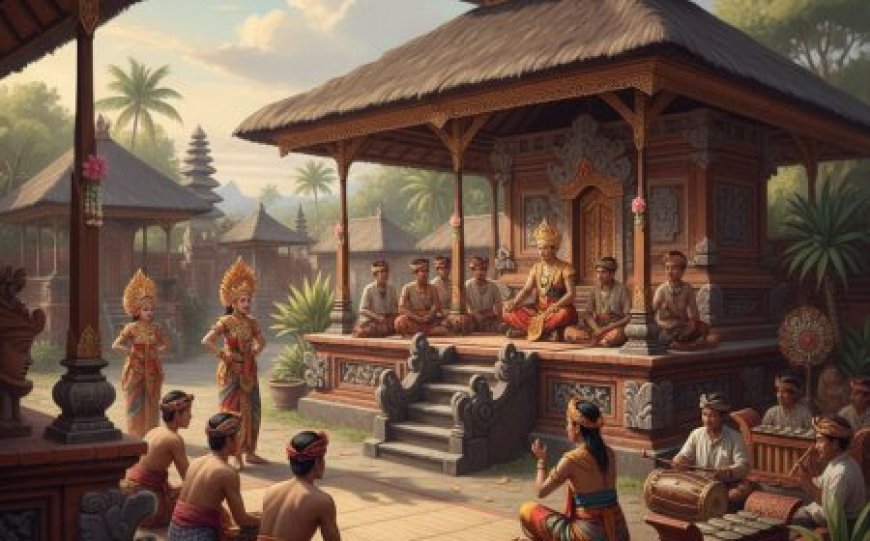
Illustration of the Gelgel Palace (Source: Personal Collection)
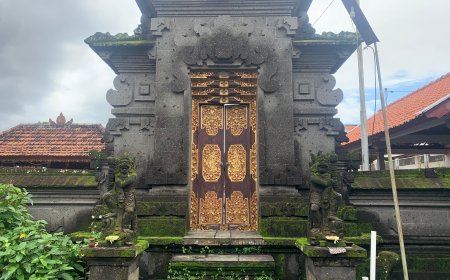
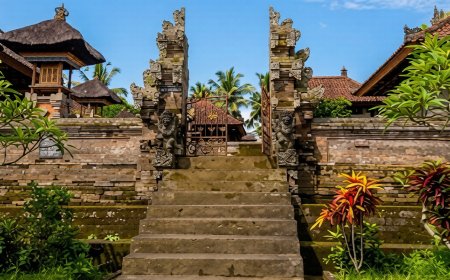
Meanwhile, the Gelgel Palace stood as a symbol of power as well as a social space, with open halls used for deliberations, art performances, and traditional meetings. The buildings constructed during that period were vernacular in nature, utilizing local materials such as stone, wood, and thatched roofs, and were built with principles that aligned with nature. The influence of Danghyang Nirartha, a great priest who lived during that time, strengthened the spiritual foundation of Balinese architecture. His ideas were recorded in various sacred lontar manuscripts that served as references for construction. Traces of Balinese architecture even spread widely to Lombok, marked by the establishment of Pura Lingsar, which shows that architecture also functioned as a tool of cultural diplomacy and the creation of social harmony.
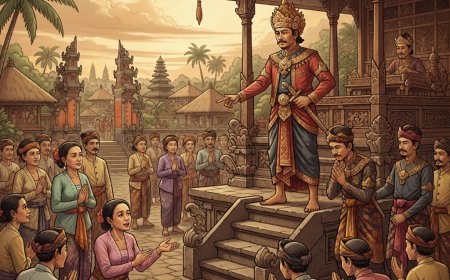
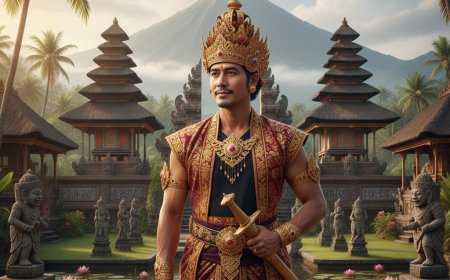
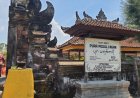
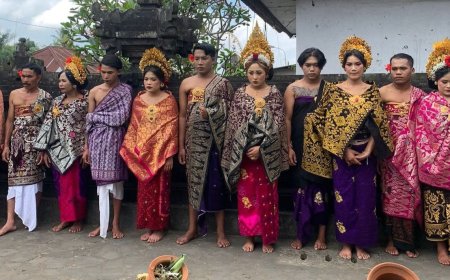
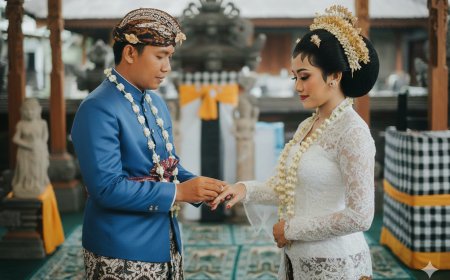
Illustration of a Just and Compassionate Leader (Source: Personal Collection)
The social life of the people at that time was marked by firm yet compassionate leadership. Dalem Waturenggong was known as a king who upheld the law fairly, regardless of status. Officials who were at fault were punished, while commoners who were wronged due to coercion were given protection. The people felt close to their king because happiness was accompanied by empathy. The expansion of power to Blambangan, Lombok, and Madura extended the influence of Balinese culture, bringing along artistic traditions and rituals to those regions and resulting in cross-cultural interactions.
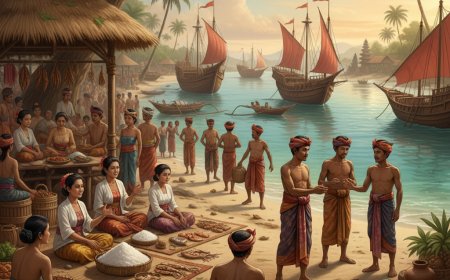
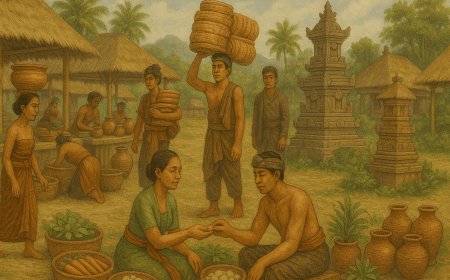
Illustration of Trade and Port Activities (Source: Personal Collection)
In Balinese society at that time, agriculture, the arts, and trade went hand in hand as the foundation of prosperity and social harmony. Among the three, trade played a strategic role, especially through ports such as Kusamba and Kuta, which connected Bali with other regions in the archipelago as well as foreign traders from China and India. Goods such as rice from the subak system, salt, songket cloth, and marine products were distributed beyond the island, while ceramics, silk, metals, and spices entered Bali from abroad. This exchange strengthened the kingdom’s economy while also enriching local culture with foreign influences that were still adapted in accordance with Balinese identity.
Traditional markets in various villages developed into centers of both economic and social interaction. Trading activities took place in a strong familial atmosphere, written in friendly bargaining and the spirit of menyama braya. The market became a lively social space, a place where solidarity and inter-community sustainability were established. In this process, openness to the outside world was still controlled within the strong framework of Balinese culture.
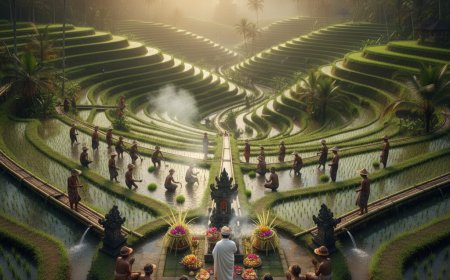
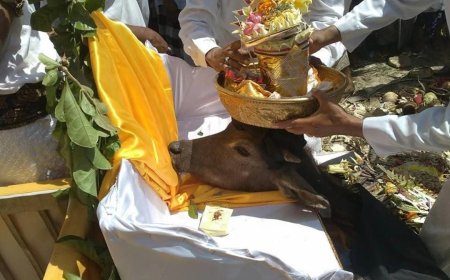
Illustration of Farming Activities and Worship in the Rice Fields (Source: Personal Collection)
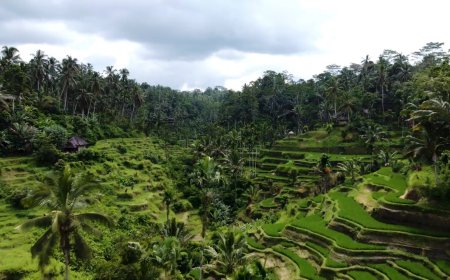
The welfare of Balinese society at that time depended heavily on the subak farming system, a traditional irrigation system that regulated water flow collectively to maintain soil fertility and stability of rice production. On the technical side, subak also involved worship and rituals in the fields carried out together to ensure soil fertility and harvest success. Through close cooperation among farmers in managing water resources and carrying out customary ceremonies, the fields remained free from drought and pests, so harvests were abundant and staple food prices remained affordable. The subak system was not merely a farming technique but an important part of the life philosophy that balanced the relationship between humans, nature, and spirituality.
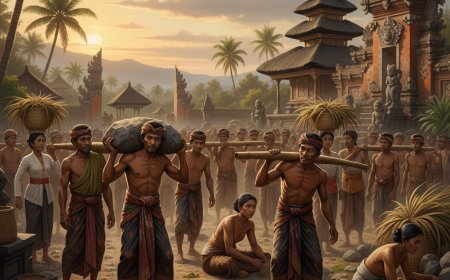
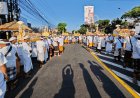
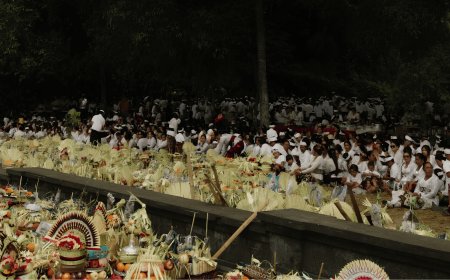
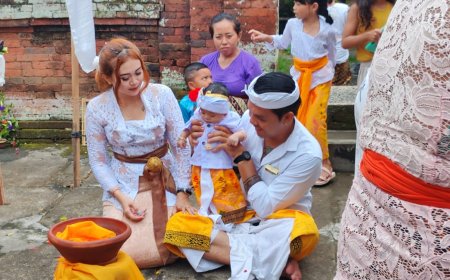
Illustration of Mutual Cooperation Activities (Source: Personal Collection)
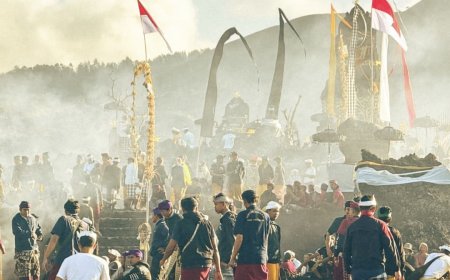
In addition, the spirit of mutual cooperation known as ngayah became the pillar of the social life of village communities. Ngayah is voluntary communal work in customary activities, temple construction, and other community affairs which strengthened solidarity among residents. Through this practice, the value of menyama braya, namely the spirit of kinship without distinguishing social status, was truly realized, thus creating a social life that was harmonious without barriers disturbing community harmony.
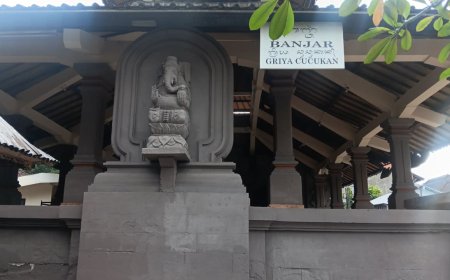
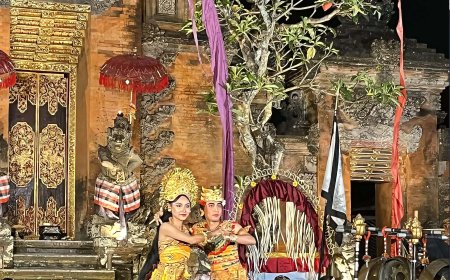
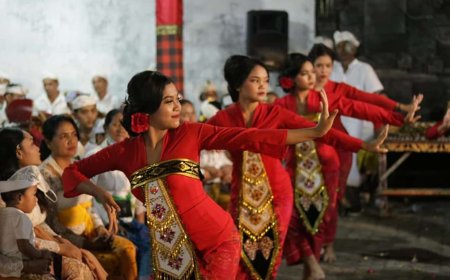
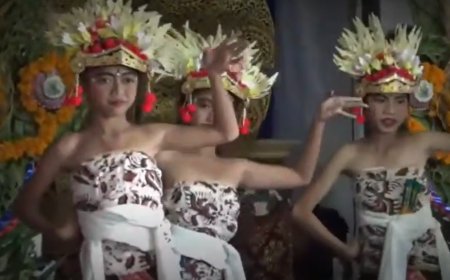
Cultural development reached its peak during this period. Arts such as Gambuh dance flourished within the royal court as performances rich in moral meaning, while Wayang Wong developed in temples as part of sacred offerings. Visual arts like gold painting and songket weaving also became integral to community traditions. Literary works such as kakawin, kidung, and geguritan were preserved in the palace and community halls (bale banjar) as tools for moral and spiritual education. Art was not merely a form of entertainment, but also a medium for character building and the reinforcement of noble values.
Mythological stories also enhanced the authority and charisma of leaders. One of the most well-known myths is the tale of Dalem Waturenggong, who was said to ride across the ocean in a chariot pulled by oxen. Although symbolic, this story reflects the people’s belief that their king had a special connection with the supernatural world and acted as an intermediary between humans and the gods. This belief strengthened the legitimacy of spiritual power and fostered respect and loyalty among the people toward their leader.
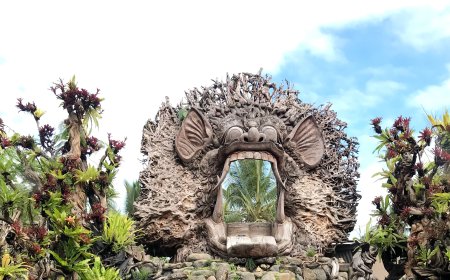
The memory of Waturenggong’s reign lives on in the collective consciousness of the Balinese people. This period is remembered as a time that brought perfect harmony between architecture, social life, economy, culture, and spirituality. Temples and palaces were not merely physical structures, but symbols of the cosmic order and universal balance. Society lived in peace, justice was upheld, agriculture and trade flourished, while art and literature became the lifeblood of social life. Supported by strong myths and spirituality, 15th-century Bali stands as an example of how a society can achieve balance between the physical and the spiritual realms. For this reason, this period truly affirms Bali’s title as the Island of the Gods.
References:
Arsana, I. Wayan. Babad Dalem: Sejarah Raja-Raja Bali di Gelgel dan Klungkung. Denpasar: Upada Sastra, 1996.
Cokorda, Raka Keputra. Babad Dalem Waturenggong: Sri Haji Krisna Kepakisan. Denpasar: Dinas Kebudayaan Bali, 1986.
Raka Sudewi. Kerajaan Bali Kuno. Denpasar: Balai Kajian Sejarah, 2011.