












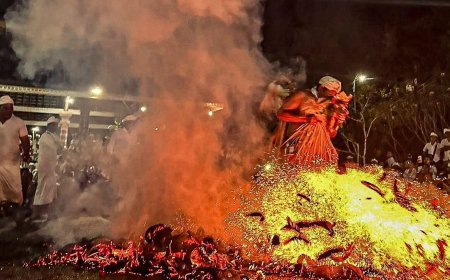










Behind the Dance Movements: The Life Journey of I Made Openanta, Guardian of the Balinese Cultural Soul
For more than five decades, I Made Openanta has devoted his life to Balinese dance. From his early journey as a young dancer to his role in educating the next generation, dance is portrayed not merely as movement but as a lifelong dedication. This article explores how one individual continues to safeguard the living spirit of Balinese culture amid changing times.

Artist Biography
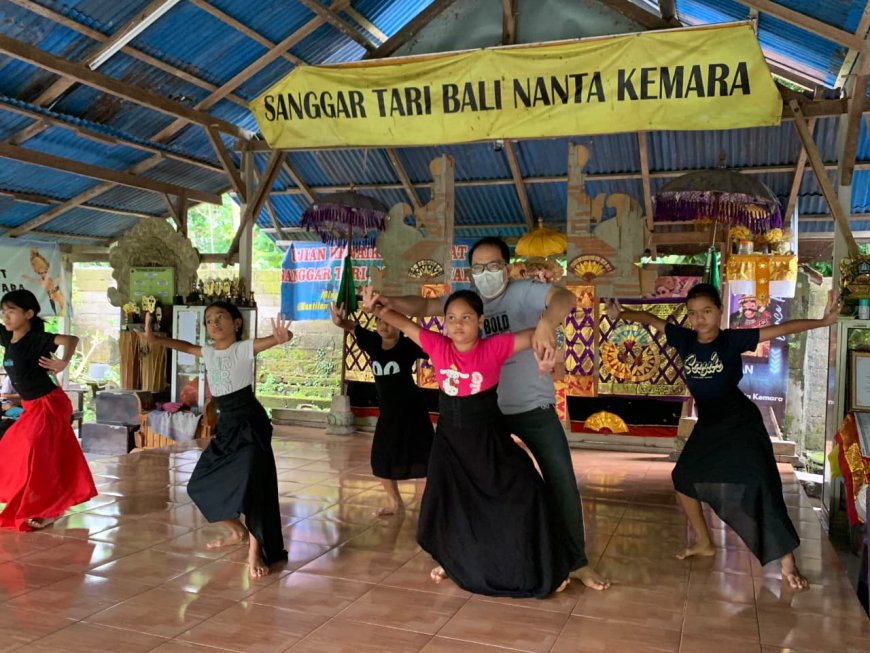
Behind the graceful and measured movements of Balinese dance lies a long process shaped by discipline, devotion, and a lifetime commitment to art. These movements do not emerge instantly; they are nurtured through years of learning, teaching, and cultural service. One figure who has consistently safeguarded the living spirit of Balinese dance is I Made Openanta, S.Sn., M.Pd., founder of Sanggar Tari Bali Nanta Kemara and a cultural arts teacher at SMAN 4 Denpasar. For more than five decades, he has dedicated his life to the world of dance.
A Long Journey of a Dance Artist
I Made Openanta’s relationship with dance began at an early age. He started learning Balinese dance in the second grade of elementary school under the guidance of several artists from Blahbatuh. From childhood, dance was not merely a skill to be mastered but a form of devotion. He regularly participated in ngayah voluntary service through art in temples and performed in various settings, including hotels, as part of his formative experiences.
His artistic path became more structured when he pursued formal education at KOKAR (Konservatori Karawitan Indonesia), later known as SMKI (Sekolah Menengah Karawitan Indonesia) and now SMK Negeri 3 Sukawati. This environment played a crucial role in shaping both his technical skills and artistic character. He continued to immerse himself in dance training until completing his studies.
He later advanced his education at ASTI (Akademi Seni Tari Indonesia), which evolved into STSI (Sekolah Tinggi Seni Indonesia) and is now recognized as Institut Seni Indonesia (ISI) Denpasar. During his years in higher education, he was actively involved in performances, artistic training, and cultural exchanges across regions and abroad. Beyond academic institutions, he also engaged in artistic activities through ARTI Foundation at the Art Centre Denpasar, a prominent hub for artistic collaboration in Bali.
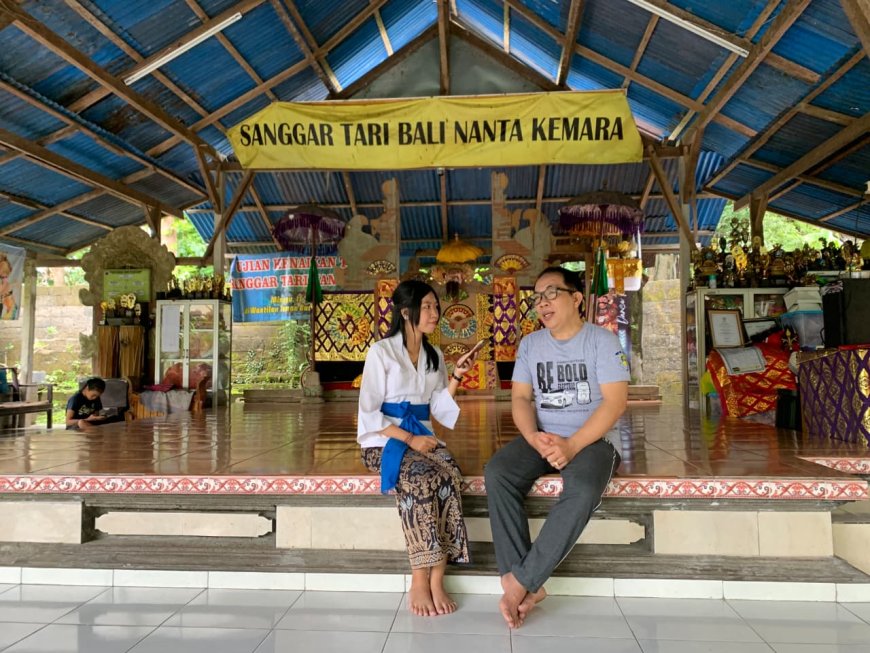 Interview session with I Made Openanta discussing his artistic journey (Source: Private Collection)
These experiences shaped him not only as a performer but also as a mentor and educator. To this day, I Made Openanta has been involved in the field of Balinese dance for over fifty years.
Dance as an Expression of the Soul
For I Made Openanta, Balinese dance is far more than a sequence of elegant movements. Dance is an expression of the human soul, manifested through rhythmic and aesthetically structured motion. It is inseparable from his life because it exists at the core of Balinese society, particularly within religious and customary practices.
He views art as a form of service. Wherever religious ceremonies take place, art naturally follows. Although he formally serves as a cultural arts teacher, dance remains the essence of his life. It is not merely a profession, but a lifelong calling that continuously gives meaning to his daily existence.
Discipline as a Guiding Principle
Decades of experience in the performing arts have shaped I Made Openanta’s worldview and principles. Among the most important values he upholds is discipline. Discipline, in his perspective, goes beyond rehearsal schedules or stage performances; it encompasses responsibility, punctuality, and commitment to completing every process thoroughly.
In the practice-oriented world of dance, discipline becomes the foundation of success. He believes that artists trained through consistent practice and stage experience are more adaptable, as they grow through real-world engagement rather than theoretical learning alone. This principle is central to how he guides and educates younger generations.
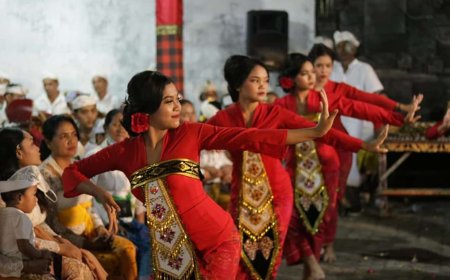
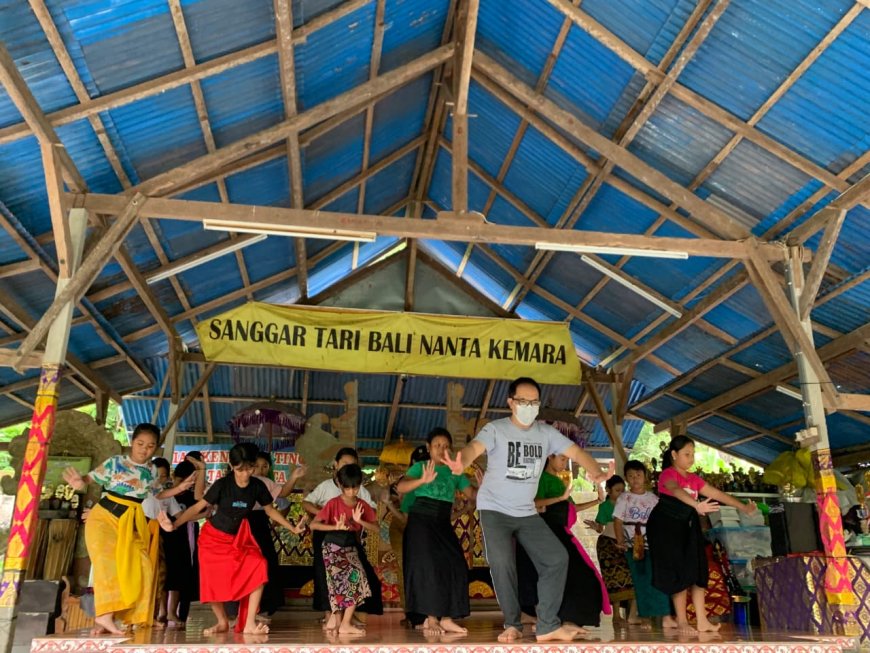 Children practicing Balinese dance as part of cultural transmission and education (Source: Private Collection)
Contribution Through Cultural Service
I Made Openanta’s contribution to the development of Balinese dance stems from a deep sense of devotion rather than personal ambition. For him, art will remain ajeg steadfast as long as religious and customary traditions continue. As long as ceremonies are held, dance will have a place and purpose.
Through his roles as a dancer, mentor, educator, and cultural practitioner, he remains actively involved in the artistic life of the community. Teaching and mentoring are not routines, but meaningful forms of cultural service that connect art with social life.
Hopes and Concerns for the Younger Generation
Amid rapid globalization and the influence of social media, I Made Openanta holds both concern and hope. He recognizes that spaces for learning traditional arts may diminish if they are not consciously protected. For this reason, dance studios play a vital role as places of guidance and cultural preservation.
According to him, fostering a love for art is the first step. When children develop affection for dance, they will naturally seek to learn, understand, and practice it as a form of contribution to society. Balinese dance also serves as a moral and cultural anchor, helping younger generations navigate the challenges of modern life.
Learning dance from an early age, he believes, builds character, mental resilience, and preparedness to face the future.
Preserving the Cultural Soul of Bali
The life story of I Made Openanta illustrates that preserving art is not merely about maintaining tradition, but about safeguarding the cultural soul itself. Through discipline, devotion, and an unwavering love for the arts, he continues to pass down Balinese cultural values to future generations. Behind every dance movement he teaches lies experience, meaning, and hope that Balinese dance will continue to live, grow, and remain relevant in an ever-changing world.