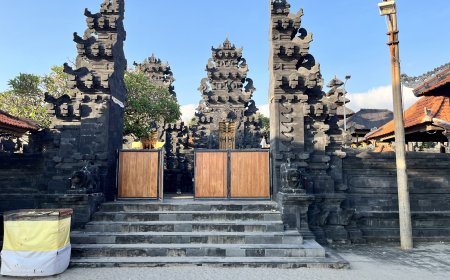
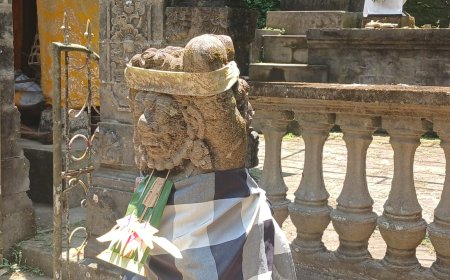
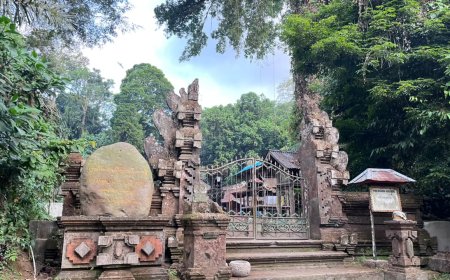
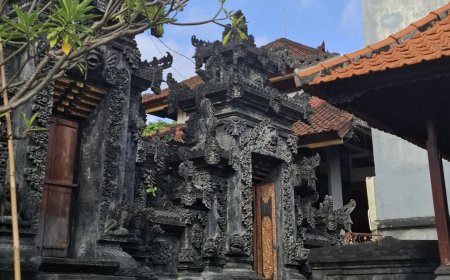

















Dalem Ketut Ngulesir: The Founder of the Gelgel Kingdom
Dalem Ketut Ngulesir, also known as Dalem Semara Kepakisan, was the founder and first king of the Gelgel Kingdom after relocating the center of government from Samprangan, due to his older brother's leadership being considered weak. During his reign, he attended a royal assembly in Majapahit, and upon returning to Bali, he was escorted by 40 Muslim soldiers from Majapahit, who were then granted land in Gelgel as a place to settle. This marked the beginning of the oldest Muslim community in Bali, with Nurul Huda Mosque serving as their center of worship. His policies and leadership transformed Gelgel into the political and cultural center of Bali for centuries, leaving behind a significant historical legacy that contributed to intercultural relations on the island.



AI Illustration of Dalem Ketut Ngelusir (Source : Private Collection)
The Ancient History of Bali is Inseparable from the Great Role of the Gelgel Kingdom, one of the most powerful kingdoms that ever existed on the Island of the Gods. Behind the kingdom’s glory stood an important figure who founded it Dalem Ketut Ngulesir. He was a wise king who moved the center of government from Samprangan to Gelgel, becoming the first ruler to lay the foundations of the Kepakisan Dynasty’s golden era in Bali. His story is recorded not only in local tradition but also in the historical legacy of Balinese kingdoms passed down through generations.
Following a major expedition led by Gajah Mada in 1343 AD, Bali officially became part of the Majapahit Empire. To strengthen control over the island, Majapahit appointed a noble of Brahmin descent from East Java, Sri Aji Kresna Kepakisan, as the ruler of Bali.
Sri Aji Kresna Kepakisan ruled from his palace in Samprangan, a region that at the time served as Majapahit’s administrative center in Bali. His reign was stable until his death. After his passing, power was handed down to his son, Dalem Samprangan. However, Dalem Samprangan's rule was seen as weak and ineffective in managing the kingdom. This led to widespread dissatisfaction among nobles and the people, creating political instability across the region.

AI Illustration of Dalem Ketut Ngelusir (Source : Private Collection)
Amid this uncertain situation, Dalem Ketut Ngulesir, the youngest brother of Dalem Samprangan, emerged. He lived in Pandak Village, and was known as a wise, fair, and capable leader. His popularity and influence among both the nobility and the common people led many to urge him to take over the throne and save Bali from political decline.
Responding to these calls, Dalem Ketut Ngulesir eventually accepted the mandate to lead. In 1383 AD, he was officially crowned king and immediately took a decisive step that marked the beginning of the Gelgel Kingdom.

AI Illustration of Dalem Ketut Ngelusir With His Army (Source : Private Collection)
His first action as king was to relocate the center of government from Samprangan to a new region called Gelgel, located in what is now Klungkung. There, he built a new palace known as Puri Suweca Linggarsapura, which became the symbol of new power in Bali.
This move was not only geographical but also strategic. Gelgel was closer to spiritual and cultural centers in eastern Bali, and it also held a more advantageous position in terms of defense and governance.
From that moment on, the Gelgel Kingdom was officially established with Dalem Ketut Ngulesir as its first king. This marked the beginning of an important period in Balinese history, later known as the golden age of Hindu kingdoms in Bali.
During his reign, Dalem Ketut Ngulesir was known as a just and wise king, capable of building a stable government structure. He reorganized the bureaucracy, established laws and royal regulations, and maintained harmonious relations among nobles, the people, and traditional leaders.

AI Illustration of Dalem Ketut Ngelusir With His Followers (Source : Private Collection)
One particularly interesting aspect of his reign was his relationship with Majapahit and the early arrival of Islam in Bali. According to local tradition, it is said that Dalem Ketut Ngulesir once visited Majapahit to establish political and cultural ties.
Upon his return to Bali, he was accompanied by around 40 attendants from Majapahit, who were Muslim. These attendants were then given a place to live near the Gelgel area and became the early Muslim community in Bali, which still resides in Kampung Gelgel, Klungkung. This community has preserved its identity and traditions as part of Bali's historical heritage and continues to live harmoniously alongside the predominantly Hindu local population.
Dalem Ketut Ngulesir ruled for several decades and passed away around 1460 AD. After his death, the leadership of the Gelgel Kingdom was succeeded by his son, Dalem Waturenggong, who would later bring the kingdom to its peak of glory. Under Dalem Waturenggong, Gelgel became a powerful kingdom, exerting influence as far as Lombok and Sumbawa.
Dalem Ketut Ngulesir was not only the founder of a kingdom but also the architect of a civilization that shaped the face of classical Bali. Under his leadership, a distinct Hindu-Balinese governance system emerged, complete with its own social structure, customs, and legal systems that continue to influence Balinese life to this day.
Although the Gelgel Kingdom eventually declined and was replaced by the Klungkung Kingdom in the 17th century, the legacy of greatness established by Dalem Ketut Ngulesir remains enduring. Gelgel Village continues to be a place rich in historical, cultural, and spiritual meaning. His story is remembered as the beginning of Bali’s golden age and remains an essential part of the island’s colorful historical narrative.
References:
Dinas Komunikasi dan Informatika Kabupaten Klungkung. (n.d.). e-Museum Kabupaten Klungkung. https://e-museum.klungkungkab.go.id
Pemerintah Desa Gelgel. (2018, August 7). Sejarah Desa Gelgel. Official Website of Gelgel Village. https://gelgel.desa.id/artikel/2018/8/7/sejarah-desa-gelgel
Pemerintah Desa Kampung Gelgel. (2022, August 7). Sejarah Desa Kampung Gelgel. Official Website of Kampung Gelgel Village. https://kampunggelgel.desa.id/artikel/2022/8/7/sejarah-desa-kampung-gelgel