
























Majapahit Storm: Gajah Mada's Expedition That Destroyed the Bedahulu Kingdom (1343 CE)
The Majapahit expedition to Bali in 1343 CE was a significant moment that changed the destiny of the island of Bali. Led by Mahapatih Gajah Mada, this expedition faced fierce resistance from two powerful Balinese figures, Ki Kebo Iwa and Ki Pasung Grigis. However, Majapahit's cunning tactics proved effective, even when facing unmatched power. This conquest marked the beginning of a new chapter in Bali's history, giving rise to a stronger cultural heritage.


The Majapahit expedition to Bali in 1343 CE was a pivotal moment in the history of Bali. This event marked the fall of the Bedahulu Kingdom and the end of Bali's long-standing political autonomy under the Warmadewa Dynasty. The expedition, led by Mahapatih Gajah Mada, paved the way for a new era where Bali's identity was profoundly shaped by acculturation with Javanese-Majapahit traditions. This conquest not only changed the political landscape but also left a strong cultural legacy that is still visible today.
This expedition began with the appointment of Gajah Mada as Mahapatih Amangkubhumi in 1336 CE. At that time, Gajah Mada uttered an oath: "Lamun huwus kalah nusantara ingsun amukti palapa, lamun kalah ring Gurun, ring Seram, Tanjungpura, ring Haru, ring Pahang, Dompo, ring Bali, Sunda, Palembang, Tumasik, samana ingsun amukti palapa." This oath affirmed that Gajah Mada would not enjoy worldly pleasures before successfully conquering the entire Nusantara under the rule of Majapahit. According to the oath, there were ten regions that had to acknowledge the glory of Majapahit, and Bali was one of them.

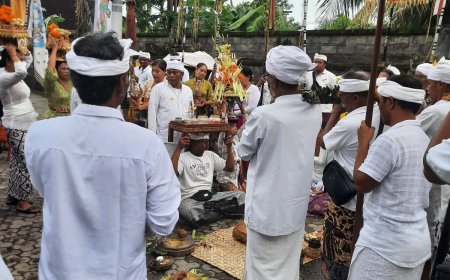
AI Illustration Of Bali As A Kingdom Of Art (Source: Personal Collection)
Beyond the ambition of uniting Nusantara, the Majapahit conquest of Bali had a deeper reason. At that time, Bali was known not only for its geographical location but also as a region with a unique and diverse culture. The rulers of Bali were known as patrons of the arts, making their entire kingdom seem like a living work of art, full of tradition and beauty. Majapahit's interest in Bali was inseparable from the important role of Gayatri Rajapatni, the mother of Queen Majapahit, Tribhuwana Tunggadewi. Gayatri had a deep admiration for traditional Balinese culture. She saw Bali not just as a political target but as a valuable cultural heritage. Gayatri believed that Bali, with its relatively remote position far from the centers of economic and political influence, could serve as a guardian of the fundamental cultural and religious elements of Majapahit.
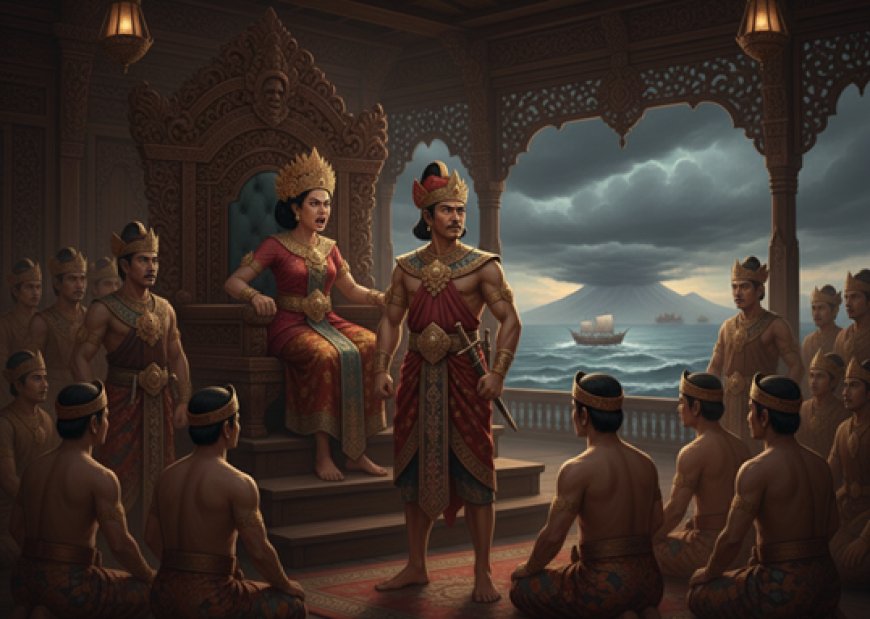
AI Illustration Of The Majapahit Queen Angry At The Bedahulu King's Decision (Source: Personal Collection)
Queen Tribhuwana was sure the conquest would be smooth, given that Bali had been conquered by the Singasari Kingdom in 1284 CE. However, that prediction was far off the mark. The planned conquest of Bali instead faced fierce resistance from the King of Bedahulu, Sri Astasura Ratna Bhumi Banten. The king refused to submit to Majapahit's authority and was determined to defend his kingdom's independence. His stance was not without reason he was supported by his highly-trusted military commanders and strategists, Ki Kebo Iwa and Ki Pasung Grigis. Both were known as symbols of Balinese resistance. The strong rejection from the King of Bedahulu sparked Queen Tribhuwana's anger. She was incensed by Bali's defiant attitude and its opposition to Majapahit's authority. Feeling disrespected, she immediately issued a firm order to Gajah Mada to conquer Bali.
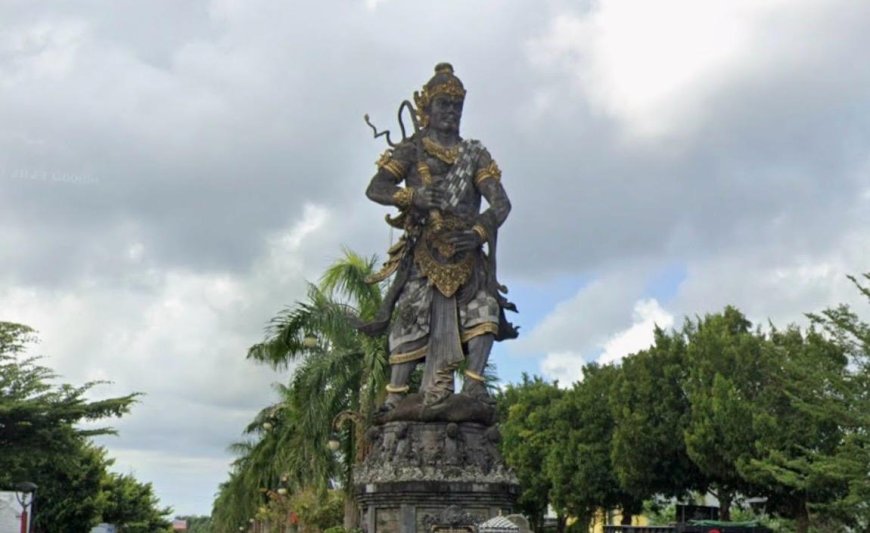
Illustration Of Ki Kebo Iwa (Source: Personal Collection)
Gajah Mada realized that conquering Bali could not be done in the usual way. He began his strategy by facing Ki Kebo Iwa, a gigantic military commander who could not be defeated in a direct fight. Gajah Mada tricked Ki Kebo Iwa under the pretext of a wedding in Java. After successfully trapping him in a well, the Majapahit forces buried him with rocks, but the attempt was futile. Ki Kebo Iwa emerged from the well without a single injury, then offered himself to be killed with lime water. Before he drew his last breath, he cursed Majapahit, foretelling that they would one day be struck by disaster as a result of their treacherous actions.
After successfully eliminating Ki Kebo Iwa, Gajah Mada launched a four-pronged attack to conquer the Bedahulu Kingdom. His troops were divided into four small groups and landed on various sides of the island. This strategy was even more effective because Gajah Mada exploited the internal conflict among the Balinese people who disliked their cruel king. With the support of the local population and attacks from various sides, the Majapahit forces destroyed the Bedahulu Kingdom and forced the king and his family to surrender.
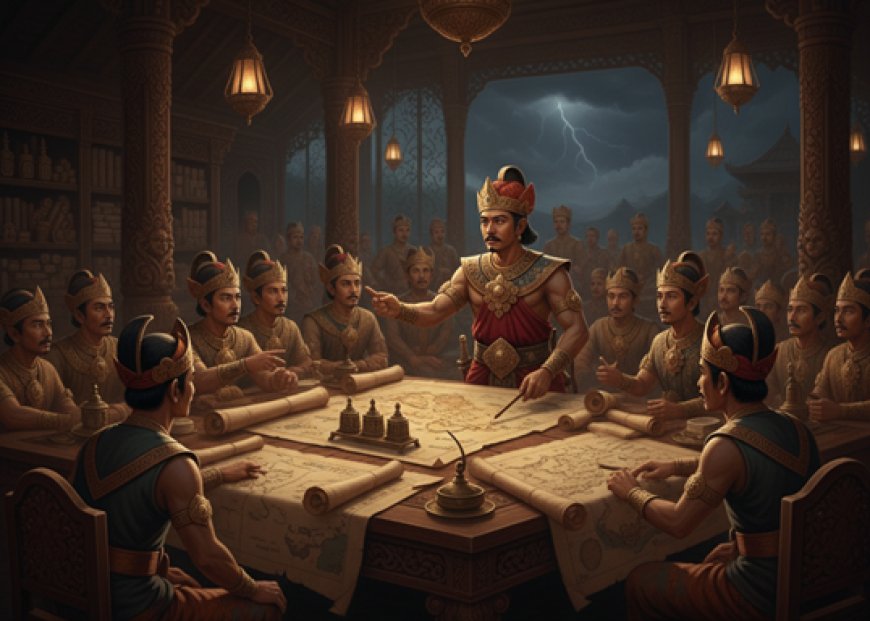
AI Illustration Of Gajah Mada Preparing His Strategy (Source: Personal Collection)
After Gajah Mada successfully controlled all of Bali's coastal regions, he launched another strategy to defeat Ki Pasung Grigis and his forces who were still holding out in Tengkulak Village. Gajah Mada pretended to surrender, which made Ki Pasung Grigis feel victorious. The Balinese military strategist then invited Gajah Mada and his troops to his residence. Gajah Mada saw this opening and immediately set a trap. He humiliated Ki Pasung Grigis by accusing him of breaking a promise to his pet dog, a serious violation in the teachings of a warrior (ksatrya). Ki Pasung Grigis had promised the dog food, but he did not keep his word. Feeling ashamed, Ki Pasung Grigis seemed to lose all his power and chose to surrender himself and all of his people to Majapahit's rule. The surrender of Ki Pasung Grigis marked the destruction of the Bedahulu Kingdom and Bali's complete conquest by the Majapahit Kingdom.
References
Alit, D. M. (2019). Strategi Politik Majapahit Menaklukan Kerajaan Bali 1352-1380 M. Social Studies, 1-12.
Pangestika, A. E. (2019). Penaklukan Bali Oleh Kerajaan Majapahit Tahun 1343 M. PESAGI (Jurnal Pendidikan dan Penelitian Sejarah), 1-12.
Raka, A. A. (2021). Kebo Iwa Di Bali. Denpasar: Pustaka Larasan.