






















The Transformation of Ki Patih Wulung during Bali’s Transition to Majapahit
A Historical account of Ki Patih Wulung, the Majapahit appointed leader who guided Bali through its 14th century transition, balancing local wisdom and Javanese influence.
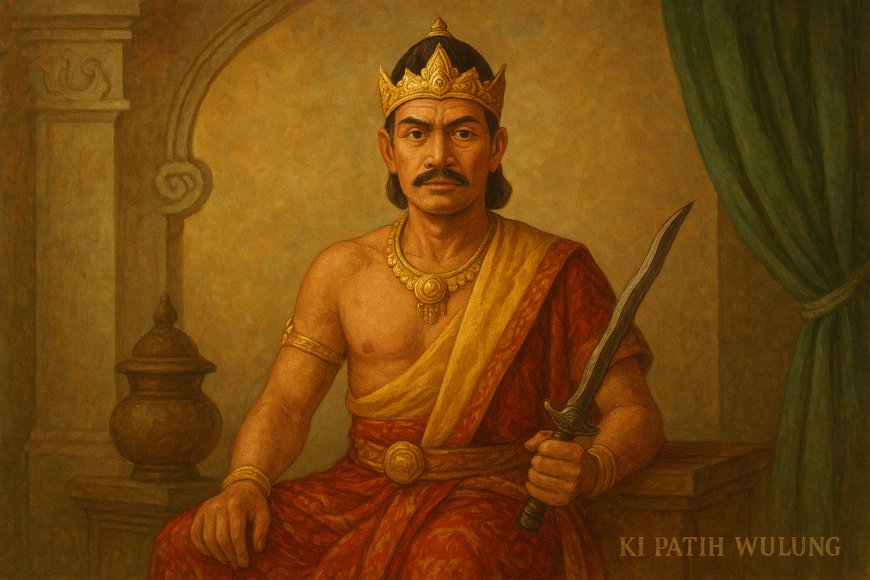
The mid-14th century marked a crucial point in Bali’s history. The fall of the Bedahulu Kingdom to Majapahit forces ended the centuries old sovereignty of the Bali Aga. Amid this leadership vacuum emerged an important figure, Ki Patih Wulung. He was not merely an acting official but a leader who guided Bali through the transition from local rule to a new order under Majapahit.
In 1343 CE, Queen Tribhuwana Tunggadewi Patih Gajah Mada and his troops succeeded in conquering Bedahulu. King Asta Asura Ratna Bumi Banten, along with his patihs Ki Kebo Iwa, Ki Pasung Grigis, and others, fell in battle or were captured. Negotiations were then held at the Majapahit court, led by Queen Tribhuwana Tunggadewi, which decided that authority in Bali would temporarily be entrusted to a Brahmin named Mpu Jiwaksara, later titled Ki Patih Wulung.
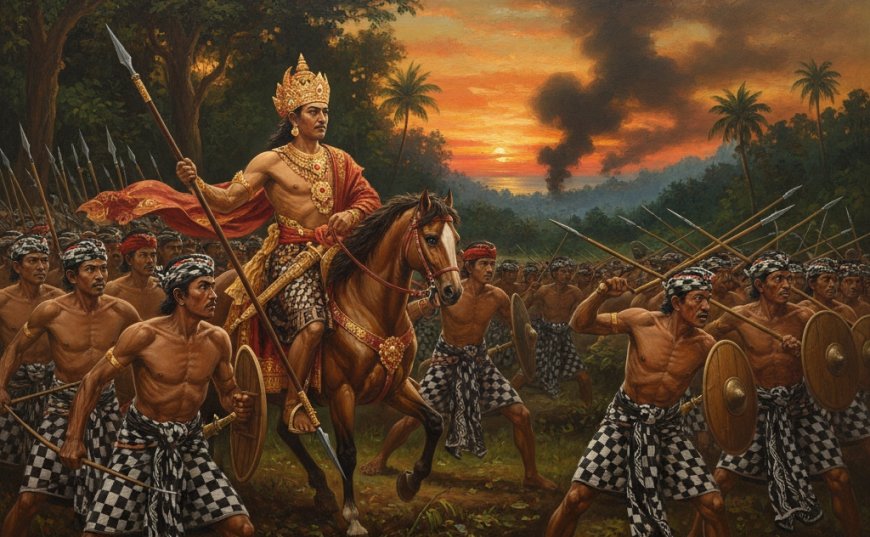
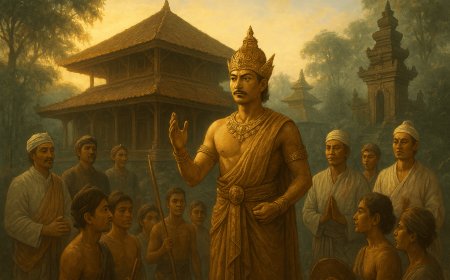
Majapahit Expedition to Bali, AI Illustration (Source: Private Collection)
Although the Majapahit forces gained control of Bali, resistance from the Bali Aga people continued to flare, such as the uprisings of Ki Tokawa in Ularan and Ki Buwahan in Batur. During this transitional period, Ki Patih Wulung organized the government while suppressing persistent underground resistance.
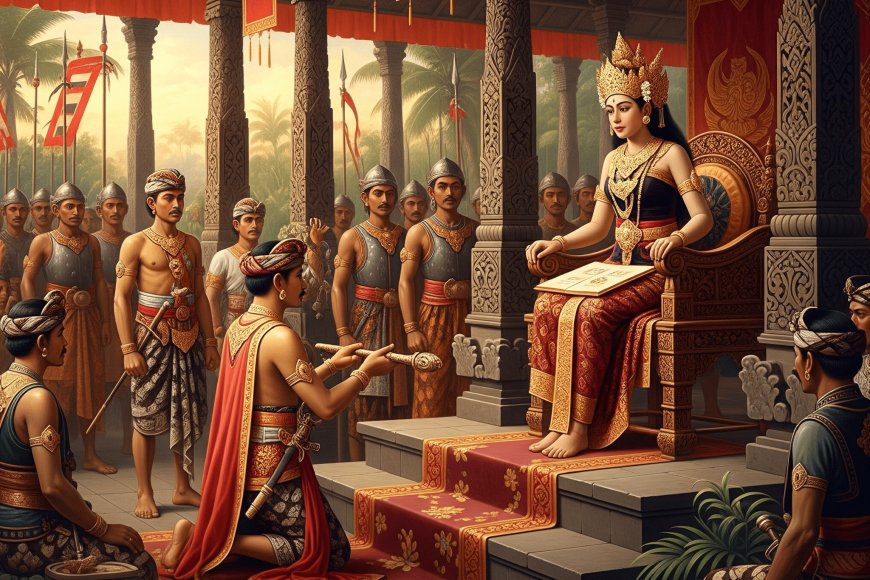
Appointment of Mpu Jiwaksara as Patih Mangkubumi of Bali, AI Illustration (Source: Private Collection)
Ki Patih Wulung played a major role in stabilizing Bali after the Majapahit occupation. He undertook military actions to quell rebellions and also engaged in extensive discussions with Bali Aga leaders to achieve greater stability. Ki Patih Wulung was known for his closeness to the Bali Aga community and leaders, making dialogue between Majapahit and Bali Aga more constructive.
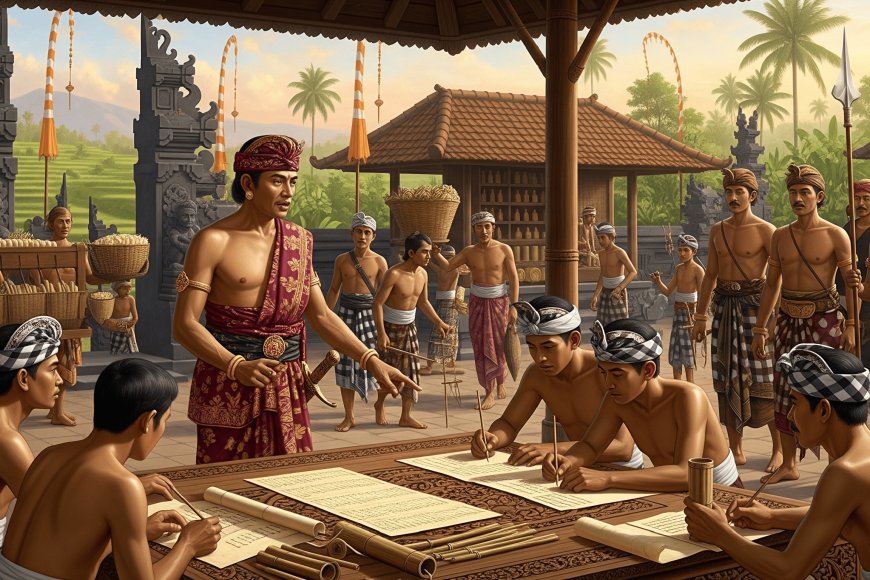
Kingdom Administration by Ki Patih Wulung, AI Illustration (Source: Private Collection)
Once the situation was relatively secure, about seven years after Ki Patih Wulung became interim leader, he traveled to Majapahit to meet Queen Tribhuwana. Further negotiations were held at the Majapahit court to discuss Bali’s kingship. After these talks and expert assessments, it was decided that Sri Aji Kresna Kepakisan, known to the Balinese as Ida Dalem Wawu Rawuh would be installed as King of Bali Dwipa with his palace at Samplangan, while Ki Patih Wulung would remain as mangkubumi to ensure an orderly transition.

Coronation of Sri Aji Kresna Kepakisan as King of Bali, AI Illustration (Source: Private Collection)
At the start of Sri Aji Kresna Kepakisan’s reign, many people had yet to fully accept the new king’s authority. Ki Patih Wulung, already known for his closeness to the Bali Aga community, became a key figure enabling the people to voice their aspirations at court. As a result, the kingdom granted the people’s requests, including:
- Recognition of the Catur Kahyangan.
- Acknowledgment and protection of major temples such as Pura Besakih, Pura Lempuyang, Pura Dasar Bhuwana, and others.
- Equal rights and obligations for Majapahit and Bali Aga citizens, and the appointment of Bali Aga leaders to participate in governmental administration.

Dialogue of Patih Wulung with Bali Aga Leaders, AI Illustration (Source: Private Collection)
Ki Patih Wulung’s influence persisted into later generations. When Majapahit weakened at the end of the 15th century, his descendants and followers continued to stand out in various chronicles. The Babad Bandesa Manik Mas records the ongoing roles of Bali’s patihs and commanders, as well as the descendants of Ki Patih Wulung, in military expeditions to Blambangan and Pasuruan during the 15th and 16th centuries.
His descendants and followers participated in expansions, rebellions, and the consolidation of power in Bali’s kingdoms after Majapahit’s decline. This reinforces that Ki Patih Wulung’s legacy was not only administrative and military but also established a noble and warrior network that shaped Balinese history into the Gelgel era.
After the expedition to Blambangan, which marked the end of his military career, a political upheaval arose in Bali, shaking the stability of the government. In the midst of this tense situation, Ki Patih Wulung chose to resign from his position as royal patih. He then settled and memacek (took residence and led) in an area that would later be known as Mas Village, in the central region of Bali. From that moment, he became known as Bandesa Manik Mas, signifying his transformation from a statesman and military leader into a people’s leader who guided village life, spirituality, and education in his community.

Ki Patih Wulung during the Blambangan expedition, AI Illustration (Source: Private Collection)
As a Bandesa, he did not lose his influence or authority. On the contrary, during this period, Bandesa Manik Mas became a central and respected figure in Central Bali, admired for his wisdom and spiritual depth. His influence continued into later generations, particularly when Dang Hyang Nirartha arrived in Bali in the 16th century. The descendants of Bandesa Manik Mas warmly welcomed the great priest and even offered one of their daughters to become his wife. From this lineage emerged the Brahmana Mas, known throughout Balinese history as guardians of tradition, sacred knowledge, and ancestral wisdom.
The transformation of Ki Patih Wulung reflects Bali’s way of preserving its identity amid external hegemony. Through diplomatic policy, he safeguarded dharma the balance between political power and local wisdom. This steadfast yet flexible approach enabled Bali to remain a center of culture and spirituality despite successive waves of Javanese dominance
References
Gingsir, I. N. D. Kiyai Gusti Pangeran Bendesa Manik Mas. (1996). Jakarta, Yayasan Diah Tantri