








































The Traces of Kertanegara of Singasari in the Island of the Gods (1284 AD)
The history of the Indonesian archipelago is filled with stories of great kings with great ambitions. One of them was King Kertanegara, the last ruler of the Singasari Kingdom in East Java. He is remembered for his courage and ambition to expand his power beyond Java. Among the many political and military steps he took, the expedition to Bali in 1284 AD became one of the most significant events in his reign.

In the 13th century, the political situation in the archipelago was far from simple. Many kingdoms stood with their own strength, often competing, sometimes cooperating, and occasionally going to war. This condition required any ruler who wanted to become powerful to think far ahead. Kertanegara realized that if Singasari only focused on Java, its position would be fragile. At the same time, the Yuan Dynasty from China, led by the Mongols, was expanding its territory into Southeast Asia. This external threat was one of the reasons why Kertanegara turned his attention outward.
Bali was considered an important region to control. The island was not only known for its strong Hindu culture, but also for its strategic position in maritime trade routes. Its location connected Java with eastern parts of the archipelago. Controlling Bali meant controlling a vital trade route. In addition, Bali had local kingdoms that were quite influential. By conquering Bali, Kertanegara wanted to show that Singasari was a truly powerful kingdom, not only in Java but also in surrounding regions.

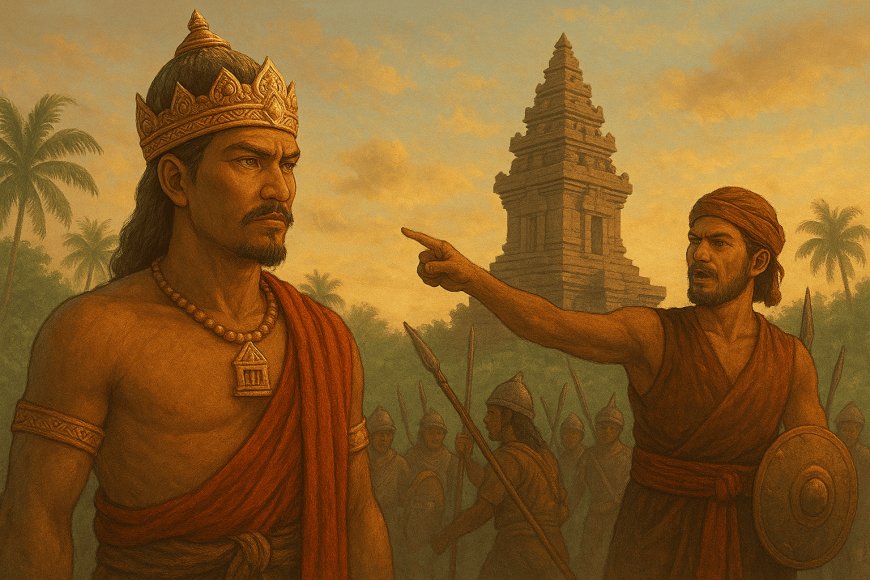
AI Illustration of King Kertanegara (source: Private Collection)
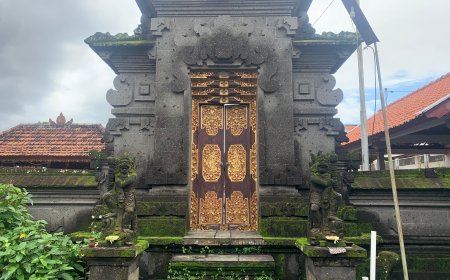
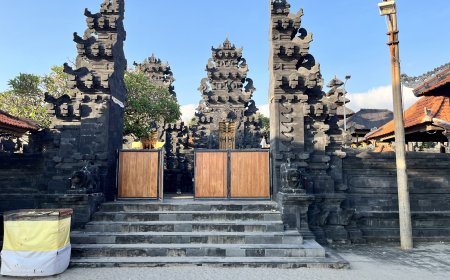
Before the expedition, Bali already had an organized social life. Its people lived under local kingdoms influenced by Hindu traditions. Temples and religious practices had become an important part of society. This made Bali attractive, not only as a strategic region but also as a cultural center. Controlling Bali therefore also meant extending Javanese influence in culture and religion to the east.
The expedition to Bali was carried out in 1284 AD. Detailed accounts of the battle are not available, but several sources mention that Singasari successfully defeated the local Balinese kingdom. The disciplined Singasari troops demonstrated their strength. This victory was not only about military force but also about strategy. Kertanegara managed to expand Singasari’s influence through concrete action rather than empty threats.
The impact of this expedition was significant. Politically, Singasari became more respected. Its territory expanded, and Kertanegara’s prestige increased among other kingdoms. Culturally, the relationship between Java and Bali became closer. While Bali maintained its own identity, Javanese influence entered in the fields of art, religion, and administration. The meeting of these two traditions enriched the cultural landscape of the archipelago.
This expedition also showed that by that time, the idea of uniting the archipelago already existed. Although it was not yet in the form of a modern nation-state, Kertanegara’s actions were an early attempt at unity. The effort to bring regions together was not only achieved through war but also through culture and trade.
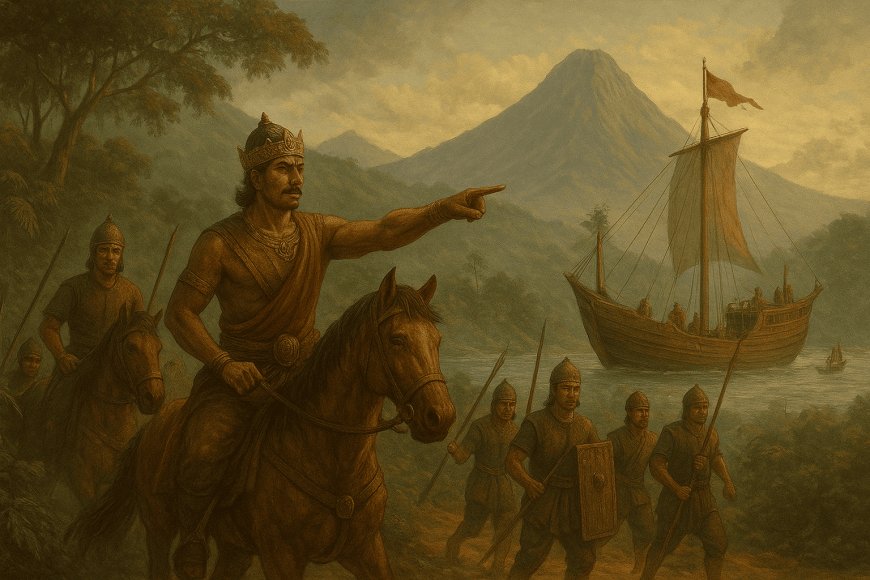
AI Illustration of The Military Expedition of King Kertanegara (source: Private Collection)
However, the glory did not last long. In 1292 AD, Kertanegara was killed in a rebellion led by Jayakatwang of Kediri. The fall of Singasari caused its conquered regions, including Bali, to lose political stability. Bali once again came under the control of local rulers until it was later integrated into the Majapahit Kingdom. Although brief, Kertanegara’s influence in Bali left an important trace.
From this event, we can see how far-sighted Kertanegara’s vision was. He was not only a king who thought about Java’s security but also a leader who sought to unite the archipelago. The expedition to Bali proves that centuries ago, there was already an ambition to unify the islands separated by the sea.
The traces of Kertanegara in the Island of the Gods in 1284 AD stand as clear evidence of how a king tried to strengthen his kingdom while building networks of power across the archipelago. This event reminds us that Indonesian history is not only about wars, but also about ambition, strategy, and vision. From Bali, we learn that the spirit of unity has long existed, even though the path toward it was never easy.
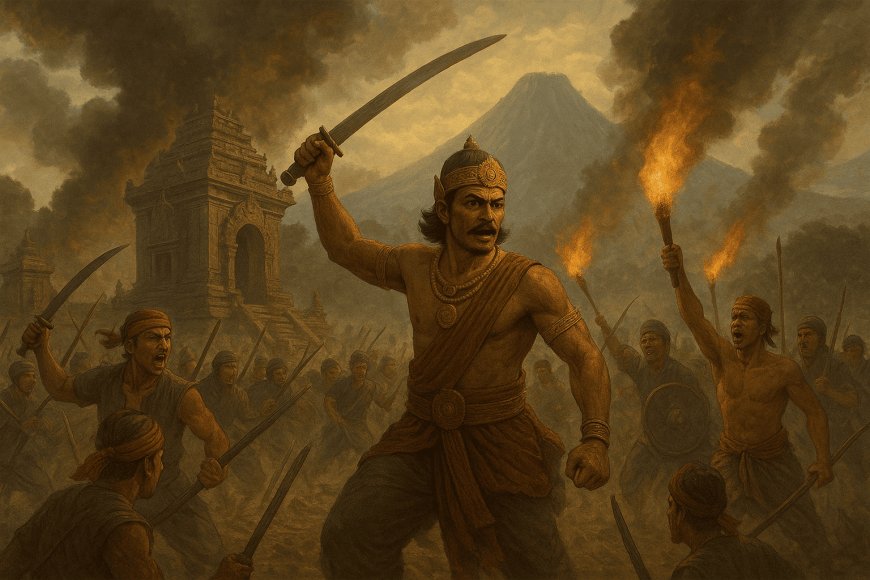
AI Illustration of The Rebellion of Jayakatwang (source: Private Collection)
Sources
Cœdès, G., The Indianized States of Southeast Asia, 1968, University of Hawaii Press.
Hall, K. R., A History of Early Southeast Asia: Maritime Trade and Societal Development, 100–1500, 2011, Rowman & Littlefield.
Muljana, S., Negarakertagama dan Tafsir Sejarahnya, 2008, LKiS.
Pigeaud, T. G. Th., Java in the 14th Century: A Study in Cultural History, 1960, Martinus Nijhoff.
Ricklefs, M. C., Sejarah Indonesia Modern 1200–2008, 2008, Serambi Ilmu Semesta.
Pararaton (Kitab Raja-Raja), 1987, Balai Pustaka.