












Plastic For Art: Turning Plastic Waste into Balinese Art
Plastic For Art is an art community from Klungkung, Bali, that uses plastic waste as a material for artworks. The community, initiated by Dewa Bayu in 2024, processes used plastic into various works of art. Through this creativity, Plastic For Art shows that waste once considered useless can be given a new function while also becoming part of efforts to protect the environment.
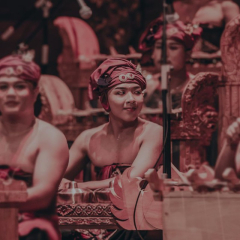
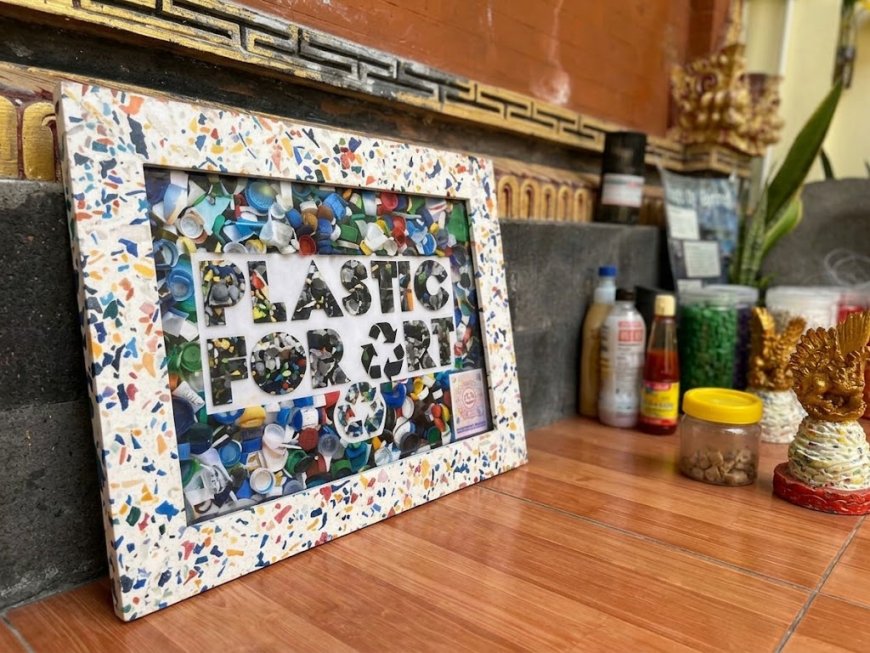
What happens when used oil bottles, mineral water bottle caps, and shampoo bottle caps that are no longer needed become part of a work of art? These objects may have been seen merely as waste after they are no longer used. However, for Dewa Bayu, these objects can still have another function. Through Plastic For Art, plastic waste is processed into parts of artworks, ranging from gamelan cases to dance attributes and accessories.
The idea began with Dewa Bayu's concern, a Balinese artist and composer from Klungkung who initiated Plastic For Art, about the condition of the environment. As an artist and composer, he sees the environment as one of his sources of inspiration in creating works. The sounds of animals, plants, nature, and various conditions around him can become ideas for creating art. However, when the environment that serves as a source of inspiration becomes increasingly filled with waste, he felt the desire to do something through the field he works in.
“People in the arts usually tend to look for sources of ideas from the conditions of the environment,” said Dewa.
The community, which is based in Klungkung, Bali, began to be initiated in 2024 by Dewa, stemming from his concern about the condition of the environment. This concern encouraged him to explore the use of plastic as a material in art. After going through various experiments, Plastic For Art was officially introduced in 2026. In the early stages, Dewa conducted various experiments to discover how plastic could be used in artworks, including to create parts of gamelan.
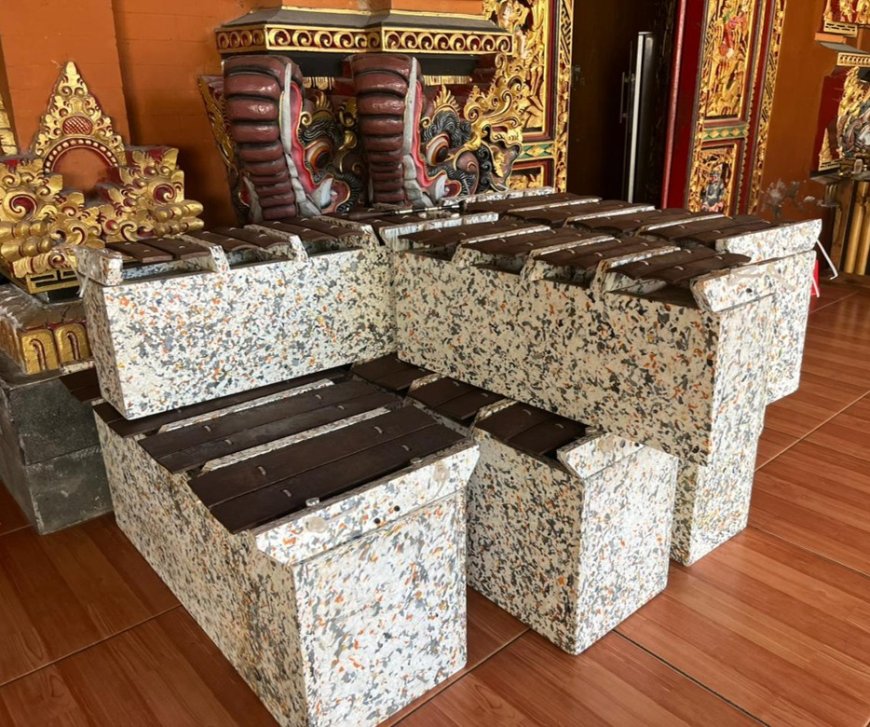
A Plastic-Based Selonding Gamelan Pelawah (Source: Personal Collection)
One of the results of this exploration is a Selonding gamelan that uses plastic as the material for its case. In Balinese, this part is known as the pelawah, which is the container or structure that forms part of a gamelan. While it is usually made from wood, Plastic For Art attempts to replace it with boards made from processed plastic waste.
The material is obtained through collaboration with Rumah Plastik Mandiri Buleleng. Plastic waste is collected from the environment, including from households, and then processed into boards before being reused. One type of plastic used is HDPE, which can be found in various objects such as oil bottles, mineral water bottle caps, and shampoo bottle caps.
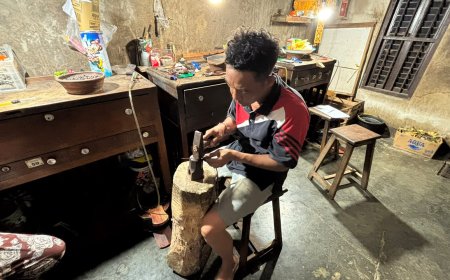
The process begins with the collection of used plastic, which is then shredded and cleaned. The plastic is subsequently heated until it melts and is pressed into sheets of board. Once it becomes a board, the material can then be used to make the required parts. Dewa cuts and assembles it using tools that are essentially also used in woodworking.
The amount of plastic needed to make the gamelan is also considerable. Dewa estimates that more than one hundred kilograms of plastic waste are used for one Selonding barung. Bottles and packaging caps that were previously scattered as waste are eventually collected and processed into material that can be used in a work of art.
The use of plastic also requires Dewa to make various adjustments. He does not only consider the shape of the gamelan case, but also the character of the sound he wants to produce. After going through an exploration process for around eight months, he chose to use a diatonic scale, Do, Re, Mi, Fa, Sol, La, Si, Do, while still maintaining a Balinese nuance.
According to Dewa, he does not simply want to bring traditional sounds into a case made of plastic. Therefore, he searched for a sound character that he felt could become a middle ground between Balinese musical elements and the new concept being developed. This process became one part of the long journey before the plastic-based gamelan could finally be used.
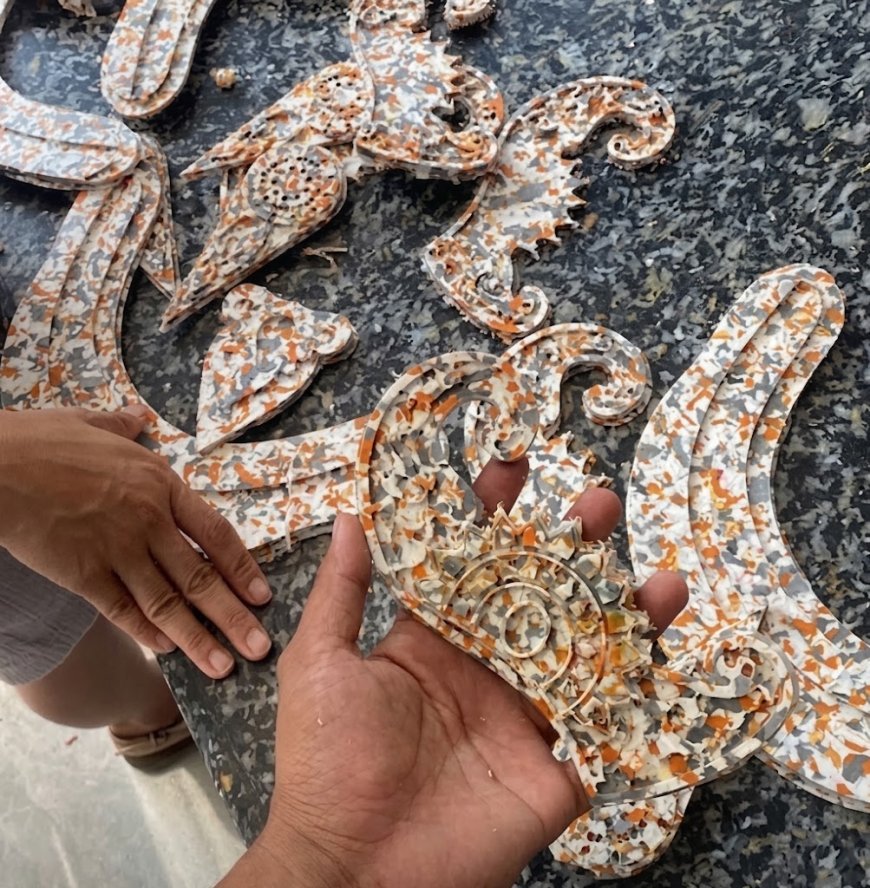
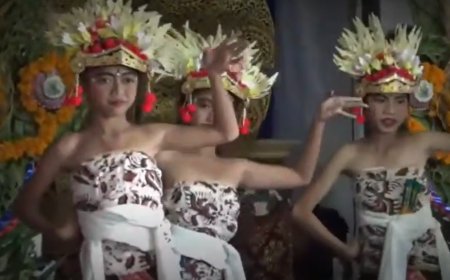
Plastic-Based Dance Accessories (Source: Personal Collection)
However, the use of plastic in Plastic For Art does not stop at gamelan. The same material is also used to create dance attributes and accessories. This is another form of exploration carried out by the community to see how far recycled plastic can be used in Balinese arts.
Attributes and accessories have an important function in a dance performance because they help shape the appearance of a dancer. Therefore, when plastic materials are used, they need to be processed and reshaped to suit the needs of the artwork. Recycled plastic boards can be cut and assembled into various forms that are then used as parts of dance equipment.
In this way, objects that were originally bottles or packaging caps are no longer recognizable as waste when they appear on stage. The material has gone through several stages of processing and gained a new function as part of an artwork. For Plastic For Art, this provides an opportunity to continue exploring the use of plastic beyond gamelan production.
Their exploration is also still ongoing. Besides Selonding, Dewa mentioned several works that are currently being developed, such as Gender Wayang, Angklung Kocok, and Rindik. In Angklung Kocok, plastic is used for the case. They are also experimenting with making wayang from plastic. Meanwhile, in dance works, the use of this material continues to be developed for various types of attributes and accessories.
Plastic For Art does not only carry out its activities at the place where the artworks are made. Since being introduced in 2026, their works have already been brought to various performances several times. Dewa said that within around three months after its launch, they had performed around eight times at various events. In addition to performances, the community's activities also include regular gamelan learning sessions, such as Gender and Selonding, held in the afternoons.
The response to the works has also been quite positive so far. Dewa said that more people have expressed appreciation after seeing the plastic-based gamelan. Nevertheless, he realizes that not everyone can immediately accept the use of plastic as part of gamelan or artworks. According to him, this is natural because the concept brought by Plastic For Art is indeed different from what people have traditionally known.
For Dewa, Plastic For Art is not a community that wants to encourage people to become fanatical about waste. Instead, they see it from the perspective of artists who want to reduce the use of certain materials and seek alternatives through materials that are no longer being used. Wood and other organic materials still have their place in the arts, but in his view, the use of alternative materials should also be explored.
This idea becomes even more interesting when connected to the waste problem in Bali. What Plastic For Art is doing is certainly still very small compared to the amount of waste produced every day. However, Dewa sees their work as a simple example of how waste can be utilized according to each person's abilities.
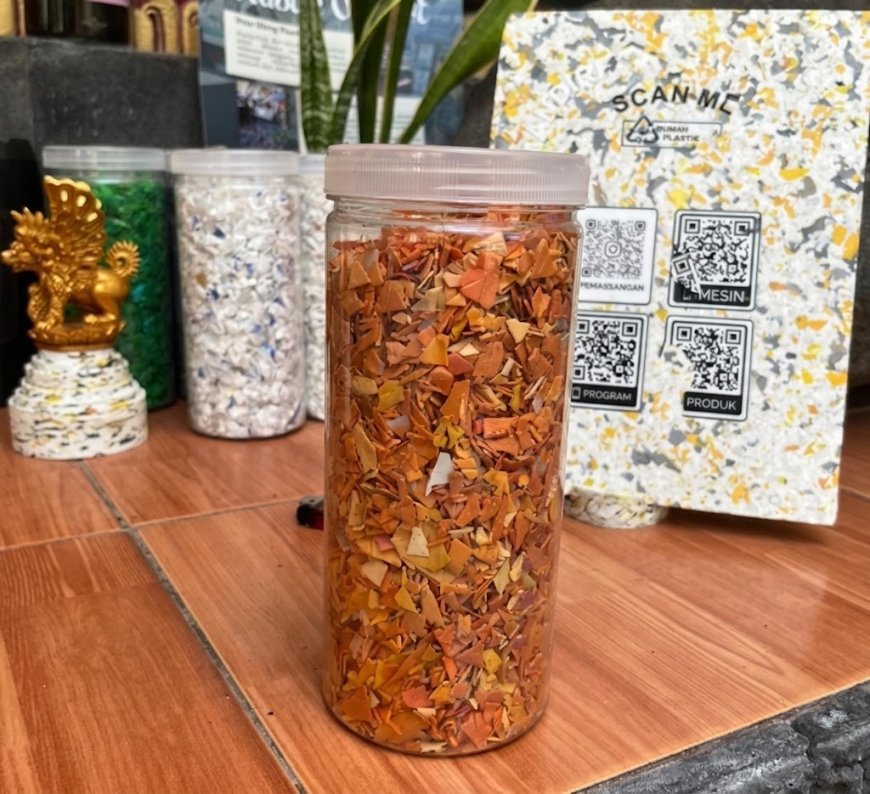
Shredded Plastic Waste (Source: Personal Collection)
A single Selonding barung alone requires more than one hundred kilograms of plastic waste. That amount comes from just one artwork made by one community. From this, a fairly simple question arises: what if more people or communities in Bali had their own ways of processing the waste found in their surroundings?
This does not mean that all waste has to be turned into artworks. Waste management certainly requires many other things, such as the habit of sorting waste, processing facilities, and the involvement of communities and the government. However, creativity can be one way to give discarded objects a new function.
Plastic For Art is still in the early stages of its journey. Many works are still in progress, and there are still many possibilities they want to explore. Dewa said that for now, they want to continue creating and exploring plastic materials in various forms of art before thinking about further development.
His hope is simple. He wants Plastic For Art to have the space to continue growing and creating. According to him, the community does not always need support in the form of funding. Opportunities to perform, create, and introduce their ideas to the public are also important.
“Give us space to continue creating and developing our work,” said Dewa.
Plastic For Art shows that plastic waste does not always have to end up as waste, but can be processed into materials with artistic value and a new function. Through works such as Selonding gamelan, dance attributes, and accessories, Dewa Bayu seeks to combine creativity with environmental awareness. Although this is still a small step, Plastic For Art demonstrates that art can be one way to change the way people view waste while introducing alternatives in the arts.