


















Siakin Village: Agrarian Life in the Heart of Kintamani’s Forest
Siakin Village in the Kintamani region presents a calm and modest side of Bali, a village where community life revolves around agriculture as the heartbeat of everyday living. Surrounded by cool mountain air and landscapes still wrapped in lush greenery, residents manage gardens and farms that serve as their primary source of livelihood, from coffee to a wide range of horticultural crops. Here, the land is not merely a field, but a living space: a place to plant, nurture, and harvest hope. From chayote gardens and orange groves to dense chili plantations, Siakin Village reflects the harmony between nature and human labor, an agrarian story that grows naturally in the forested highlands of Kintamani.

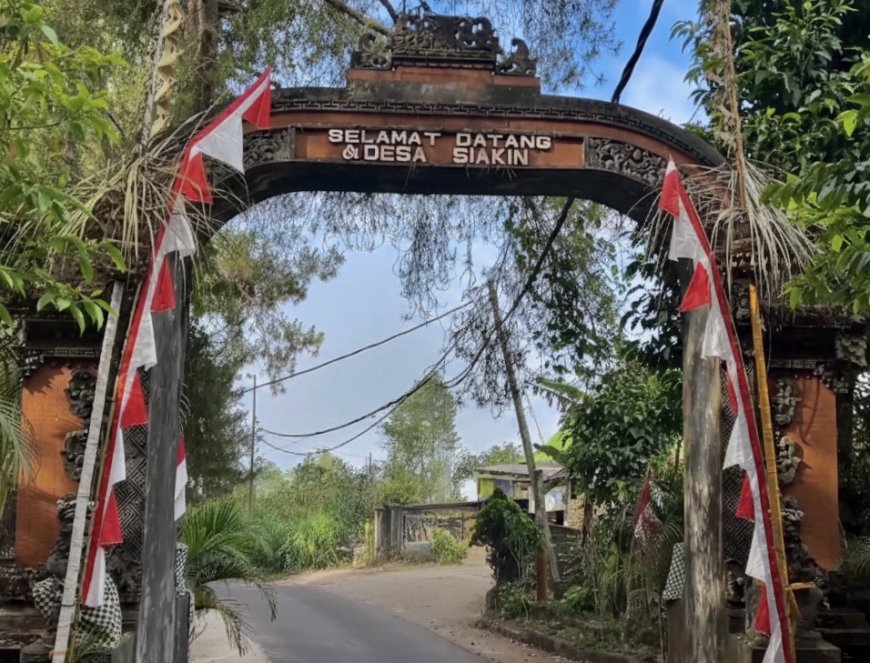
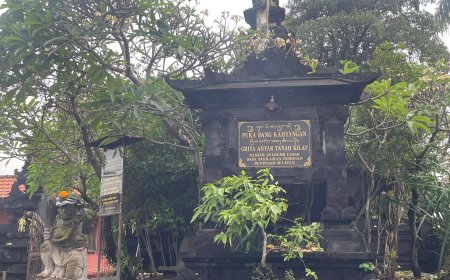
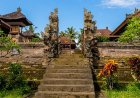
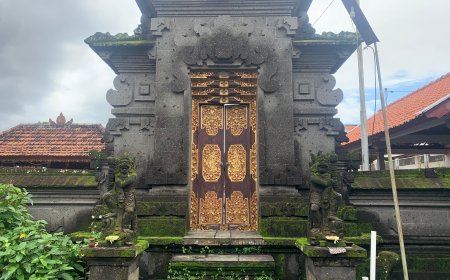
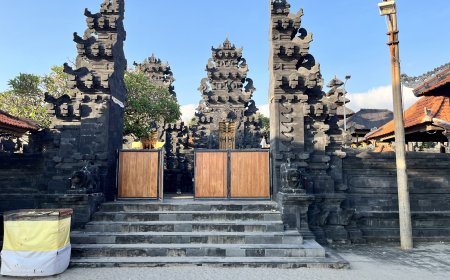
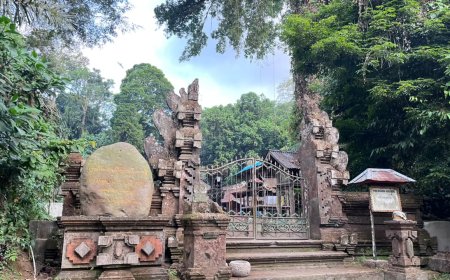
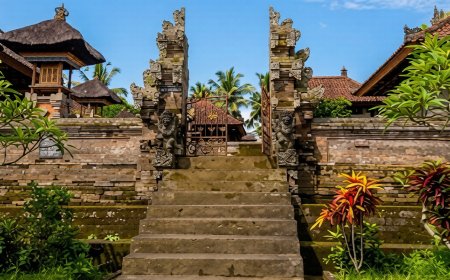
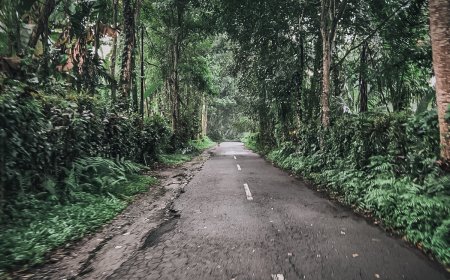
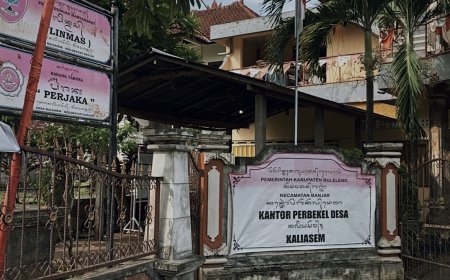
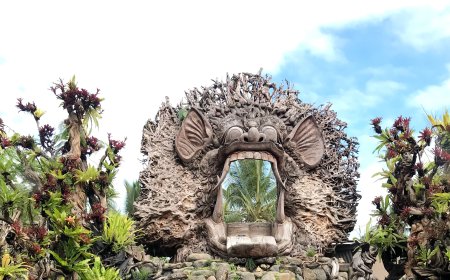
Siakin Village is one of the villages in the Kintamani area that offers a cool, peaceful, and still natural mountain atmosphere. Visitors are welcomed by the village’s humble charm, shady trees, quiet roads, and green landscapes that form the backdrop of local daily life. A traditional gateway adorned with distinctive Balinese ornaments is not merely a territorial marker, but also a symbolic starting point for entering a village life deeply connected to nature. Behind its serenity, Siakin Village is an active living space where residents maintain balance between the environment and daily activities, ensuring that its natural beauty remains well preserved.
More than just a stop along the way, Siakin Village holds a strong identity as an agrarian village, where land and gardens shape the rhythm of life. Most residents rely on agriculture passed down through generations, making the village rich in diverse garden commodities. From this point, the story of Siakin Village leads us to productive farmlands, including chayote plantations, one of the village’s notable agricultural outputs.
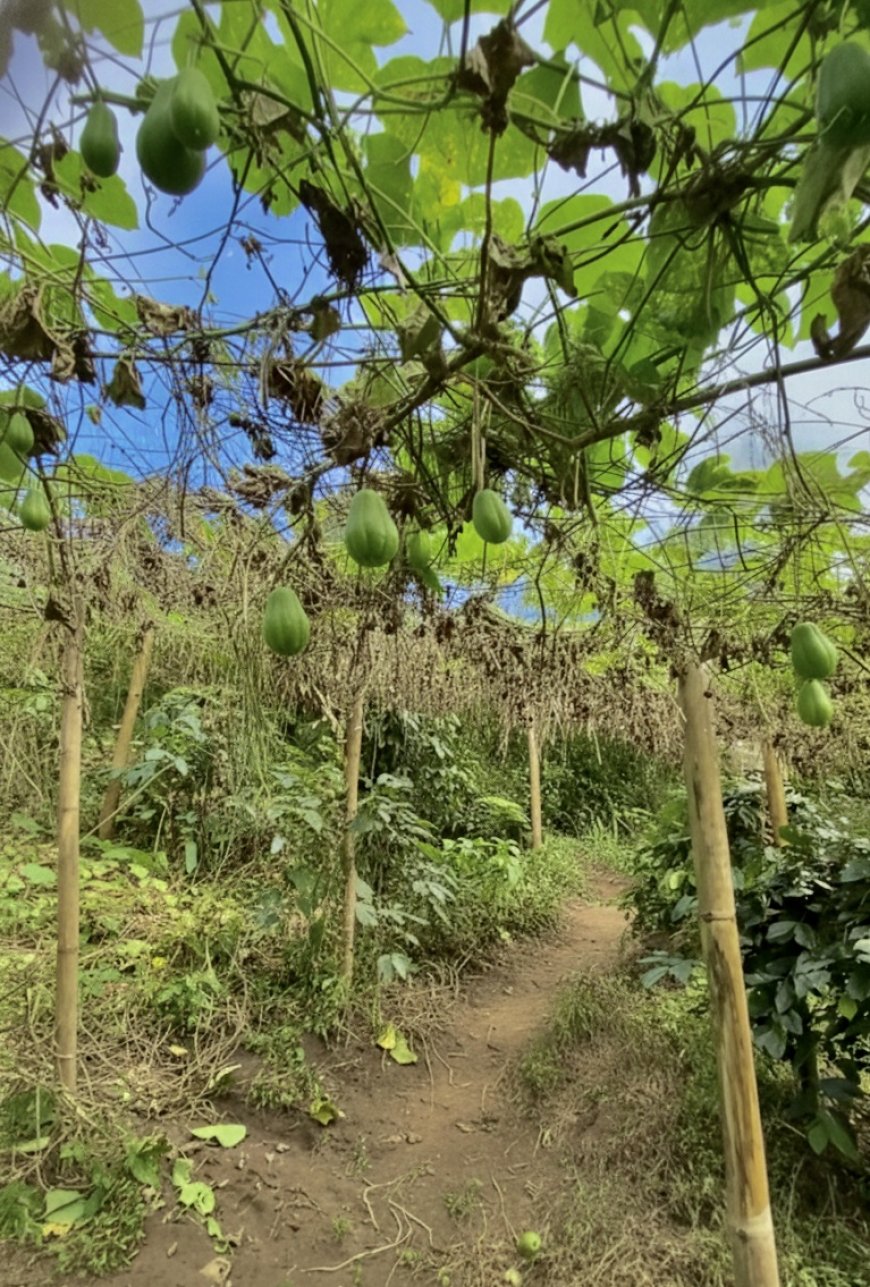
Chayote Garden in Siakin (Source: Personal Collection)
In Siakin Village, chayote is one of the most commonly found commodities in local farming life. Chayote plantations are usually arranged using bamboo trellises to support the vines, forming a naturally lush and shady “green roof.” The chayote fruits hang between leaves and tendrils, showing how well the plants thrive in Kintamani’s cool highland climate. A small path beneath the trellis reflects farmers’ routine activities, checking the plants, clearing the soil, and ensuring that the fruits develop properly before harvesting.
This condition has made Siakin Village known as one of Bali’s significant chayote-producing areas, with plantation activity visibly dominant throughout many parts of the village. The harvest not only fulfills local needs, but also reaches wider markets and distribution routes, demonstrating chayote’s role as a driver of the community’s economy. Siakin’s agricultural richness does not stop there. Beyond these orderly plantations, other commodities also flourish strongly in this region, one of them being the orange groves that characterize the highlands.
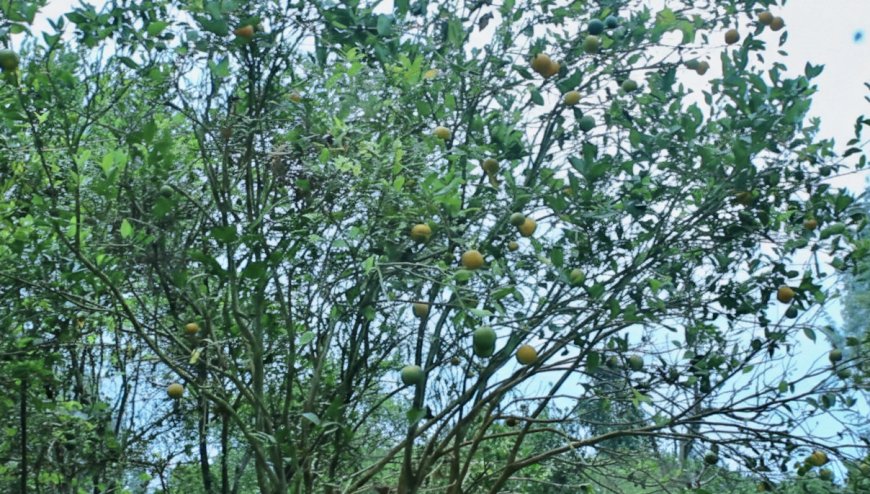
Orange Grove in Siakin (Source: Personal Collection)
The lush orange trees filled with fruit illustrate the fertility of Siakin Village’s soil and the supportive nature of the highland environment for horticulture. The fruits appear in different stages of ripeness, some still green, others beginning to turn yellow, showing a natural harvest cycle that follows the seasons. In gardens like these, diligence is essential: trees are regularly cared for to remain productive, through pruning, fertilization, and maintaining fruit quality until the time comes to pick them.
For the people of Siakin Village, orange groves are not only refreshing scenery but also a real source of livelihood. In fact, Siakin is recognized as one of the areas supplying Kintamani oranges (Jeruk Kintamani), a commodity widely known among Balinese communities for its quality and flavor. The oranges harvested from residents’ gardens contribute significantly to the local economy, strengthening the village’s identity as an agrarian region powered by agricultural productivity. After oranges, Siakin’s farmlands also offer another valuable commodity, chili peppers, grown in open plots under Kintamani’s cool and humid climate.
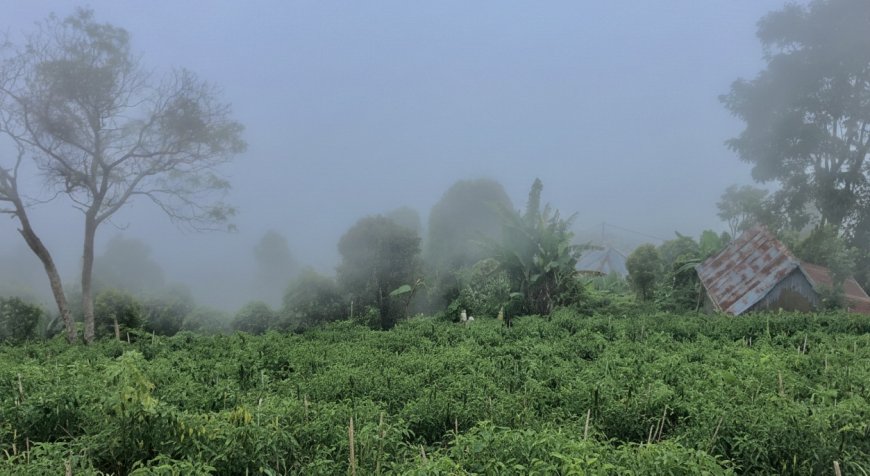
Chili Farm in Siakin (Source: Personal Collection)
A wide chili plantation stretches beneath a thin layer of mist blanketing Siakin Village’s landscape, emphasizing the region’s cool and humid mountain atmosphere. The chili plants are neatly arranged in rows, reflecting serious and planned land management. This farm demonstrates that local agriculture is not carried out randomly, but maintained through consistent care, from removing weeds and setting planting distances to ensuring the plants remain healthy for maximum yield.
Chili peppers hold significant value, as they require patience and careful attention, yet offer high economic returns for farmers. In Siakin Village, chili farming illustrates how misty highland nature and fertile soil do not only provide beauty, but also serve as a source of life. From chayote and oranges to chili peppers, all reflect Siakin Village’s identity as a community rooted in agrarian life, a daily rhythm that grows in harmony within the forests of Kintamani.