

















The Historical Traces of Tabanan Market: From a Royal Center and Trading Hub to a Modern Economic Space for the Community
Tabanan Market is more than just a place where people conduct their daily buying and selling activities. Behind the bustle of vendors and shoppers lies a long history closely connected to the development of life, culture, and the urban space of Tabanan City. The market has served as an important space for the community to interact, meet their daily needs, and build social relationships over time. The traces of its past that remain today offer a range of stories worth exploring.

Tabanan Market may appear to be an ordinary traditional market amid the activities of the city. In its time, this market was one of the centers of economic activity not only for Tabanan Regency but also for other regencies. This was because Tabanan Regency was known as Bali's rice granary. However, behind its bustling activities lies a history that may not be widely known. These historical traces can be found not only within the market area but also scattered throughout the spaces surrounding the center of Tabanan City.
Historical Traces in Regional Names
One of the clues regarding the existence of the market in the past can be found in the names of several areas in Tabanan City. Among them are Dauh Peken Village, Delod Peken Village, and Dajan Peken Village. For today's residents, these names have become part of the area markers used in everyday life. However, I Nengah Januartha, a Balinese historical document archivist, explains that these three names can also provide clues for tracing the existence of Tabanan Market in the past.
To understand these historical traces, it is necessary to first look at how market activities developed in the past. According to him, the existence of a market began with gatherings that served as places where people came together. In the context of life during the kingdom era, such gatherings generally developed around a puri, or royal palace and center of government. From the activities taking place in these areas, exchanges of goods gradually emerged, becoming the forerunner of the market. At the early stage, these activities did not yet use a buying-and-selling system as we know it today. Instead, they were conducted through barter, in which one item was exchanged for another needed item.
As time passed, this pattern of exchange changed. Uang kepeng, or pis bolong, began to be used as a means of payment in trading activities. The use of uang kepeng changed the transaction system, which had previously relied on direct exchanges of goods. People gradually became familiar with a buying-and-selling system using uang kepeng as payment for obtaining the goods they needed.
Around the Puri and Banyan Tree
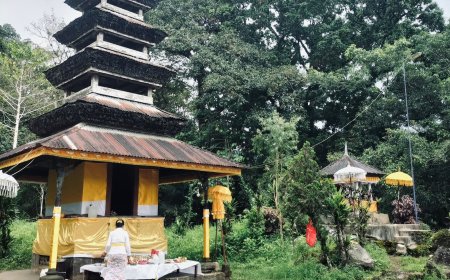
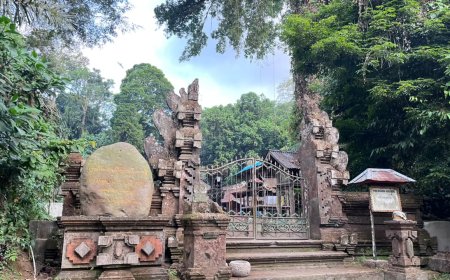
According to Januartha, the historical traces of Tabanan Market point toward the area surrounding the center of royal power as one of the important locations in the development of the peken, or market, in Tabanan. The remains associated with the old market are believed to have been located around a banyan tree and Pura Puseh Kota Tabanan. The banyan tree in question is located in the Jalan Gunung Agung area of Tabanan and serves as one of the important points in tracing the early history of Tabanan Market.
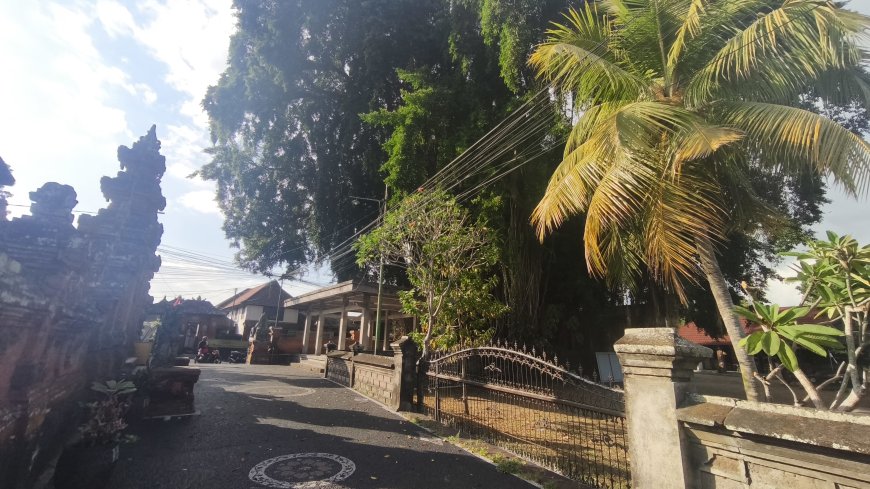
The Banyan Tree and Pura Puseh Kota Tabanan area (Source: Personal Collection)
The proximity between the market and the center of power can also be seen from the presence of puri in the surrounding area. There were two main puri associated with the Kingdom of Tabanan, namely Puri Gde and Puri Kaleran. Puri Gde was reportedly located around the area that is now occupied by BPD Tabanan, while Puri Kaleran can still be found today to the north of the banyan tree. This spatial arrangement provides an illustration of the relationship between the trading area and the puri as the center of power during the Kingdom of Tabanan.
Traces of the old market can also be found in the names of areas that are still used by the people of Tabanan today. Dauh Peken is located to the west of the market, Delod Peken to the south, and Dajan Peken to the north. These names are related to the position of each area in relation to the market that once developed in the center of Tabanan City. Thus, these regional names have become surviving traces even though the location of the market has changed over time.
The development of these trading activities was also recorded in the study of anthropologist Clifford Geertz through his book Pedlars and Princes. In his discussion of Tabanan, Geertz recorded the existence of Gadarata, or Gabungan Dagang Rakyat Tabanan. This organization provides one indication of the development of trade in Tabanan as it began moving toward a more structured form of business.
The 1906 Map and the Relocation of the Market
An interesting finding in this historical investigation is a map of Tabanan City published in 1906. The map provides an important clue that further strengthens evidence of the market's existence in the past because the market's position can be seen within the spatial layout of Tabanan City during that period. Based on Januartha's research, the map depicts the territory of the Kingdom of Tabanan in considerable detail, including the location of the market. The year 1906 itself was a period shortly before the end of the Kingdom of Tabanan. The map further strengthens the possibility that the area around the banyan tree was one of the early locations of Tabanan Market.
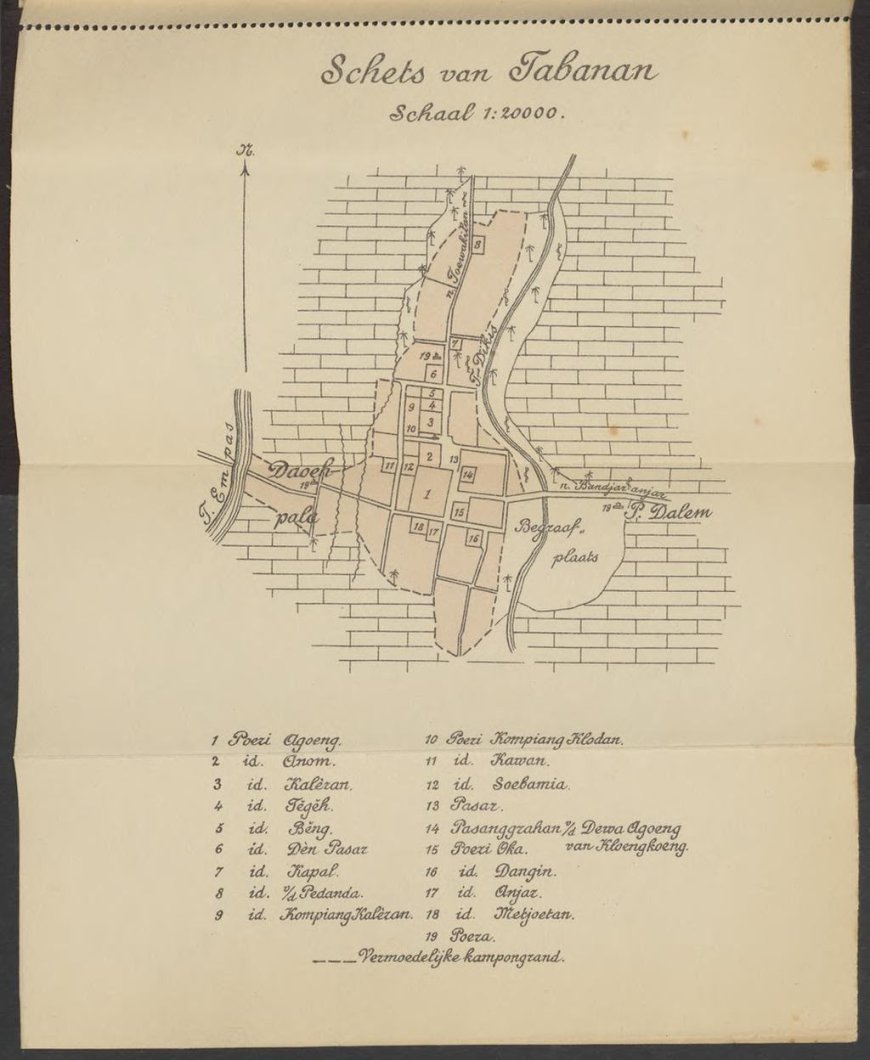
Map of Tabanan City published by the Dutch in 1906 (Source: Personal Collection)
After 1906, in the early twentieth century, the center of trade in Tabanan is believed to have gradually shifted eastward. This shift is thought to have occurred after the fall of the Kingdom of Tabanan, when the Dutch began taking control of the Tabanan region. Trading activities subsequently developed along Jalan Gajah Mada in Tabanan, which remains the location of Tabanan Market today.
According to I Nengah Januartha, the relocation may have been carried out by the Dutch to make community activities easier to monitor. However, this explanation remains an assumption based on the investigation and information obtained and therefore cannot yet be confirmed as the primary reason for the market's relocation.
Although the exact year of the relocation remains unknown, evidence of the market's presence at its current location can be found in records from a later period. One such piece of evidence is a photograph of a building believed to be part of the southern entrance of Tabanan Market in the Jalan Gajah Mada area. The photograph bears the year 1929. This photograph provides an indication that Tabanan Market was already located in the area by that period.
This evidence is further supported by notes from Nyoman S. Pendit in his book Di Lambung Gunung Agung. In his book, Pendit describes his experience of returning to Tabanan after spending many years living in Jakarta. He describes Tabanan Market as having once been surrounded by walls decorated with scenes inspired by the epics Ramayana and Mahabharata. According to Januartha, these descriptions correspond with the appearance of the market in the old photograph and further strengthen the possibility that the photograph was indeed related to Tabanan Market.
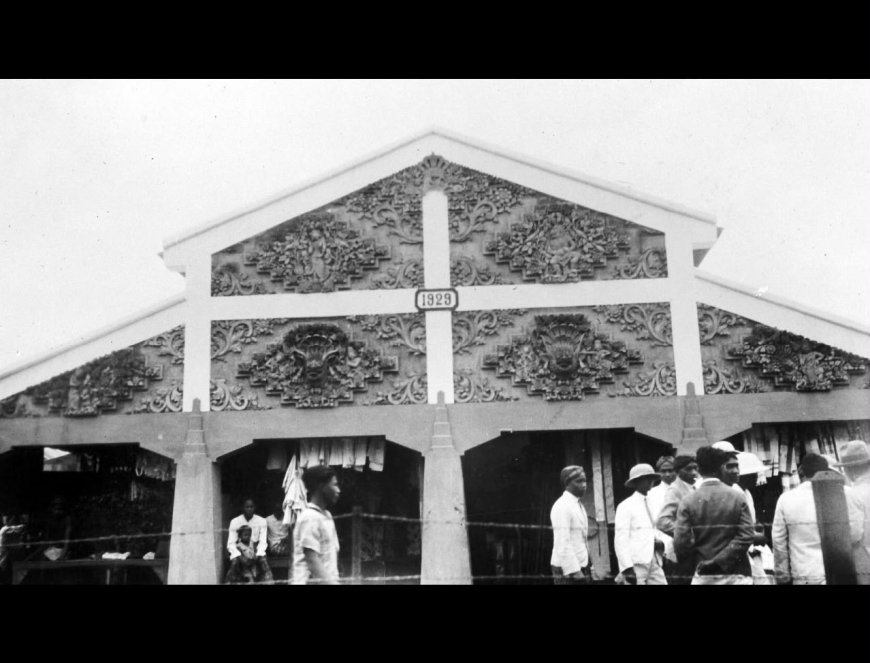
Photograph believed to show the southern entrance of Tabanan Market. The number 1929 displayed on the building provides one of the clues regarding the period in which the photograph was taken. (Source: Personal Collection)
From the Old Market to a New Appearance
These various traces show that Tabanan Market has changed alongside the development of community life and the urban area of Tabanan. Trading activities, which in their early stages are said to have been conducted through barter, later developed with the use of uang kepeng as a means of payment. These changes in trading patterns occurred alongside changes in physical space, from the area around the banyan tree to the location of Tabanan Market used by the community today.
Today, Tabanan Market remains part of the everyday life of the community. Amid the development of Tabanan City, traces of its past remain present in the names of surrounding areas, the banyan tree and Pura Puseh area, as well as various maps, photographs, and written records that can still be traced.
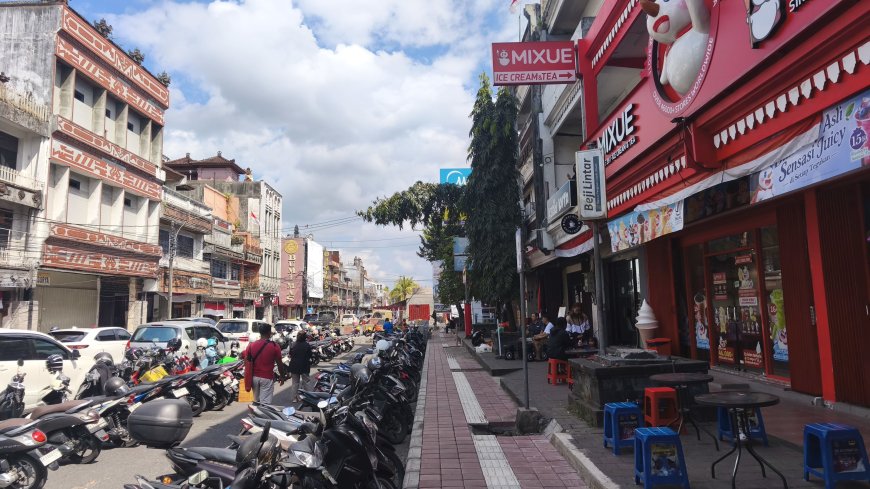
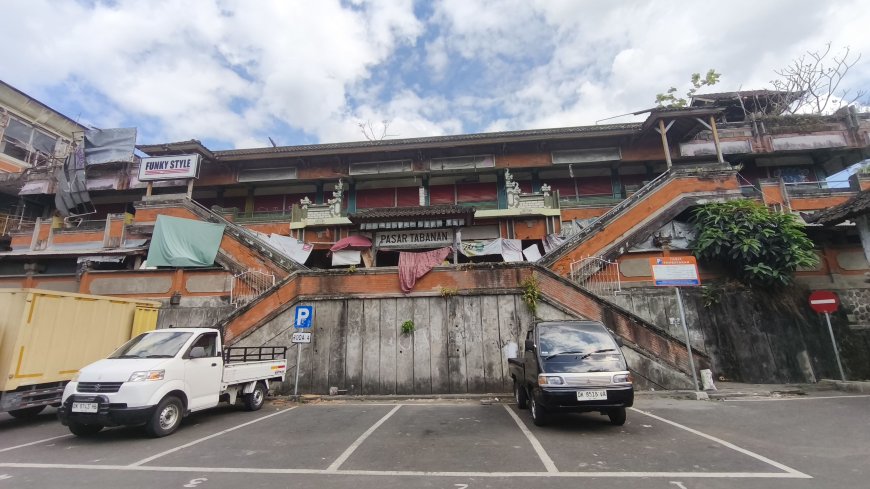
The Tabanan Market area today. The market can still be seen bustling with visitors, while renovation work is taking place around the market. (Source: Personal Collection)
The journey of Tabanan Market has not yet come to an end. Plans for the market's revitalization in the coming years will once again change its appearance.