





From a Home-Based Sanggar to Cultural Diplomacy: Sanggar Guntur Madu on the Stage of the Vietnamese Embassy
Balinese traditional arts do not only thrive within formal performance spaces, but also grow organically through communities and family environments. One of the most important spaces in the process of preservation and regeneration of these arts is the sanggar (traditional arts studio). Sanggar Seni Guntur Madu is an example of a community-based sanggar that originated from a home environment and a banjar (traditional village unit), yet has successfully reached the international stage through its participation in embassy events in Vietnam.
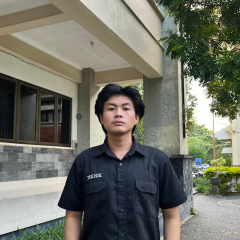
Sanggar Seni Guntur Madu was established in 1998 as a home-based sanggar that initially did not have a formal name. At the beginning, only a few children from the surrounding neighborhood participated in dance training. Over time, the number of participants gradually increased. The presence of students from the Indonesian Institute of the Arts (Institut Seni Indonesia) who visited the area further encouraged the formation of the sanggar in a more structured manner.
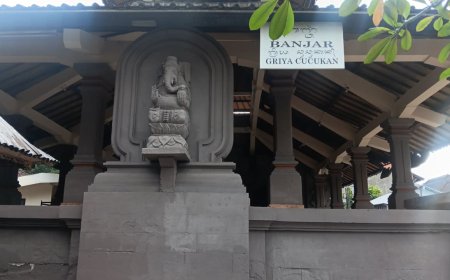
Through this process, the name Sanggar Seni Guntur Madu was officially adopted. The sanggar is located in Banjar Pundung, Pangsan Village, Petang District. Since then, it has actively conducted regular training sessions and has remained open to the surrounding community.
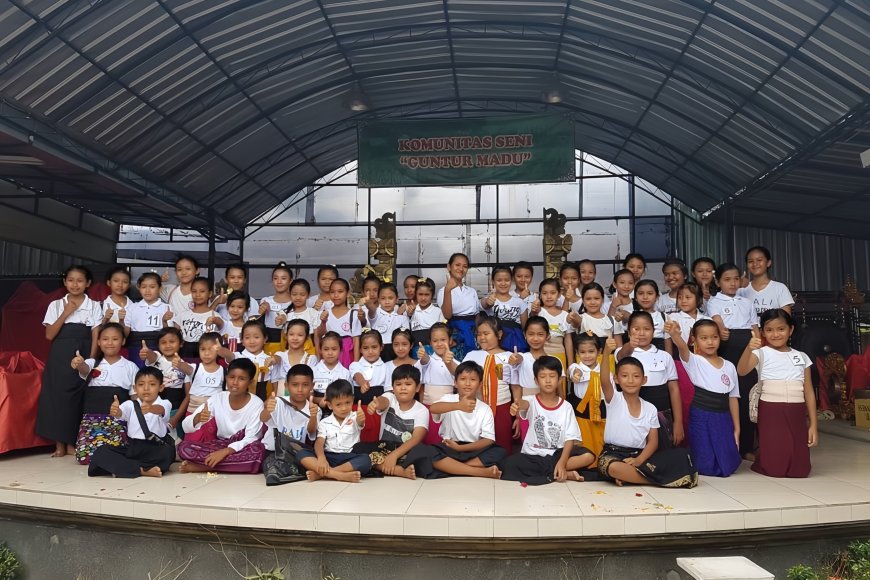
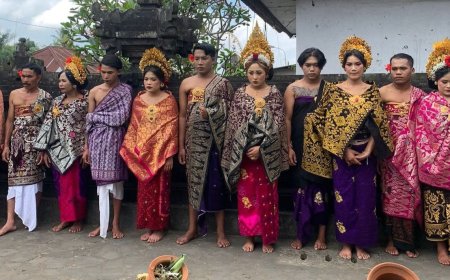
Group Photo After Practice (Source: Personal Collection)
Founder and Background of the Sanggar
Sanggar Seni Guntur Madu was founded by Ni Nyoman Rashini, a graduate of the Indonesian School of Karawitan (SMKI) with a major in dance. Her educational background in traditional arts became a strong foundation for establishing the sanggar. The initial purpose of founding Sanggar Seni Guntur Madu was to further develop her dance skills after graduation, while also serving as a medium for ngayah a form of voluntary service at temples.
The name Sanggar Seni Guntur Madu carries deep meaning and philosophy. It was created by the founder’s husband, I Nyoman Putra Saptana. Philosophically, “Guntur Madu” conveys the idea of using one’s energy and abilities for the benefit of society.
The word guntur (thunder) symbolizes strength, spirit, and powerful motivation, while madu (honey) represents sweetness, harmony, and beneficial outcomes. The combination of these two words reflects a strong artistic spirit grounded in values of refinement, balance, and togetherness.
Training Schedule at Sanggar Guntur Madu
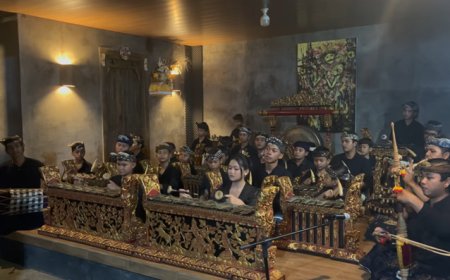
Training activities at Sanggar Seni Guntur Madu are conducted regularly twice a week. On Saturdays, dance practice takes place at 2:00 PM (WITA), followed by gamelan practice at 4:00 PM. On Sundays, dance training begins at 9:00 AM, while gamelan practice is held at 2:00 PM.
Participants come from various age groups, ranging from elementary school students as young as first grade, to junior and senior high school students, as well as general community members who are not enrolled in formal education.
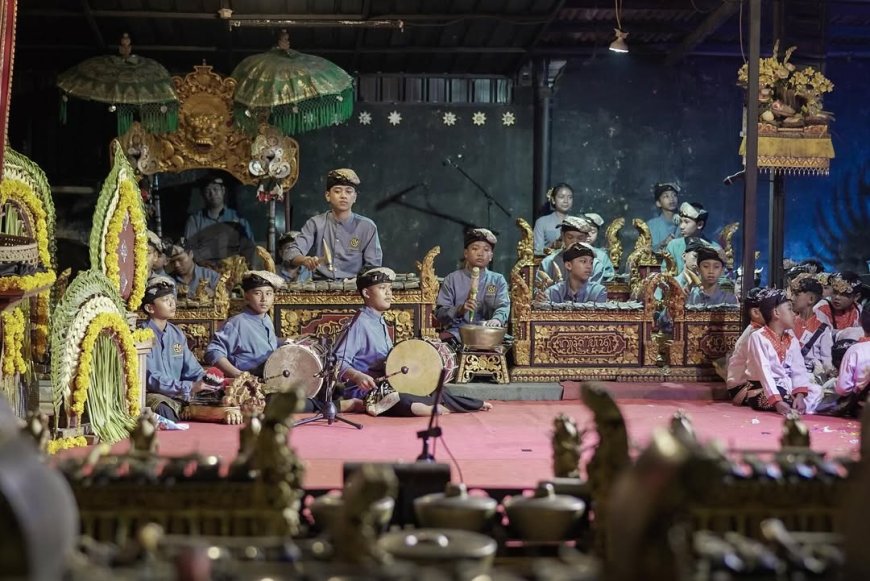
Grade Promotion Exam at Sanggar Guntur Madu (Source: Personal Collection)
Artistic Disciplines Taught
Sanggar Seni Guntur Madu teaches a wide range of Balinese traditional arts, including both dance and tabuh (gamelan music). In the field of dance, various types of Balinese dances are taught according to the participants’ levels of ability. In terms of gamelan, the sanggar provides instruction in several ensembles, including Gong Kebyar, Semar Pegulingan, Slonding, and Bleganjur.
The Role of the Sanggar in Adat Activities and Ngayah
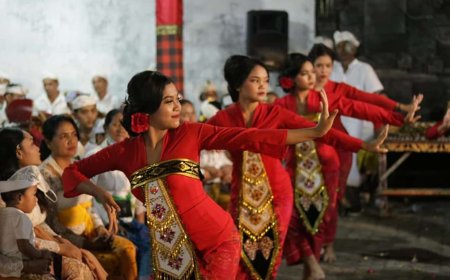
Beyond serving as a training space, Sanggar Seni Guntur Madu plays an active role in traditional and religious activities. The sanggar is frequently involved in ngaturan ayah or ngayah, both in temples and in the homes of community members who are conducting yadnya ceremonies.
This involvement demonstrates that the sanggar’s activities are deeply integrated into the traditional life of Balinese society, contributing directly to religious and social rituals.
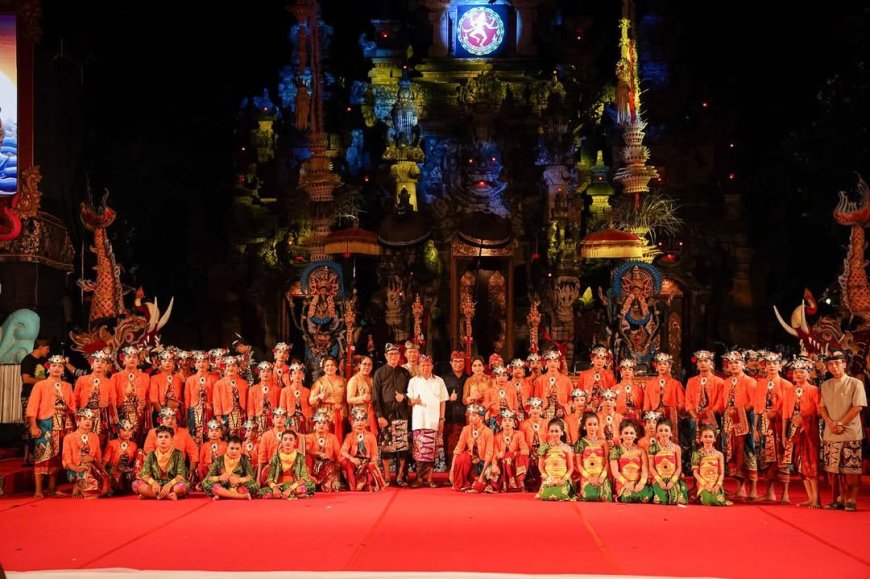
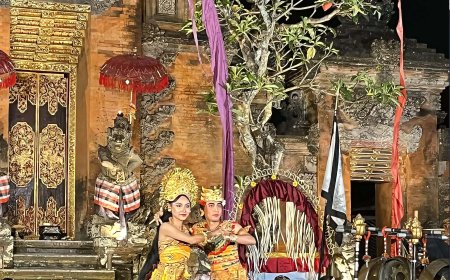
Sanggar Guntur Madu Participates in the Bali Arts Festival (Source: Personal Collection)
Participation in Festivals and Cultural Events
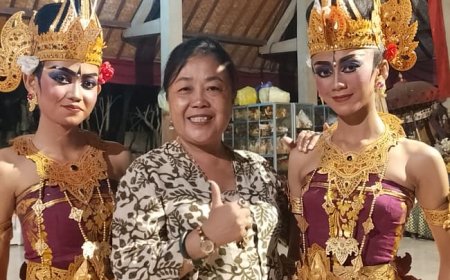
Throughout its journey, Sanggar Seni Guntur Madu has participated in numerous cultural events and festivals. The sanggar has taken part in agricultural festivals, served as an opening and entertainment performer, and participated in the Badung Cultural Festival as well as various provincial-level events.
In addition, Sanggar Seni Guntur Madu regularly participates in the Bali Arts Festival (Pesta Kesenian Bali), presenting performances such as Janger, Gong Anak, and Dolanan. These participations demonstrate the sanggar’s consistency in maintaining its presence and the quality of its traditional art performances.
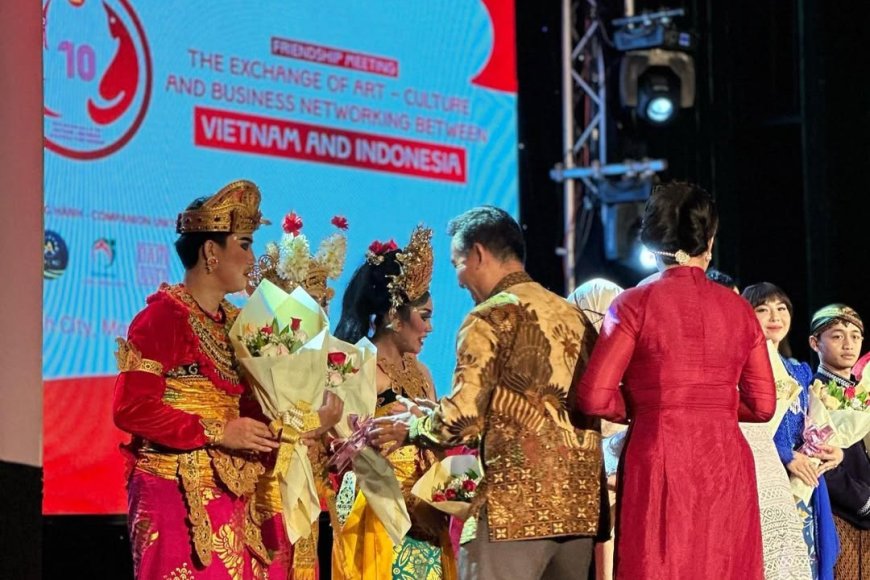
Sanggar Guntur Madu Performs at the International Embassy in Vietnam
(Source: Personal Collection)
International Performances and Cultural Diplomacy
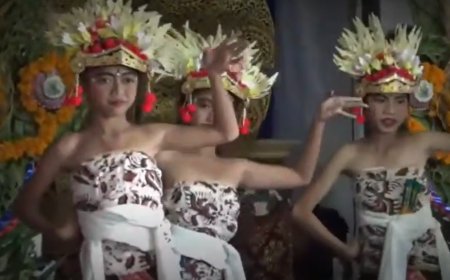
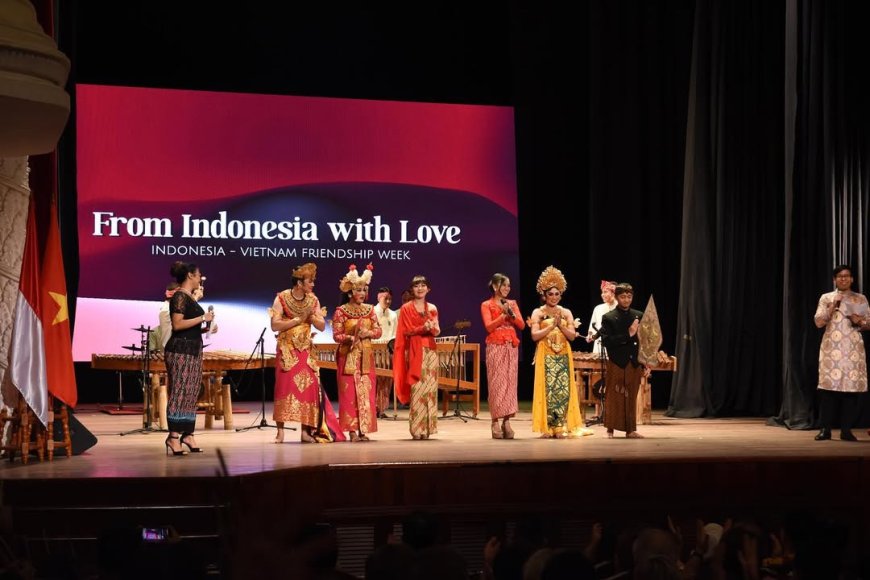
One of the most distinctive aspects of Sanggar Seni Guntur Madu is its involvement in international performances. The sanggar performs annually in Vietnam as part of events organized by international embassies. This participation positions Sanggar Seni Guntur Madu as an actor of cultural diplomacy, introducing Balinese traditional arts to international audiences.
Through dance and gamelan performances abroad, Sanggar Seni Guntur Madu not only represents local cultural identity but also contributes to strengthening the global image of Balinese and Indonesian culture.
Memorable Moments and Achievements
Sanggar Seni Guntur Madu has experienced many memorable moments, particularly during students’ level promotion examinations, participation in the Badung Cultural Festival, and performances at the Bali Arts Festival. These moments serve as important milestones in the learning process and in building the confidence of the sanggar’s participants.
Amid rapid social change and the growing number of art studios, Sanggar Seni Guntur Madu has managed to sustain its existence by focusing on foundational training. The sanggar emphasizes educating children who begin learning traditional arts from the very basics, while prioritizing the value of ngayah as its core principle. This approach not only develops technical skills but also fosters a sense of togetherness and joy, both for the children and their parents.
Through its activities, Sanggar Seni Guntur Madu expresses hope that younger generations will continue to preserve and cherish Balinese arts and culture, particularly in dance and gamelan. The preservation of traditional arts is expected to remain strong and sustainable, not only in Bali, but also beyond the island and internationally.