










































Tipat Plecing: The Perfect Blend of Traditional Ketupat and Water Spinach in Raw Sambal
Tipat Plecing is a representation of local Balinese cuisine that highlights a fresh, spicy flavor from freshly mixed raw sambal. Featuring ketupat infused with the aroma of young coconut leaves and fresh vegetables, this dish captures traces of cultural acculturation that has now grown into a driver of the micro-economy. At Warung Mesari, Sidakarya, the existence of this dish proves that authentic culinary quality remains relevant and accessible at an affordable price.

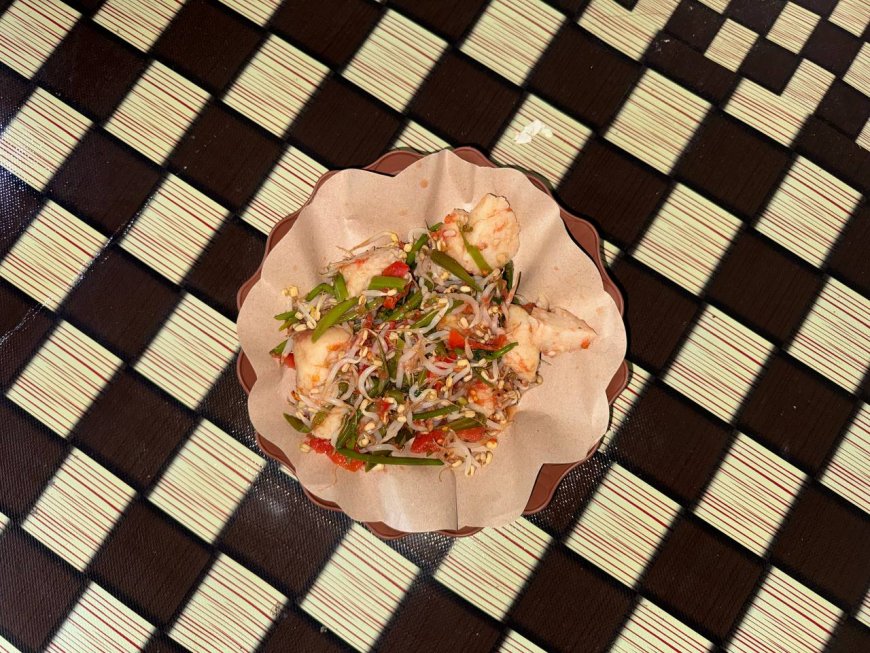
Tipat Plecing shatters the notion that Balinese cuisine is always synonymous with complexly spiced meat dishes. This dish purely relies on the freshness of vegetables and a rapid serving method. Balinese people use the term "tipat" to refer to ketupat, which is rice cooked inside woven young coconut leaves, known as "janur". The use of janur is technically crucial because it not only compacts the rice texture but also imparts a natural fragrant aroma that distinguishes it from regular lontong (rice cakes).
In Bali, janur is not just a food wrapper, it is a sacred cultural element as it is also used as a basic material for making banten or Hindu ceremonial offerings. The skill of weaving tipat is an ancestral heritage generally mastered by the community from an early age. When janur is boiled for a long time with the rice, the pores of these young coconut leaves release natural compounds that act as organic preservatives. This makes the texture of the tipat more durable and long-lasting when stored at room temperature without requiring any additional chemical ingredients.
The main key to Tipat Plecing's delight lies in its anatomy of ingredients, which completely avoids instant seasonings. Its vegetable components rely on water spinach (kangkung) and bean sprouts (tauge) that are briefly boiled (blanched) to keep their texture crunchy. Unlike Tipat Cantok, which uses a thick and sweet peanut sauce, Tipat Plecing is served with raw sambal that produces a spicy, sour, and refreshing flavor profile.
The presence of this water spinach and bean sprouts not only functions as a textural element but also makes it a nutrient-dense dish. These vegetables are generally obtained directly by the sellers from nearby traditional markets, which directly turns the wheels of the local agricultural economy. From a nutritional standpoint, this combination of fresh green vegetables contributes to the intake of fiber, iron, and vitamins. The brief boiling process ensures that these nutrients do not largely dissolve into the boiling water, allowing buyers to get a healthy meal at a very economical price.
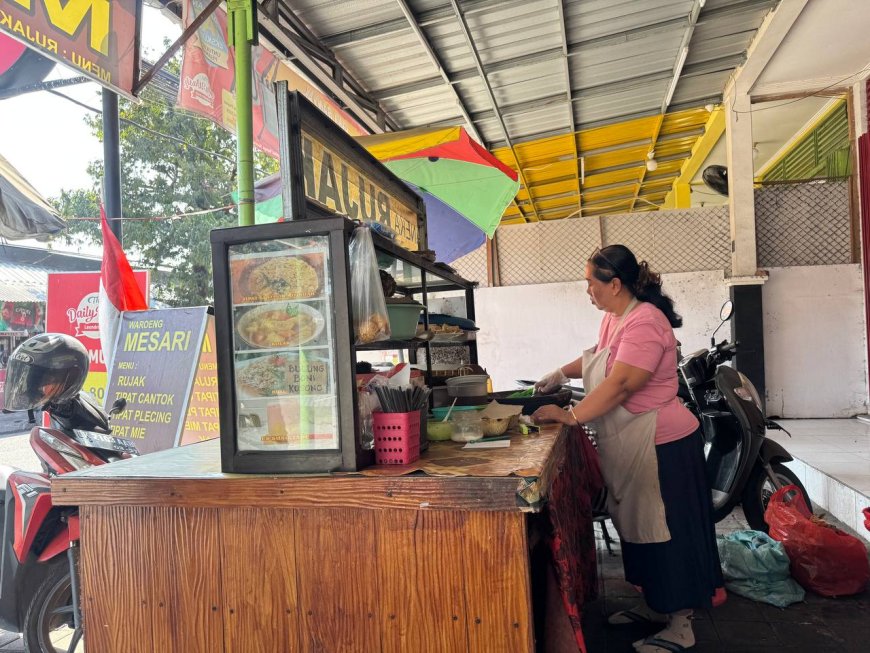
A seller at Warung Mesari making Tipat Plecing (Source: Personal Collection)
Authentic Tipat Plecing preparation practices can be found in various corners of the city, one of which is at Warung Mesari, located on Jalan Pendidikan, Sidakarya, Denpasar. In this place, the seasoning preparation process is done made-to-order. The seller crushes a composition of raw ingredients consisting of red bird's eye chilies, tomatoes, salt, grilled shrimp paste (terasi), and kaffir lime juice. Each ingredient has a specific function: terasi injects an umami flavor element into the vegetables, while the kaffir lime juice serves to balance the heat of the chilies with the right level of acidity. Because it is mixed right before serving, the quality and freshness of the sambal's flavor remain at their optimal point when served to the customer.
The secret behind the explosive flavor of this raw sambal actually lies in the treatment of the shrimp paste before it is ground. The terasi is not put into the mortar in a raw state but must be grilled or roasted first. This heating process triggers a natural chemical reaction that eliminates the raw ocean smell and releases essential oils that produce a rich, savory taste. When this grilled terasi is crushed together with tomatoes and kaffir lime juice, a natural emulsion occurs, uniting all the seasoning components. The absence of a sautéing process using cooking oil keeps the calories of this dish low and leaves no uncomfortable feeling in the throat.
The presence of the plecing seasoning in this dish is not merely a flavor enhancer but tangible proof of cultural acculturation. Historically, the characteristics of plecing seasoning were influenced by the culinary traditions of Lombok Island, which interacted through cross-island trade routes. The Balinese people then adapted this formula using local coastal terasi and paired it with the tipat dish, creating a new variant that is now embedded as a signature culinary delight of the Island of the Gods.
Interestingly, a shift in the dish's function occurred during this culinary acculturation process. In its place of origin, Lombok, plecing kangkung is generally positioned as a side dish accompanying high-protein main courses such as Ayam Taliwang. However, when it arrived in Bali and was combined with dense carbohydrates in the form of tipat, the status of plecing evolved into an independent main dish. This transformation demonstrates the ingenuity of the Balinese people in adapting foreign cuisine into a complete, filling meal that suits the consumption patterns of the local community.
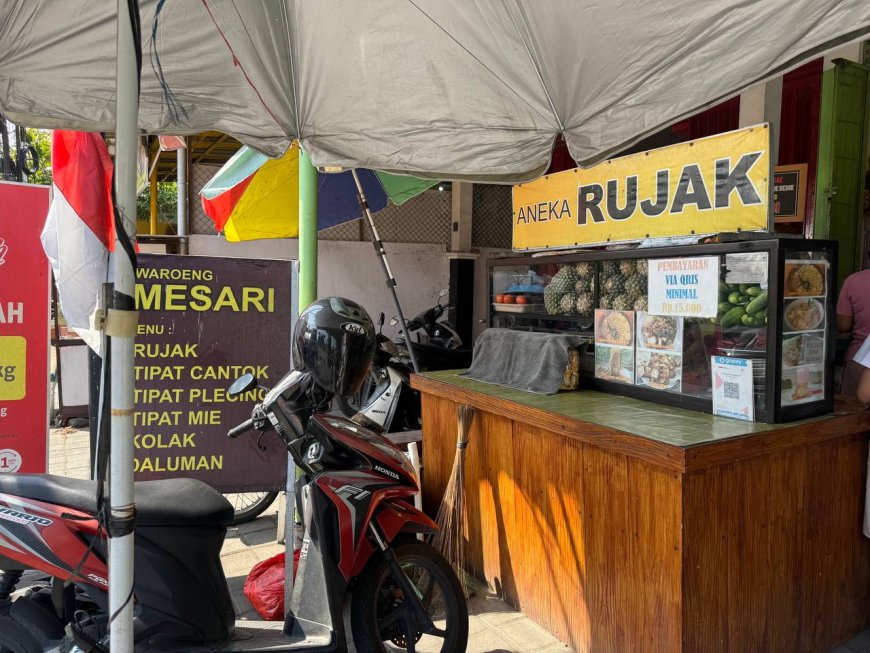
The front view of Warung Mesari (Source: Personal Collection)
From a socio-economic perspective, Tipat Plecing holds the status of an inclusive culinary delight. With a highly affordable selling price of Rp 10,000 per portion at Warung Mesari, this dish can meet the food needs of various layers of society, from university students to field workers. The abundant and cheap availability of raw materials in local markets also allows the community to open food stalls with minimal capital, making it one of the driving forces of the MSME (Micro, Small, and Medium Enterprises) economy in Bali.
Furthermore, Tipat Plecing stalls like Warung Mesari indirectly function as a medium for social interaction among the community. At these simple dining tables, social status becomes irrelevant. Students returning from school, people taking a lunch break, and neatly uniformed office workers can sit side by side enjoying the same menu. The light conversations that often occur between buyers and sellers create an emotional community bond that is hard to find in modern fast-food restaurants.
Amidst the massive expansion of modern cafes and international restaurants in Bali's urban areas, Tipat Plecing has managed to maintain its position without having to change its original identity. Moreover, its serving method using woven young coconut leaves has its own distinct characteristic. The use of janur as a carbohydrate container makes it an environmentally friendly product with minimal plastic waste, in stark contrast to modern food trends laden with single-use packaging. Its existence proves that the endurance of a local culinary product does not always depend on luxurious presentation, but rather on the utilization of fresh ingredients, affordability, and the ability to satisfy the tastes of a cross-generational community. Tipat Plecing stands as a functional, nutritious culinary documentation that remains relevant to the dynamics of modern local community life.