










Mpu Brahmaraja: The Ancestral History of the Pande Community in Ancient Bali
The history of Bali was not only shaped by the tales of kings and kingdoms but also by the role of ancestral figures who gave identity to certain social groups. One of these is the Pande community, a group of metal craftsmen known since the era of Ancient Bali for their exceptional skills. A central figure in this tradition is Mpu Brahmaraja, a great priest bearing the title Bhagawan Pandya Bumi Sakti, who is revered as a sacred ancestor as well as a bearer of craftsmanship knowledge and spirituality for his descendants.

The history of Balinese society is not only shaped by the stories of kings and kingdoms, but also by the role of ancestral figures who provided identity for specific social groups. One of these is the Pande community, known since Ancient Bali for their expertise in metalwork, ranging from weapon-making and jewelry to gamelan instruments. This expertise was not merely technical skill, but regarded as a sacred heritage closely connected to their ancestors.
The central figure in the tradition of the Pande community is Mpu Brahmaraja, a high priest titled Bhagawan Pandya Bumi Sakti. In various babad (chronicles), he is referred to as kawitan, the primary ancestor who passed down the Pande lineage and bequeathed teachings on craftsmanship, spirituality, and ancestral laws. His presence not only shaped genealogical identity but also affirmed the Pande community’s role as a spiritual group of importance in the history of Ancient Bali.

Mpu Brahmaraja Meditating, AI Illustration (Source: Personal Collection)
Mpu Brahmaraja, bearing the title Bhagawan Pandya Mpu Bhumi Sakti, was a high priest descended from Bhatara Brahma who lived during the reign of Hayam Wuruk in Majapahit (1350–1389 CE). The Babad Pande Beratan records that he was born when Bhatara Brahma performed yoga at Mount Silasayana, Madura. From birth, Mpu Brahmaraja was viewed as a sacred figure endowed with extraordinary powers. He mastered the teachings of Panca Bayu (prana, apana, samana, udana, and byana), the five vital energies forming the basis of metallurgical expertise. These spiritual as well as technical abilities were passed down to his descendants as Dharma Kapandean.
In the genealogical traditions recorded in the Babad Pande Beratan and Babad Pande Jadi, Mpu Brahmaraja fathered important lineages through his son Brahma Rare Sakti (Mpu Gandring) and his grandson Brahmana Dwala. From Brahmana Dwala came Arya Pande Beratan and Arya Pande Sadhaka, two central figures who spread the Pande lineage throughout Bali. Thus, it can be affirmed that all members of the Pande community in Bali trace their genealogical and spiritual roots directly to Mpu Brahmaraja as their kawitan, or supreme ancestor.

The Skill of Mpu Brahmaraja in Forging a Keris, AI Illustration (Source: Personal Collection)
Beyond genealogy, Mpu Brahmaraja also imparted teachings and values that shaped the identity of the Pande community. The Dharma Kapandean emphasizes that metalwork is not merely technical labor but a sacred duty. The work of a pande is seen as a spiritual path integrating body, soul, and the cosmos. In practice, Panca Bayu is expressed through five elements: prana as breath (wind), apana as bodily water, samana as fire radiating from the eyes, udana as the core of metal providing steel with strength, and byana as bodily movement personified in the anvil, hammer, and tongs. This symbolism elevates the work of a pande to the level of sacred ritual.
Furthermore, Mpu Brahmaraja left behind the Bhisama Pande, which emphasizes three main points:
- The obligation of all his descendants to worship at Pura Penataran Pande Besakih.
- The use of a special sulinggih system known as “Sira Mpu” as a form of spiritual independence for the Pande community.
- The strengthening of pesemetonan, or kinship bonds, among all Pande members.
This Bhisama binds the community not only by blood but also by shared spiritual obligations inherited from their ancestor.

Patih Madhu Asking for Help from Mpu Brahmaraja, AI Illustration (Source: Personal Collection)
In the 14th century (around 1350–1380 CE), Mpu Brahmaraja appeared in Madura in an ancestral tale recorded in the babad. At that time, Patih Madhu, a minister during the reign of King Hayam Wuruk, sought to hold a major ritual of pitra yajña and bhuta yajña. However, the ceremony could not proceed because no priest was able to lead it. In this situation, Patih Madhu sought help from Mpu Brahmaraja to complete the ritual. With his ability and authority, Mpu Brahmaraja successfully carried out the entire ceremony.
Soon after, news of his powers reached Bali. Dalem Ketut Smara Kepakisan, the first king of Gelgel after the Majapahit expedition, sent Arya Langon and Pasek Bya to bring him from Madura. In Bali, he became a spiritual teacher in the Gelgel court. During this period, he established spiritual systems and metallurgical teachings that were passed down to his descendants. Mpu Brahmaraja resided in Kayumanis, a place considered sacred and suitable for a pasraman of an ancestral figure guiding the Gelgel Kingdom. He was given the title Bhagawan Pandya Bumi Sakti, signifying his role as a high priest (bhagawan), master of metallurgical knowledge (pandya), and sacred figure embodying worldly power (bumi sakti).
His legacy reached its peak in 1478 CE when Mpu Sadhaka (Arya Pande Sadhaka), Mpu Brahmaraja’s great-grandson, was invited by Dalem Waturenggong to help prepare the Eka Dasa Rudra ceremony at Pura Besakih, at the suggestion of Danghyang Nirartha. This demonstrates that the expertise inherited from Mpu Brahmaraja had developed into a skill recognized at the royal level.
Why is Mpu Brahmaraja venerated as the sacred ancestor of the Pande community?
The answer lies in three inseparable aspects. First, genealogically, all Pande in Bali affirm themselves as direct descendants of Mpu Brahmaraja, giving them a clear and unified lineage. Second, spiritually, he bequeathed Dharma Kapandean and the teachings of Panca Bayu, which render the work of a pande as sacred dharma, not merely technical profession. Third, socially and culturally, he established the Bhisama Pande, binding his descendants through shared obligations in worship, kinship, and taboos. Thus, Mpu Brahmaraja is not only remembered as a historical figure but also revered as a sacred ancestor and source of identity for the Pande.

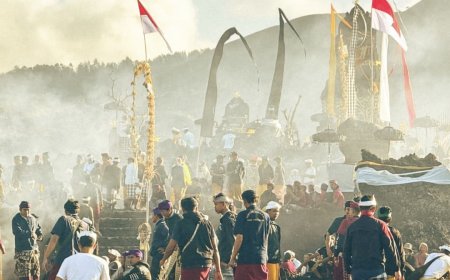
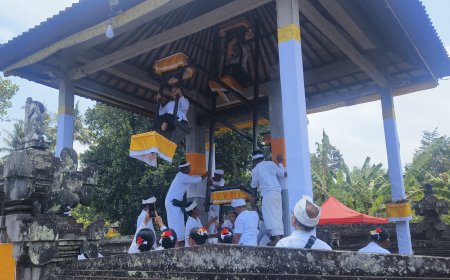
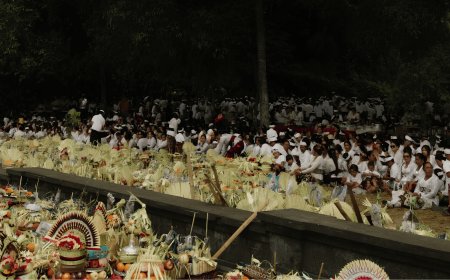
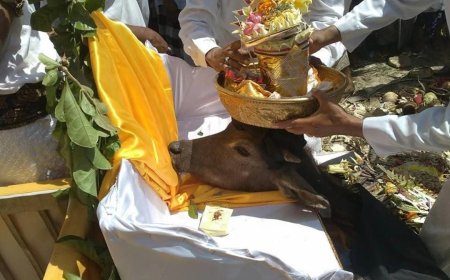
Sanctification of Heirlooms on Tumpek Landep Day (Source: Personal Collection)
His legacy continues through four main channels: genealogy, teachings, bhisama, and ritual traditions. Through genealogy, new generations spread across Bali. Through spiritual teachings, the Pande community regards their work as part of dharma. Through Bhisama Pande, they remain bound by obligations at Besakih and by internal kinship. And through rituals such as Tumpek Landep, they continue to sanctify metal creations as symbols of spiritual power. In this way, the teachings and identity of Mpu Brahmaraja remain alive, making the Pande not just a professional group of metalworkers but a spiritual community with a clear ancestral source.
The history of the Pande in Bali is firmly rooted in Mpu Brahmaraja, a high priest titled Bhagawan Pandya Bumi Sakti, born in Madura and later residing in Bali during the reign of Dalem Ketut Smara Kepakisan. From him descended Brahmana Dwala, Arya Pande Beratan, and Arya Pande Sadhaka, who spread the Pande community throughout Bali. Beyond genealogy, Mpu Brahmaraja left the Dharma Kapandean, Panca Bayu, and Bhisama Pande, forming the spiritual and social foundation of the Pande community. Therefore, Mpu Brahmaraja is not only a historical figure but also the kawitan, the sacred ancestor, and the source of identity for the Pande. To this day, his teachings, bhisama, and traditions continue to be practiced, shaping the Pande as not only craftsmen but a spiritual community with a unique place in the history of Ancient Bali.
Refrences
Anggriani, N. K., Pageh, I. M., & Pardi, I. W. (2023). The Life of the Pande Community Around Lake Tamblingan and Its Use as a Learning Resource for History in Senior High School (A Review of Inscriptions and Archaeological Remains). Widya Winayata: Journal of History Education, 11(2), 196-207.
Babad Pande Beratan. Lontar Collection, Gedong Kirtya, Singaraja.
Babad Pande Jadi. Lontar Collection, Gedong Kirtya, Singaraja.
Guermonprez, J. F., Paturusi, S. A., Widiastuti, & Atmaja, J. (2012). Soroh Pande in Bali: The Formation of “Caste” and the Value of Titles. Udayana University Press.