













Maharishi Vyasa: The Maestro Behind the Mahabharata and Guardian of Eternal Teachings
Maharishi Vyasa, also known as Veda vyasa, was a Hindu sage who divided the Vedas into four parts and composed the epic Mahabharata. He is the main narrator of the Mahabharata, which tells the conflict between the Pandavas and Kauravas, containing moral and philosophical teachings. Vyasa is considered an incarnation of Lord Vishnu and is highly revered.

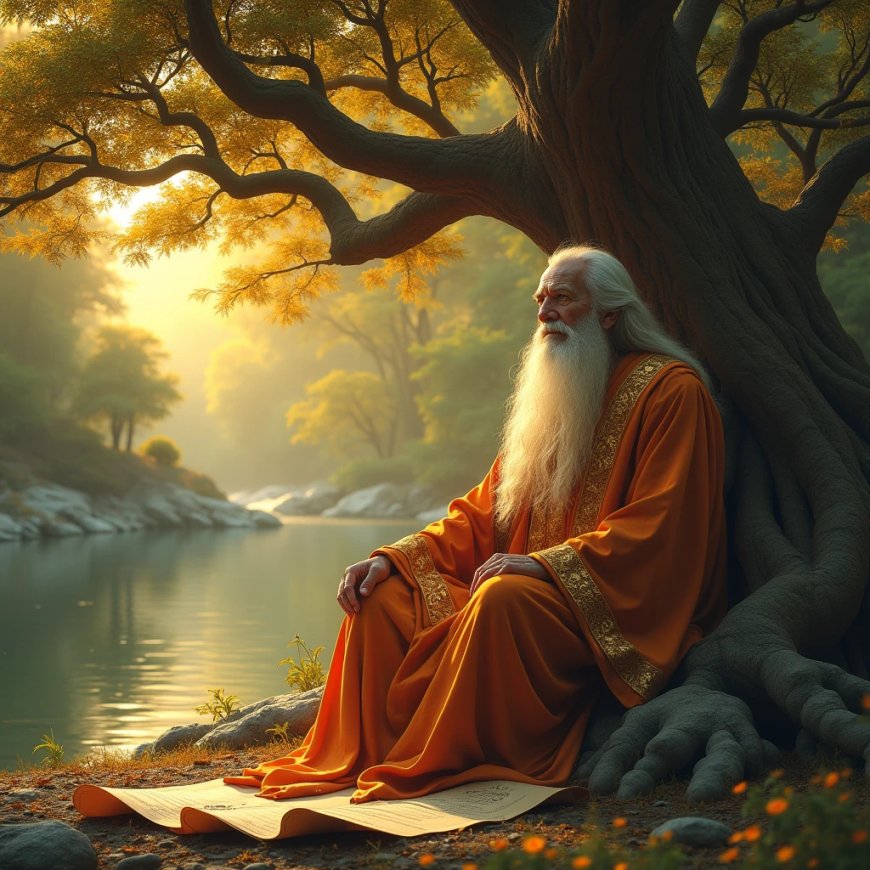
At that time, Sadyogarbha (during labor), Satyawati gave birth to a son. The baby then became known as Watu, a child with deer skin and a kamandalu (water vessel), dressed simply. Since he was born in a sandy land with little light, he was eventually named Krishna Dwaipayana. He asked Satyawati for permission to perform tapasya (austerities), promising to come immediately when called. Afterward, Satyawati returned to her kingdom, and no one asked her anything. Everyone acted as if she had never gone to the riverbank with the ascetic. Thus, Rishi Veda Vyasa, the writer of the Puranas, was born into the world.
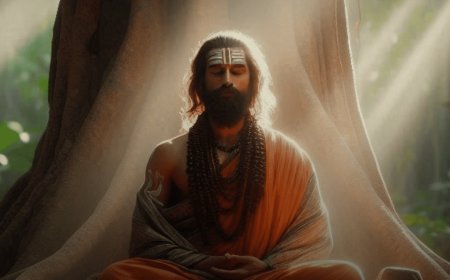
During his tapasya, he was blessed with all the Vedas by Brahma. Maharishi Vyasa then divided the Vedas into four parts. He gathered all the essential knowledge and wrote the Puranas to encapsulate the core of the Vedas.
Hindus worship Krishna Dwaipayana (another name for Maharishi Vyasa) as the one who divided the Vedas into four parts (Catur Veda). For this reason, he is also known by the name Veda Vyasa, meaning "the Divider of the Vedas." The word "Vyasa" means "to separate," "to break apart," or "to distinguish." In the process of codifying the Vedas, Rishi Vyasa was assisted by his four disciples: Pulaha, Jaimini, Sumantu, and Vaishampayana.
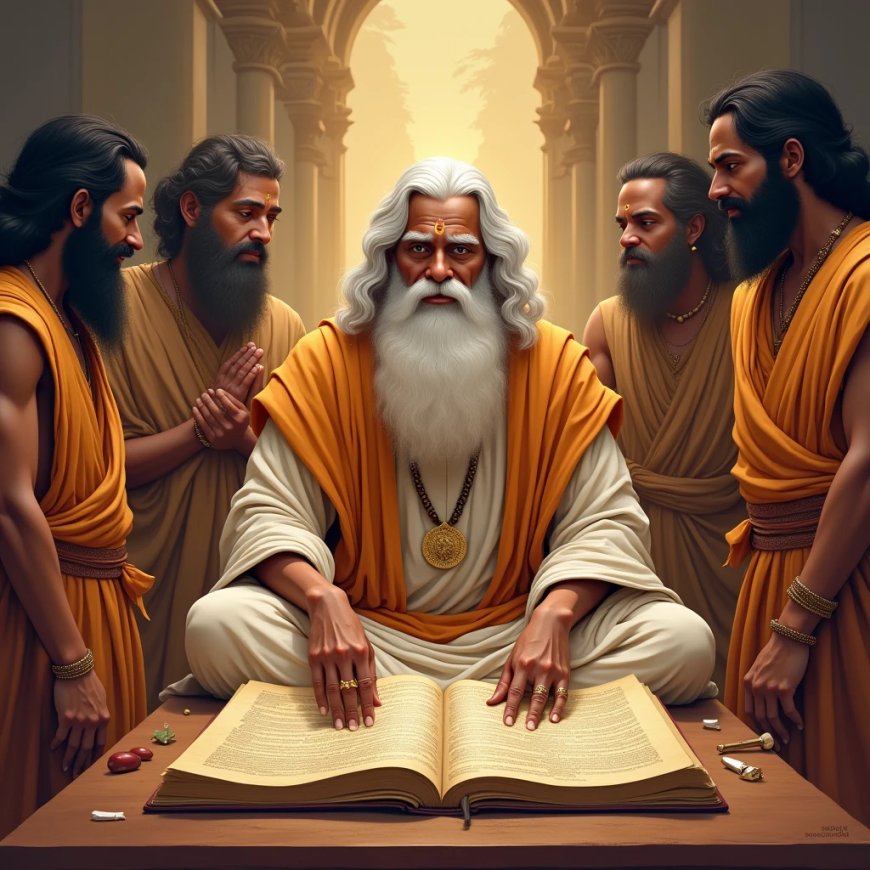
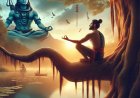
Illustration of Maharishi Wyasa in the Process of Classifying Veda Vyasa (Source: Private Collection)
There is a debate on whether Maharishi Vyasa is the name of an individual or a group of scholars who divided the Vedas. The Vishnu Purana offers an interesting theory about Maharishi Vyasa. According to Hindu beliefs, the universe is a continuous cycle of existence and dissolution, led by various Manus, each presiding over a Manvantara, consisting of four epochs known as Chatur Yuga. Dwapara Yuga is the third Yuga. The Purana (Book 3, Chapter 3) states:
"In every third epoch (Dwapara), Vishnu, through the form of Vyasa, preserves human quality by dividing the Vedas which should be one into several parts. Seeing the limitations in diligence, energy, and the mortal nature of humans, he divided the Vedas into four parts according to their capabilities. This figure is known as Veda Vyasa."
Maharishi Vyasa is known not only as the figure who divided the Vedas into four parts but also as the author of the great epic Mahabharata. However, he also has an important role within the story he wrote. Maharishi Vyasa was the son of Satyawati, who married King Shantanu of Hastinapura. From this marriage, two princes were born, Chitrangada and Vichitravirya. Chitrangada died in battle, and Vichitravirya died due to illness without leaving an heir. Therefore, Satyawati summoned Vyasa to perform a sacred ritual (yajna) to secure an heir.
Maharishi Vyasa performed the ritual with Vichitravirya's two widows, Ambika and Ambalika. During the ritual, Ambika closed her eyes out of fear upon seeing Maharishi Vyasa’s imposing face. As a result, Ambika’s son, Dhritarashtra, was born blind. Ambalika, though not closing her eyes, turned pale with fear, and her son, Pandu, was born with a pale complexion. Since both sons were physically impaired, Satyawati asked Vyasa to conduct the ritual again. However, Ambika and Ambalika refused and sent a servant in their place. The servant remained calm during the ritual, and her son was born healthy and was named Vidura.
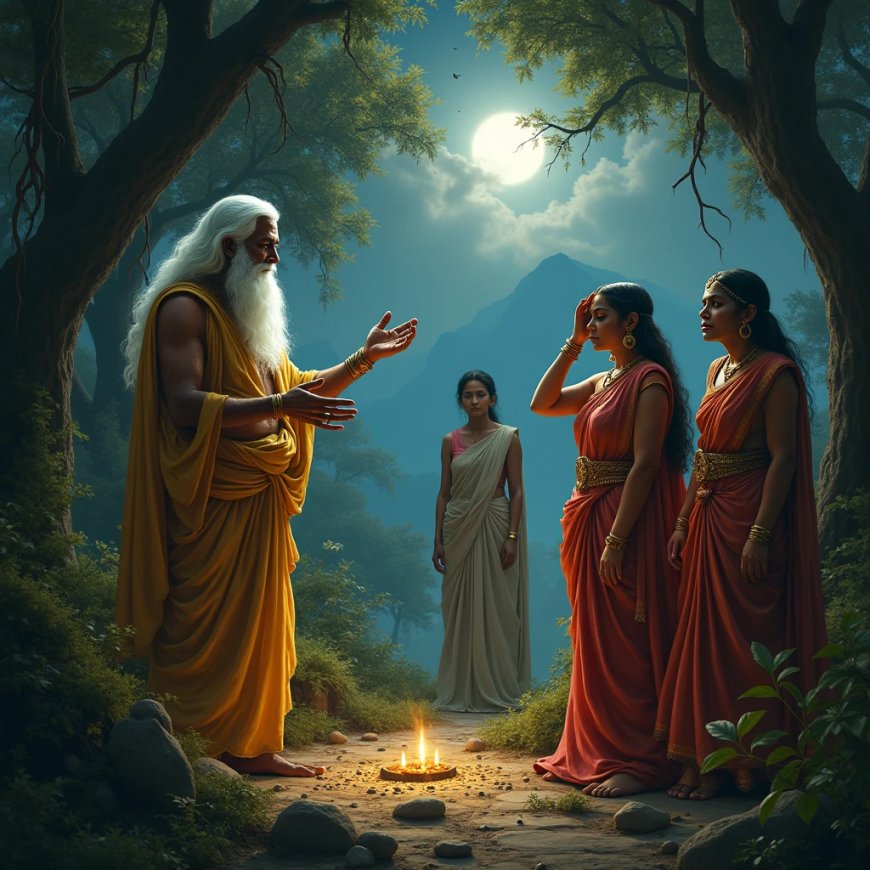
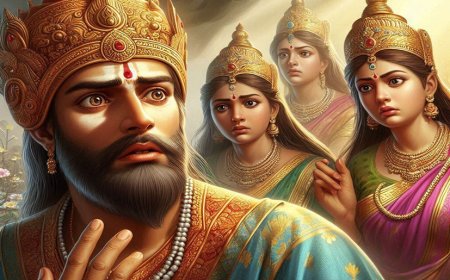
Illustration of Maharesi Wyasa in the Birth Ritual Process (Source: Private Collection)
Gandhari, the wife of Dhritarashtra, felt angry and disappointed because she had not yet given birth while Kunti had already borne sons for Pandu. In her frustration, Gandhari struck her womb, causing her to give birth to a lump of flesh instead of a baby. Maharishi Vyasa then intervened. With his knowledge and power, he divided the lump into a hundred pieces, placing each in a pot, which he then buried in the ground. A year later, the pots were retrieved, and from within them emerged a hundred babies who would be raised as Dhritarashtra’s sons. These babies would later be known as the Kauravas, leaders of the faction opposing the Pandavas in the Bharatayuddha battle.
Maharishi Vyasa played a key role in events surrounding Bharatayuddha. He resided in the Kurukshetra forest, close to the great battlefield. Maharishi Vyasa observed the battle closely, witnessing in detail the events that determined the fate of the Kuru dynasty. After the battle ended, Ashwatthama, who fought for the Kauravas, sought refuge at Maharishi Vyasa’s ashram. Soon, Arjuna and the Pandavas arrived in pursuit of Ashwatthama, creating a tense situation that almost led to a battle between Arjuna and Ashwatthama. Both warriors were prepared to unleash their divine weapons, but due to the wise intervention of Maharishi Vyasa, the clash was prevented,
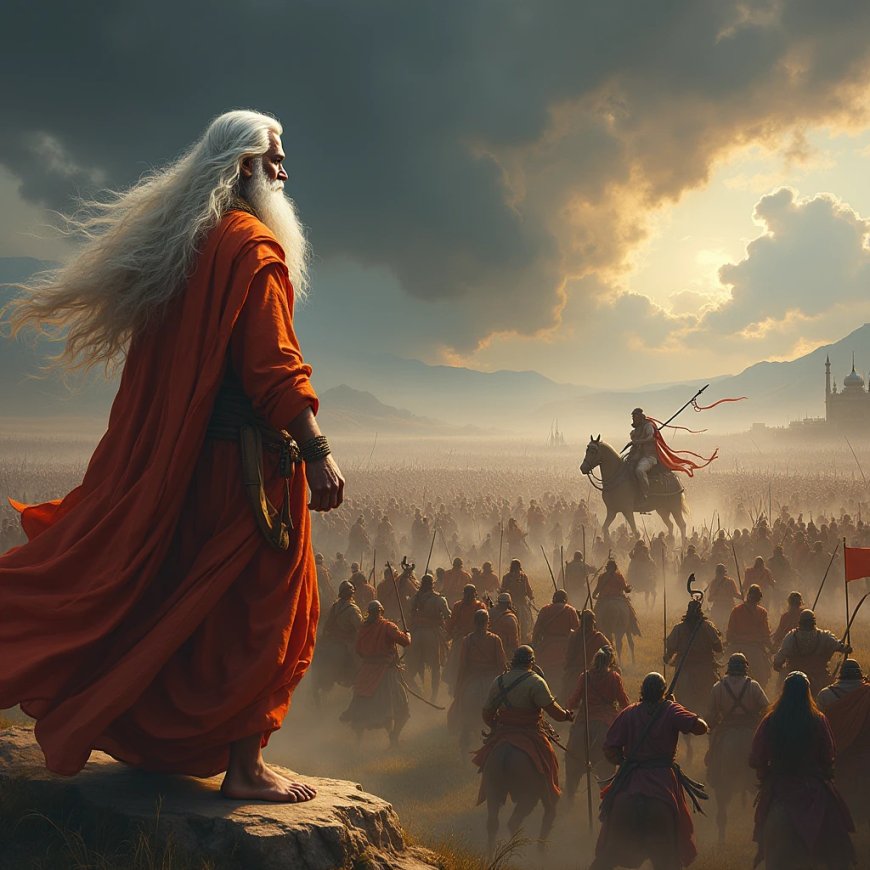
Illustration of Maharishi Vyasa in the Bharatayuddha Conflict (Source: Private Collection)
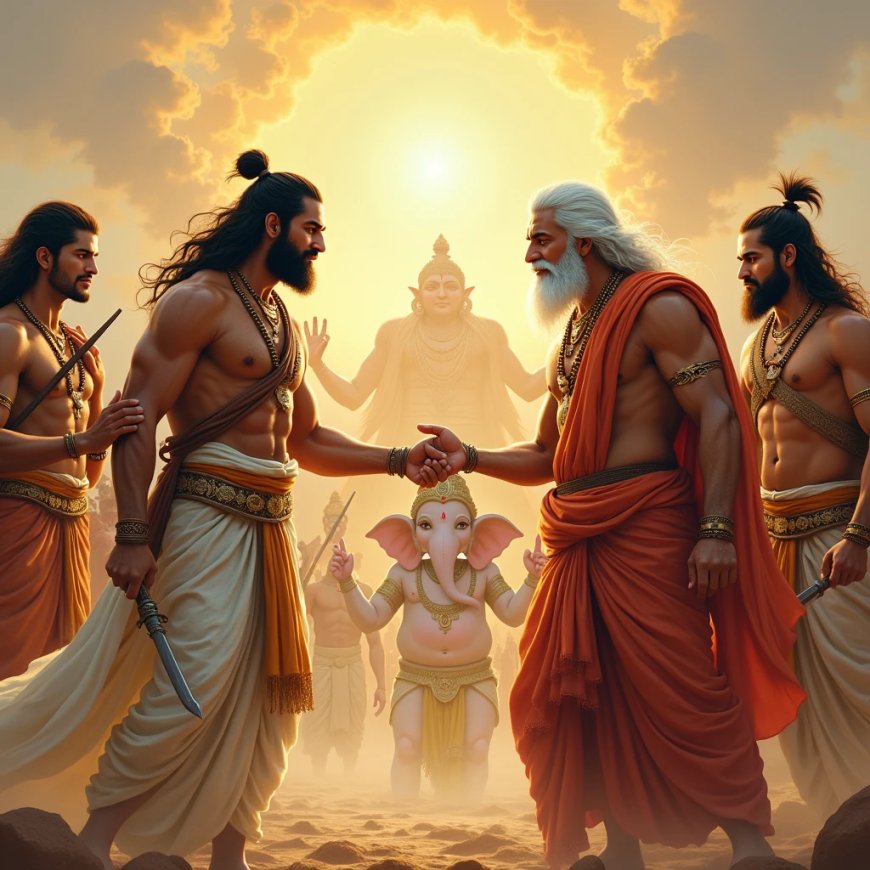
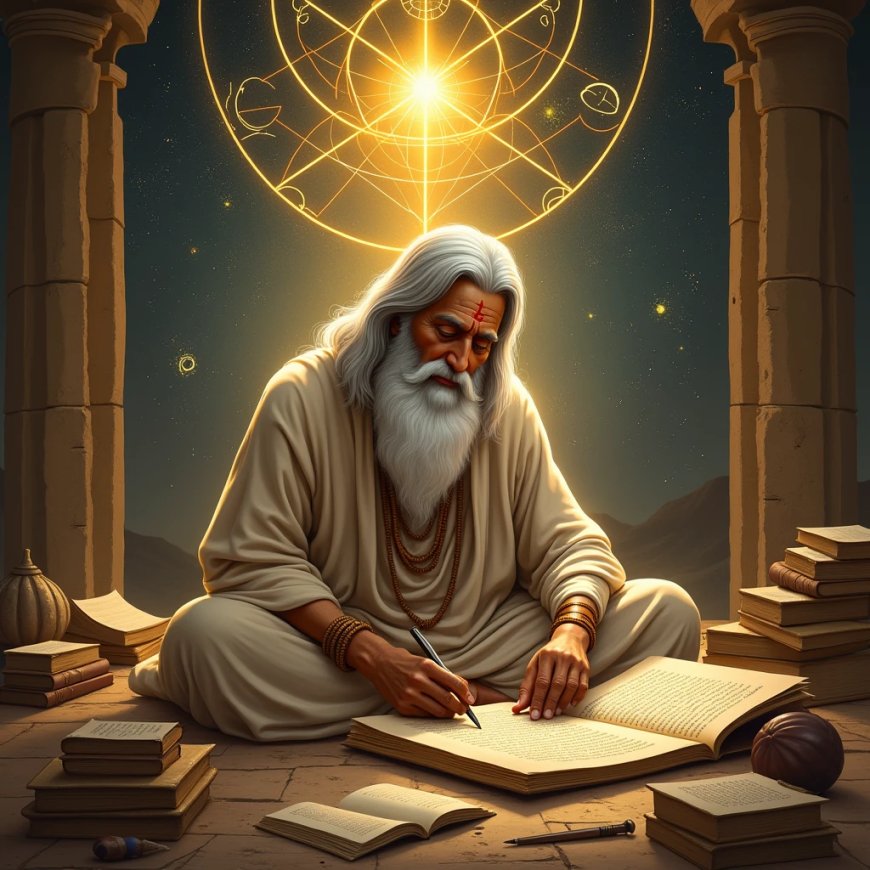
Illustration of Maharishi Vyasa in Process of Disseminating His Work Throughout the World (Source: Private Collection)
Once the Mahabharata was completed, Maharishi Vyasa's prominent disciples, such as Pulaha, Jaimini, Sumantu, and Vaishampayana, studied it. They repeated it over and over, spreading it across the world to ensure the lessons and values of the Mahabharata would be passed down through generations. The Mahabharata has since become a revered guide for moral and spiritual instruction.
The legacy of the Mahabharata continues to shape culture, spirituality, and philosophical thought today. It is regarded as a guide to spiritual and moral life, teaching dharma (duty) and karma (action), integrated into Hindu teachings and religious contexts. Moreover, Mahabharata has profoundly influenced art and literature, with adaptations in drama, film, and other artistic forms. The enduring influence of Vyasa is evident as Mahabharata continues to shape and impact culture and spirituality, maintaining its relevance as one of the most important texts in human history.