










The Shadow of Samalas in the Land of Bali: The Impact of a Devastating Volcano Eruption
The eruption of Mount Samalas in Lombok in 1257 was one of the most powerful volcanic events in history, rated as a 7 on the Volcanic Explosivity Index (VEI). This eruption is believed to have caused global climate anomalies during the Medieval period. Although Bali does not have historical records directly describing the impact of the eruption, experts believe that Bali still experienced its effects due to the magnitude of the Samalas eruption.

The Shadow of Samalas in the Land of Bali: The Impact of a Devastating Volcano Eruption
Indonesia is known as an archipelagic country located along the Pacific Ring of Fire, a region filled with chains of active volcanoes. This geographical condition makes Indonesia one of the countries with the largest number of volcanoes in the world. The presence of these volcanoes brings two contrasting sides. On one hand, the volcanic ash produced by eruptions enriches the soil, making the surrounding areas highly suitable for agriculture, especially rice cultivation, which is the nation’s staple food. In addition, the potential for geothermal energy, mineral resources, and the stunning natural landscapes formed by volcanic mountains provide great benefits for society.
However, behind all of this lies a threat that cannot be ignored. Volcanic activity often brings major disasters, such as massive eruptions, lava flows, lahar floods, and even volcanic tsunamis. These disasters not only cause environmental destruction but can also alter the course of human civilization. One striking example that left a profound mark on world history is the eruption of Mount Samalas on Lombok Island in 1257 AD.
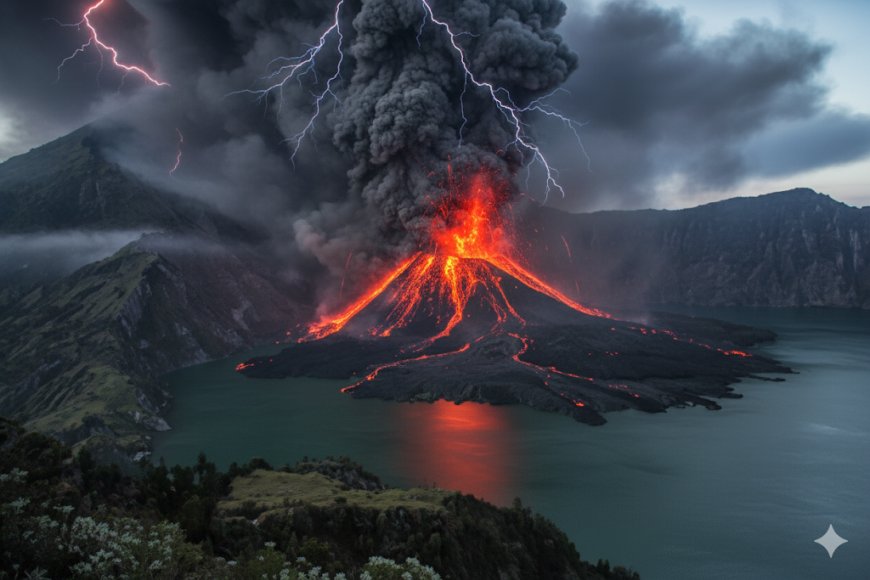
The Samalas eruption is considered one of the largest volcanic eruptions in the last 7,000 years. The tremendous explosion spewed an extraordinary amount of volcanic ash into the atmosphere, which spread to distant parts of the globe. Its impact was not only felt in the Indonesian archipelago but also altered the global climate. Historical records from Europe and the Middle East note unusually cold summers, crop failures, and widespread famine triggered by the drop in global temperatures following the eruption. For the people of Lombok, the eruption brought the collapse of an ancient civilization, claimed countless lives, and left a geological trace in the form of a giant caldera, which is now known as Lake Segara Anak in the Mount Rinjani area.
Scale and Event of the Samalas Eruption

The eruption of Mount Samalas in Lombok in 1257 AD was one of the largest volcanic events in human history. This eruption not only had local impacts but also exerted a significant influence on the global climate, which has been recorded in world history. The eruption column, rising tens of kilometers into the atmosphere, released billions of tons of volcanic ash, gases, and pyroclastic materials that spread widely across the Indonesian archipelago, including the area around Bali, which is geographically close to Mount Samalas.
The impacts of the eruption were vast and long-lasting. The widespread volcanic ash disrupted agricultural systems, public health, and local ecosystems. Furthermore, radioactive particles and aerosols released into the atmosphere blocked sunlight, leading to a decrease in global temperatures for several subsequent years. This cooling phenomenon is recorded in various global climate archives as a major cause of weather anomalies in the 13th century, which affected harvest seasons, triggered famines, and brought about social changes across different parts of the world.
The legacy of the Mount Samalas eruption also left behind geological and archaeological evidence that continues to be the focus of scientific study today. In Bali and its surrounding areas, thick layers of volcanic ash have been found, along with changes in settlement patterns and cultural shifts believed to be linked to this event. Such research helps us understand how massive volcanic eruptions can affect human life, ecosystems, and climate on both global and local scales.
Traces of Samalas Tephra in Bali

The 1257 eruption of Mount Samalas had a significant effect on Bali. Research shows that the eruption produced vast amounts of volcanic material that reached Bali, leaving a layer of volcanic ash and pumice 12–17 cm thick, particularly around Mount Agung. This ash layer severely disrupted agriculture and local ecosystems, potentially triggering food crises and social instability. The volcanic ash covering Bali’s farmlands blocked sunlight for extended periods, causing darkness and lowering air temperatures.
Social and Economic Impacts

The impact of the Samalas eruption on Balinese society was highly complex. Food crises became the primary concern. Farmlands covered in ash required a long time to regain fertility. Food supplies dwindled, forcing communities to rely on remaining reserves or seek alternative sources of sustenance from the forest. This situation triggered mass migration to areas still habitable, created social tensions, and disrupted the spiritual life of the people. Trade, which had once been relatively active, collapsed; agricultural surpluses disappeared, and commercial relations with other regions were disrupted.
The volcanic ash blanketing Bali not only caused physical damage to crops but also created harsh environmental conditions for living organisms. The thick ash layer blocked sunlight, disrupting the photosynthesis process and causing a significant decline in agricultural productivity. In addition, airborne ash contaminated water sources and posed health risks to both humans and livestock.
These disruptions led to a widespread food crisis, sparking social instability and transforming the way of life for Balinese communities at the time. The drop in air temperature due to sunlight blockage added further ecological strain, worsening the already dire conditions caused by volcanic ash. This event also brought about serious changes to the local ecosystem, placing stress on flora and fauna that depended on a balanced natural environment.
Beyond its environmental and socio-economic impacts, the layers of volcanic ash also hold important information for scientists seeking to understand the history of the Samalas eruption and its far-reaching consequences. In several locations across Bali, these ash deposits serve as physical evidence supporting analyses of the relationship between massive volcanic activity, climate change, and social conditions in the past.
Cultural and Psychological Impacts

In addition to its profound social and economic impacts, the eruption of Mount Samalas also significantly affected the culture and psychology of communities in the affected regions, particularly in Bali. Many historical sites, inscriptions, and cultural artifacts were at risk of being damaged or even lost, buried under volcanic ash and pyroclastic material. This resulted in a scarcity of written records and historical evidence from that era, making it difficult to fully study and understand the civilization and way of life of the people at the time.
From a psychological perspective, the collective trauma experienced by the population as a result of this massive disaster shaped a different worldview regarding nature and volcanic phenomena. Deep fear combined with awe led communities to adopt a more cautious approach and to hold great reverence for mountains and the forces of nature. The event reinforced local beliefs and myths related to mountains as sacred entities that must be respected and preserved.
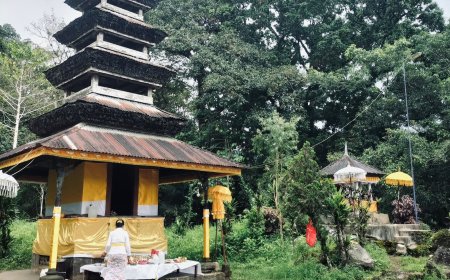
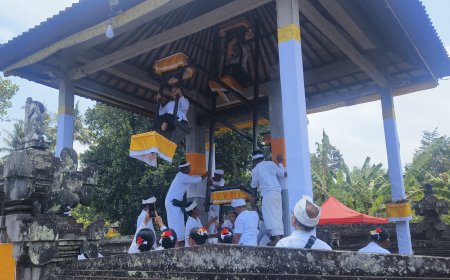
The eruption’s impact was also felt in the spiritual life of Balinese society, as temples and places of worship around Mount Agung and other areas were blanketed in volcanic ash. This forced changes in religious practices and traditional rituals, creating challenges in preserving spiritual traditions that had been maintained for centuries. The restoration of these sacred sites required significant time and collective effort, as communities worked together to clean and rebuild them so they could once again serve as places for religious rituals.
Recovery and Adaptation

Despite the devastation, the Balinese people showed remarkable resilience. Over time, the ash layers decomposed, and the soil became fertile once again. People began clearing new lands, repairing irrigation systems, and developing improved farming techniques. Economic recovery happened gradually, especially after Bali reestablished trade connections with major kingdoms such as Majapahit. This event also encouraged the community to strengthen social structures, with local leaders and spiritual figures taking a central role in restoring order, leading recovery rituals, and reviving people’s faith.
The eruption of Mount Samalas in 1257 was not just a geological event but a turning point in Bali’s history. It transformed the landscape, disrupted social systems, triggered a food crisis, and shook the spiritual life of the people. Yet, out of this disaster emerged a new resilience. The Balinese learned to adapt, rebuild their social, economic, and cultural life, and strengthen solidarity. This story serves as a reminder that nature has immense power to transform civilization but also highlights humanity’s ability to rise from destruction, rebuild together, and create a more sustainable way of life.
Daftar Pustaka
Lavigne, F., Degeai, J.-P., Komorowski, J.-C., Guillet, S., Robert, V., Lahitte, P., & Pratomo, I. (2013). The 1257 Samalas eruption (Lombok, Indonesia). Scientific Reports.
Chesner, C. A., & Gardner, J. E. (2012). Source of the great A.D. 1257 mystery eruption unveiled, Samalas volcano, Indonesia. Proceedings of the National Academy of Sciences.
Puspito, N. R., Lavigne, F., Hadmoko, D. S., & Ng, R. C. Y. (2017). Isopach Mapping of Volcanic Deposits of Mount Samalas 1257 AD. Geosciences.